

A Year in Denmark
Tags
Summary
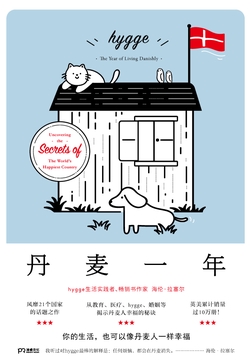
What is the secret of the Danes' happy life? Are they happy by nature? What do they know that we do not? The writer Helen Russell believed there was only one way to find the answers: live in Denmark for a year.
From family to workplace, from babies to puppies and dairy cows, from drugs to heavy drinking and sexually transmitted diseases, from food to interior design, Helen Russell's twelve months of observation show how these subjects collide with the inertia of lives we take for granted and constantly challenge our imagination of Denmark.
The Year of Living Danishly records this witty, sharp-edged journey, letting us not only understand the Danes and Danish culture but also see in three dimensions where Danish happiness comes from and how to learn a "more Danish" way of life, thereby discovering our own path to happiness.
Editor's review
Who it's for
A good fit for
- Readers with a strong interest in Nordic society, culture, and lifestyle
- Urban dwellers weary of a fast-paced life who long to rethink work-life balance
- Thinkers curious about sociology, comparative cultural studies, or the question of happiness
- Readers who enjoy nonfiction combining the depth of personal narrative with the breadth of social observation
Not a good fit for
- Readers expecting a pure travel guide or scenic introduction
- Readers seeking an absolutely correct, single answer to solve their own unhappiness
Reading tips
- Read with a comparative eye, and as you go, consider: which aspects of the Danish model inspire you personally? Which might not travel well?
- Pay attention to the subtle shifts in the author's mindset and focus in each month's record—this is the key to the book's personal-growth thread.
- The book involves many Denmark-specific social concepts (such as hygge and the Law of Jante); taking brief notes will help you understand the cultural background more deeply.
About the publisher
Hunan Literature and Art Publishing House is a publisher known for its literary titles, with a catalogue spanning foreign literature, world classics, classical Chinese literature, essays and miscellaneous writings, and mystery and detective fiction. Judging from the more than 1,100 books in the database, the press publishes foreign classics such as Crime and Punishment, Snow Country, The Complete Sherlock Holmes and Letter from an Unknown Woman, as well as Chinese classical and modern literary works including Lu Xun's Wandering and A Madman's Diary and Wu Jingzi's The Scholars. In terms of translators and authors, translations by Cao Guowei and Tan Jinghua appear in its foreign literature titles, and the authors involved include Dostoevsky, Kawabata Yasunari, Conan Doyle and Zweig. Its publishing character lies in introducing Chinese and foreign literary classics side by side, balancing popular and serious works and attending to both readability and literary value. Public information is limited; the above is a brief overview based solely on the books in the database.
Contents
- 版权信息
- 序言 寻求改变—幸福计划
- 一月 Hygge与家居
- 二月 忘记朝九晚五吧
- 三月 休闲与语言
- 四月 大丹狗与其他动物
- 五月 传统与遭到斥责
- 六月 只是个女孩
- 七月 逃离与流连忘返
- 八月 孩子很好
- 九月 屠夫、面包师和文化打造者
- 十月 疾病与健康
- 十一月 “下雪了,下冰雹了,还有毁灭灵魂的黑暗……”
- 十二月 相信税务官(或女税务官)
- 圣诞 圣诞快乐!
- 后记 丹麦制造
- 丹麦生活十大建议
- 致谢
FAQ
How is this book different from common books on Nordic happiness?
Can I learn concrete methods for becoming happy from this book?
Is the author's attitude toward Denmark wholly admiring?
Related on WeRead
Comments
Find this book
This site is an index: you start “Search all sources” in your browser, and the entries it lists all point to third-party sites; please judge their availability yourself.
About the author
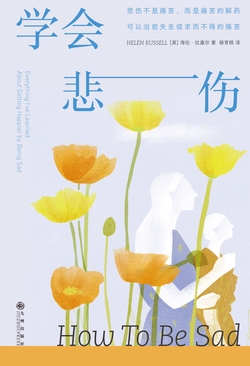
Public information about Helen Russell is limited. What is known is that her works are catalogued in the Chinese book market under psychology application and travel. Her book Learning to Grieve focuses on emotions and the experience of sorrow, addressing general readers on how to face loss and low moods, with a style that weaves psychological observation into everyday narrative. The Year in Denmark belongs to travel writing, centering on life in Denmark and the observations and feelings that arise there. The two works span quite different subjects, yet both carry a personal perspective and an approachable tone, suggesting that the author draws on her own experience to turn psychological themes and life abroad into books for a broad readership. Since details such as dates of birth and death, nationality and English name are unconfirmed, no inference is made here; this introduction relies only on the works and categories in the database.
Li Yingchun is an author about whom limited public information is available. What can be confirmed is that three works appear under this name, spanning world history, travel and theoretical writing. Representative titles include the two-volume M Translation Series Set 04: The Lives of Two Presidents, A Year in Denmark and The Secret Life of Color. Judging from these books, Li Yingchun's writing touches on different fields, including biographies of political figures, observations of life in a foreign country and the culture of color. The works range from narratives grounded in historical materials to essay-style writing attentive to everyday life and cultural detail, showing a broad choice of subjects rather than a single fixed direction. As no records of birth and death dates, nationality or educational background are available, little can be said about the author's personal experience; readers may instead turn to the above works to understand Li Yingchun's writing interests and areas of attention.
