

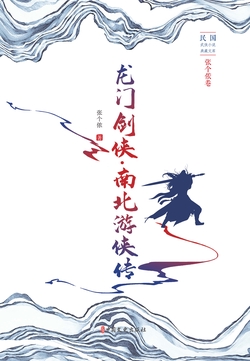
Dragon Gate Swordsman
Tags
Summary
After descending the mountain, Guan Tingyu travels with Qiu Huayu; on the way they learn that Wei Zhongxian's faction intends to harm Wang Wenyan, and the two intervene to help him. In Penglai County they uncover the truth of the past and kill the village head Cao Zheng and the jailer Hei Shen.
Later, in Ye Village, Wuyi County, they discover traces of the White Lotus Sect and learn by chance that You Jinlu is also there. With Ye Tingzhen's help, Guan Tingyu succeeds in killing You Jinlu.
At Linwan County, however, Guan Tingyu is framed by his former servant Guan Xing'er and thrown into prison; they escape and rescue Bu Qingyun, then continue on the road of revenge.
Editor's review
Who it's for
A good fit for
- Readers new to old-school wuxia who want a sense of traditional chivalric storytelling
- Wuxia fans who enjoy revenge-and-growth arcs and master-disciple relationships
- Readers interested in the late Ming setting, the White Lotus Sect, and folk case-solving elements
- Casual readers who prefer the chapter-based pace and reading in installments
Not a good fit for
- Readers who demand strict historical accuracy and realistic detail
- Younger readers used to fast pacing and strong plot twists
- Readers impatient with the slow buildup and repetition of old-school fiction
Reading tips
- Read the first few chapters to understand Guan Tingyu's family tragedy and why he takes a master, then move into the revenge plot.
- Treat the Penglai County investigation and the Linwan County prison break as two nodes, and sort out each character's stance separately.
- When the White Lotus clue appears, note Ye Tingzhen's entrance and role, which sets up the sequel.
- If the buildup feels slow, read the post-descent chapters first, then go back to the apprenticeship section.
Contents
- 版权信息
- 第一回 龙门传侠,茜窗著书 张口投师,村店遇雨
- 第二回 立志复仇,行乞奔走 仗义收徒,慨传衣钵
- 第三回 疑鬼疑神,属垣闻诡语 见贤见义,暗地保忠良
- 第四回 杨柳青侠士初出手 巨野县会首两留宾
- 第五回 祭祖茔,茶肆闻闲话 诛保正,树梢挂人头
- 第六回 访仇人,武邑惊邪教 遇义士,叶村练民兵
- 第七回 正能祛邪,仇雠授首 柔以克刚,侠义入狱
- 第八回 表同情,侠客夜越狱 骂奸阉,文士闹生祠
- 第九回 焚生祠,大闹宣家堡 救乡老,夜踹夏镇营
- 第十回 越船救人,失足落水 进庄索仆,中伏遭擒
FAQ
Is this book suitable for wuxia beginners?
What are the key nodes in Guan Tingyu's revenge arc?
Is the White Lotus clue in the book related to the sequel?
Related on WeRead


Comments
Find this book
This site is an index: you start “Search all sources” in your browser, and the entries it lists all point to third-party sites; please judge their availability yourself.
About the author
Zhang Genong was a writer of the Mandarin Duck and Butterfly School during the Republican era. A native of Dantu in Jiangsu (present-day Zhenjiang), he wrote under such pen names as Feng Chousheng, Feng Shisheng, and Zhuobi Shanren. Public information about his birth and death dates and early life is limited, but his surviving works show that he ranged across social, martial arts, detective, and historical fiction with ease, achieving his greatest success in martial arts novels. His representative works include Sh Potian Jinglu (Stone-Breaking Record), Guan Dong Qixia Zhuan (Tales of Strange Heroes of the Northeast), and the Four Great Swordsmen series. This library holds 41 of his works, most of them martial arts novels, including multiple installments of Stone-Breaking Record. His writing occupies a place in the history of Republican-era martial arts fiction, with intricate plots and diverse subjects that offer valuable texts for the study of popular literature of the period.
