

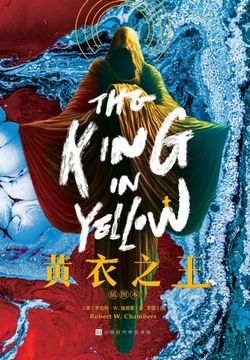
The King in Yellow
Tags
Summary
Of the ten stories collected in The King in Yellow, only four are horror stories and two are tales of the eerie, yet this in no way prevents the book from being a peerless classic in the eyes of readers throughout the worldwide 'broad Cthulhu circle.' Its author, Robert W. Chambers, is moreover hailed as one of the founders of the Cthulhu Mythos.
The first four stories all concern a forbidden book, The King in Yellow, telling of a mental patient who imagines himself descended from nobility, a sculptor with supernatural powers, a madman pursued by the evil aura of a church, and an artist confronting death. The latter six stories are connected to the author's years studying art in Paris.
Editor's review
The book's core appeal lies in its pioneering narrative device of "memetic contamination." The fictional play The King in Yellow and its symbols (such as the Pallid Mask and the song of Cassilda) circulate within the stories as a "cursed artwork": every character who comes into contact with it is driven toward madness and destruction in mind and fate. This premise of "the concept itself as horror" is deeper than any direct depiction of monsters; it implies that the universe harbors a "truth" that human reason cannot comprehend yet that can spread through artistic form—and once touched, the self dissolves. Chambers wraps this nameless dread in elegant, even slightly aesthetic and sorrowful prose, creating immense textual tension—precisely the aesthetic core later championed and developed by Lovecraft.
From the perspective of literary history, the first four "King in Yellow" stories are the true essence of the book and established its enduring status. The later stories about Parisian artists, though markedly different in style—some readers consider them disjointed—together form Chambers's bizarre, decadent, inspiration-crossed fin-de-siècle canvas, providing a realistic counterpoint to the shadow of the "Yellow." In reading, you need to adjust to this shift in rhythm and see it as the author's variations on the theme of "the duality of art"—both the creation of beauty and the vehicle of madness.
This is therefore more than a collection of horror stories. It is a literary exploration of the boundaries of reason and an early practice of symbolist and weird aesthetics. Its influence has endured for more than a century, permeating games, film, music, and many other subcultural fields. To understand The King in Yellow is to understand an important lesson in the "elegant madness" that runs through modern horror culture.
Who it's for
A good fit for
- Deep readers interested in the origins of the Cthulhu Mythos and the development of cosmic horror literature
- Horror enthusiasts who prefer psychological suggestion and atmospheric dread over gore and jump scares
- Literary readers who appreciate the aesthetic and decadent style of the late 19th century and can accept shifts in narrative rhythm
- Analytical readers who enjoy unearthing symbols, metaphors, and cultural motifs in stories
Not a good fit for
- Readers seeking a continuous long-form narrative, strong plot conflicts, and fast scares
- Readers impatient with 19th-century literary language and a relatively slow narrative pace
Reading tips
- Prioritize the first four stories directly related to The King in Yellow ("The Repairer of Reputations," "The Mask," "In the Court of the Dragon," "The Yellow Sign") to grasp the core themes; treat the later chapters as stylistic supplements.
- While reading, do not insist on constructing a clear, unified image of the King in Yellow; what matters more is sensing how it erodes reality as an "influence" or "atmosphere."
- Read comparatively alongside later works influenced by it (such as certain games and comics) to appreciate the pioneering nature and enduring vitality of its concepts.
About the publisher
Beijing Times Chinese Press takes classic works and prose miscellanies as an important publishing direction, along with foreign literature, social novels, Eastern philosophy and art books. Its catalogue includes such Chinese classics as Lu Xun's Call to Arms and Wandering, Xiao Hong's The Field of Life and Death, Zhang Dai's Reminiscences of Tao'an, Yuan Mei's Recipes from the Sui Garden and Hong Yingming's Caigentan, as well as foreign classics such as Ryunosuke Akutagawa's Rashomon. Among its translator resources is Wen Jieruo, whose translations provide reliable support for bringing foreign literary works into the Chinese-speaking world. While organizing traditional texts and reissuing classics, the press pays attention to readability and accessibility of editions, enabling ancient prose, notes and philosophical works to reach contemporary readers. Public information is limited; the above is only a brief account of the publishing directions reflected in the books held in the database.
Contents
- 版权信息
- 罗伯特·W.钱伯斯与“黄衣之王”
- 名誉修复者
- I
- II
- III
- 面具
- I
- II
- III
- IV
- 巨龙之庭
- 黄色印记
- I
- II
- III
- 少女德伊斯
- I
- II
- 先知的天堂
- 四风街
- I
- II
- 街上的第一枚炮弹
- I
- II
- III
- IV
- 圣母街
- I
- II
- III
- IV
- V
- VI
- 巴雷街
- I
- II
- III
- IV
- V
FAQ
What is the relationship between The King in Yellow and Lovecraft's Cthulhu Mythos?
Are all the stories in this book horror?
Why is this book said to have a "memetic contamination" quality?
Related on WeRead



Comments
Find this book
This site is an index: you start “Search all sources” in your browser, and the entries it lists all point to third-party sites; please judge their availability yourself.
About the author
Robert W. Chambers was an American writer known for his fantasy and weird fiction, and his representative work The King in Yellow holds a distinctive place in foreign literature. Publicly available information about his life is limited, and only one of his works is held in this collection, so the focus here is on the work itself. The King in Yellow is a collection of short stories built around a fictional play whose figures and atmosphere gradually seep into reality, creating an ambiguous and oppressive sense of horror; it is an important text in the weird fiction tradition. Chambers's writing relies on suggestion and psychological atmosphere rather than overt shocks, a style that has influenced later horror and fantasy writing and that leads him to be discussed alongside other weird fiction writers of his era.
Li Lei is a Chinese book author about whom limited public information is available; his writing and translation activities center mainly on science fiction and foreign literature. Five of his works are included in the collection: Wool, The King in Yellow, The Mark of the Letter, The Sand-Diving Record, and The Alien Record. These titles mostly involve science-fiction settings and exotic imagination, while also introducing foreign fantasy literature. Judging from these works, Li Lei's writing and editorial choices favor the readability and imaginative scope of genre fiction, and he has had some influence in the dissemination of science fiction and fantasy. Because biographical information remains incomplete, his nationality, dates of birth and death, and English name are not clearly recorded; readers and researchers may learn more about his creative profile through the works mentioned above.
