

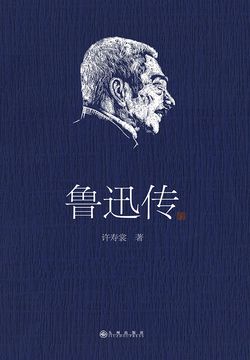
Biography of Lu Xun
Tags
Summary
Editor's review
Who it's for
A good fit for
- Readers who wish to learn about the details of Lu Xun's life and true character from a friend's perspective
- Researchers or enthusiasts interested in Lu Xun studies who hope to obtain firsthand contemporary historical sources
- Readers who have read Lu Xun's works and long to understand more deeply their creative background and inner world
- Readers who prefer biographical literature with warmth and personal reminiscence
Not a good fit for
- Readers seeking purely academic, theoretical Lu Xun research
- Readers expecting a comprehensive critique or subversive reinterpretation of Lu Xun
Reading tips
- Read this book alongside Lu Xun's reminiscence essays such as Dawn Blossoms Plucked at Dusk to appreciate the interplay between text and life.
- Pay special attention to the Lu Xun letters quoted in the book; they are precious materials for understanding his private emotions and intellectual trajectory.
- While reading, set aside for a time the various symbols later ages have attached to Lu Xun, and follow Xu Shoushang's memories in an attempt to feel Lu Xun as a "person."
About the publisher
Public information on Xu Shoushang as a publishing entity is limited. Only one title is currently held in the collection, the Biography of Lu Xun, written by Xu Shoushang himself, so its publishing profile is presented mainly through biographical works. Judging from the existing catalogue, its publishing direction centers on biography, especially accounts of Lu Xun's life and thought, and it is commonly classified under general biography. As for author resources, Xu Shoushang is both the credited author and a close associate of Lu Xun, and his writings carry a first-hand perspective that gives the relevant biographies reference value in terms of historical sources and personal recollection. Its publishing characteristics therefore lean toward biographical texts grounded in personal experience, with attention to tracing a person's life and presenting the development of their thought. Because the collection contains only a single title, it is not yet possible to determine whether other categories are involved, and a fuller publishing structure awaits further material.
Contents
- 版权信息
- 《鲁迅传》出版说明
- 上 亡友鲁迅印象记
- 小引
- 一 剪辫
- 二 屈原和鲁迅
- 三 杂谈名人
- 四 《浙江潮》撰文
- 五 仙台学医
- 六 办杂志、译小说
- 七 从章先生学
- 八 西片町住屋
- 九 归国在杭州教书
- 十 入京和北上
- 一一 提倡美术
- 一二 整理古籍和古碑
- 一三 看佛经
- 一四 笔名鲁迅
- 一五 杂谈著作
- 一六 杂谈翻译
- 一七 西三条胡同住屋
- 一八 女师大风潮
- 一九 三一八惨案
- 二 〇广州同住
- 二一 上海生活——前五年
- 二二 上海生活——后五年
- 二三 和我的交谊
- 二四 日常生活
- 二五 病死
- 读后记
- 下 我所认识的鲁迅
- 我所认识的鲁迅
- 怀亡友鲁迅
- 鲁迅的生活——在北平大学女子文理学院
- 怀旧
- 《民元前的鲁迅先生》序
- 关于《弟兄》
- 《鲁迅旧体诗集》序
- 《鲁迅旧体诗集》跋
- 回忆鲁迅
- 鲁迅的几封信
- 鲁迅与民族性研究
- 鲁迅的精神
- 鲁迅和青年
- 鲁迅的德行
- 鲁迅的人格和思想
- 《鲁迅的思想与生活》自序
- 鲁迅的避难生活
- 鲁迅的游戏文章
- 附录一 鲁迅先生年谱
- 附录二 鲁迅古诗文的一斑
FAQ
What is the main difference between Xu Shoushang's biography of Lu Xun and other versions?
What is the writing style of this book? Is it easy to read?
Does this book help in understanding Lu Xun's works?
Related on WeRead


Comments
Find this book
This site is an index: you start “Search all sources” in your browser, and the entries it lists all point to third-party sites; please judge their availability yourself.
About the author
Xu Shoutang (1883–1948), courtesy name Jifu and style Shang Sui, was a native of Shaoxing, Zhejiang, and a renowned modern Chinese educator, scholar and biographer. In 1902 he went to Japan to study, where he met Lu Xun and formed a lifelong friendship. He served as a secretary at the Ministry of Education, taught at Peking University and other institutions, and later headed the Taiwan Provincial Compilation and Translation Bureau and taught at National Taiwan University. Drawing on his firsthand acquaintance, he wrote such works as Impressions of My Late Friend Lu Xun, The Lu Xun I Knew and A Biography of Zhang Binglin, and also compiled writings related to Lu Xun, including a biography of him. His plain, restrained prose, grounded in personal contact and observation, preserves valuable primary material for Lu Xun studies and for understanding exchanges among modern scholars. He was killed at his residence in Taipei in 1948.
