

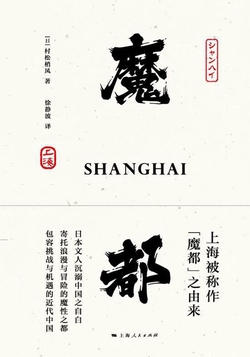
Magic City
Tags
Summary
Editor's review
Who it's for
A good fit for
- Readers with a strong interest in Shanghai's urban history, especially the social landscape of the Republican era
- Scholars and students researching modern Sino-Japanese cultural exchange history, literary history, or orientalist perspectives
- Travel literature enthusiasts who enjoy observing a city's character through personal, documentary essays
- General readers curious about the origin and cultural connotations of the term "Modu" (Magic City)
Not a good fit for
- Readers seeking a coherent, well-structured novel
- Readers expecting deep, systematic, and objectively positioned historical analysis of Shanghai
Reading tips
- It is recommended to read this book alongside works by contemporary Chinese writers (such as Mao Dun's Midnight) or accounts of Shanghai by Western journalists for a multifaceted perspective.
- While reading, consult old maps or historical images of Shanghai to match the textual descriptions with spatial locations and enhance immersion.
- Focus on the author's contrasting depictions of "modern" phenomena (films, automobiles, dance halls) and the lower classes (beggars, laborers) to sense the source of his perception of the "demonic."
About the publisher
Shanghai People's Publishing House is a comprehensive publisher whose list focuses on academic monographs and general-interest titles in philosophy, social sciences, politics and law, economics and management, and history. Among its books are Wei, Jin, Southern and Northern Dynasties History in the Chinese Dynastic History series; The Hobbit and The Lord of the Rings trilogy in foreign literature; the Wenjing Classical Translation Illustrated Edition of The Complete Greek Tragedies of Euripides; and works of social theory such as Max Weber's Economy and Society and Dialectic of Enlightenment: Philosophical Fragments. Its authors include Wang Zhongluo, J.R.R. Tolkien, Luo Niansheng, and Zhou Zuoren.
Contents
- 版权信息
- 译者前记
- 辑一
- 扬子江
- 明亮的上海 黑暗的上海
- 夜上海
- 绿牡丹
- 田汉先生
- 新世界、大世界
- 参观学校
- 移居俄国人的公寓、友人来
- 《创造》同人
- 跑马
- 西湖之旅
- 归国之日
- 辑二
- 乞丐与剩饭
- 梦寐之乡
- 中国的色彩
- 黄包车
- 欢乐之都
- 大世界 新世界——上海的民众娱乐场
- 赏钱
- 辑三
- 车站一景
- 我观上海
- 跑狗
- 北四川路
- 俄国女郎
- 黑猫跳舞场
- 赌博馆
- 辑四
- 风景的印象
- 建筑
- 中国的庭园
- 都市的风景
- 茶馆
- 中国菜肴
- 苏州游记
- 西湖游览记
FAQ
Is this book a novel or a documentary work?
What kind of person was the author Muramatsu Shōfū?
Where did the name "Modu" (Magic City) come from?
Related on WeRead


Comments
Find this book
This site is an index: you start “Search all sources” in your browser, and the entries it lists all point to third-party sites; please judge their availability yourself.
About the author
Muramatsu Shōfū was a Japanese author whose biography and educational background are not well documented publicly; what can be confirmed is that his works are classified in the Chinese book database under classic works and foreign literature. He wrote on Chinese themes, and his representative works include Modu (The Demon City) and Chinese Colors. Modu is set in Shanghai, and its title itself became a literary summation of the city's urban image; Chinese Colors depicts Chinese local customs and culture from an observer's perspective. Both works reflect the author's sustained attention to foreign cities and societies, with a reportorial, essayistic touch that captures everyday details and the atmosphere of the times. Among Chinese readers, Muramatsu Shōfū is often mentioned for Modu, which is also regarded as a literary reference for understanding modern Shanghai's urban culture. Because public information is limited, his specific life and the full scope of his writing remain to be further verified.
Information about Xu Jingbo available to the public is limited, but his writing and translation work centers largely on Chinese and Japanese culture, history, and literature. Ten of his works are held in this collection, spanning a wide range of subjects: documentary works such as The Jianjian Lu: Secret Diplomatic Records of the First Sino-Japanese War, which draws on historical sources to examine modern diplomacy, as well as literary and urban-memory works such as The Boat of the Night at Shirakawa, Night on the Qinhuai River, and The Magic City. The Character of the Japanese and Primal Colors of Kyoto: A Symphony of the Classical and the Modern focus on observing Japanese society and urban culture, tracing connections between classical tradition and contemporary life. His output also includes biographical texts such as The Autobiography of Osugi Sakae: The Monologue of a Rebel, and accounts that recover old stories, such as Their Memories of Shanghai. Overall, his writing emphasizes historical sources and a sense of place, with a restrained tone; he often takes specific people, events, and urban spaces as entry points, presenting the historical textures and cultural experiences of modern East Asia between documentary and literary writing.
