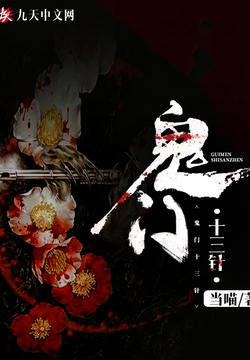
Thirteen Needles of the Ghost Gate cover

Thirteen Needles of the Ghost Gate

Rating 2.5
Word count
670 words
Chapters
3

Tags

Summary

Traditional Chinese thought and culture have a long history and are highly original, inventive, and literary. Early forms of thought have distinctive features; religious theology, classical texts of Chinese medicine, ancient military strategy, Confucianism, Daoism, Buddhism and the Hundred Schools, feng shui and metaphysics, the Twenty-Four Histories, and local customs and geography are all profound and extensive. This "Essence of Classic Chinese Learning: Original Texts" series preserves the original appearance of the books and focuses on preserving and transmitting traditional Chinese thought and culture. By reading the literary essence left by ancient sages, readers can cultivate their temperament and subtly appreciate the classics of Chinese learning.

Editor's review

This book takes the "Thirteen Needles of the Ghost Gate" from traditional folk custom as its thread and is included in the "Essence of Classic Chinese Learning: Original Texts" series; the whole book preserves the original appearance and focuses on presenting the textual form in which ancient folk medicine and theological concepts intertwine. Readers can thereby observe the narrative manner in which traditional Chinese medical texts, religious theology, and feng shui metaphysics permeate one another, and understand the ancients' framework for understanding illness, body and mind, and supernatural forces. As a documentary reader, its value lies not in providing operable medical plans but in preserving a sample of cultural memory and folk knowledge. When reading, one should adopt the perspective of cultural history and folklore, examining the content as material of traditional concepts rather than copying and applying it. It is suitable for desk browsing by readers interested in folk belief, the cultural history of Chinese medicine, and traditional texts, and also as auxiliary reading for understanding the diverse aspects of "Chinese learning."

Who it's for

A good fit for

  • Readers interested in folk belief and folk medical culture
  • Scholars studying the cultural history of Chinese medicine and ancient theological concepts
  • General readers who like to collect traditional Chinese learning source texts
  • Culture enthusiasts who need to understand ancient forms of folk knowledge

Not a good fit for

  • People hoping to seek actual disease treatment plans from this book
  • Clinicians who accept only the modern scientific medical framework
  • Beginners expecting a systematic acupuncture textbook

Reading tips

  1. First read the table of contents and preface to clarify the book's position in the series and editorial principles.
  2. Read the content as cultural historical material, remaining cautious when encountering medical claims.
  3. Can be read alongside general histories of Chinese medicine or folklore to help understand the background.
  4. After each chapter, make brief notes recording differences between ancient concepts and today's understanding.

Contents

  1. 版权信息
  2. 孙真人针十三鬼穴歌
  3. 正文

FAQ

Can this book be used to learn acupuncture for treating illness?
It is not advisable to use it this way. This book is an edited traditional culture source text, focusing on preserving ancient folk texts and conceptual features; it is not a modern acupuncture textbook or clinical operation guide. The medical claims involved should be viewed as cultural historical material, and actual diagnosis and treatment should follow modern medical standards and consult professional physicians.
Can I read this book without a foundation in Classical Chinese?
You can try, but it requires some patience. This book preserves the original appearance, and the language may carry ancient expressive habits. It is advisable to first browse the table of contents and preface to grasp the overall structure; when encountering difficult passages, consult reference books or annotated editions for comparison, and do not insist on understanding everything at once.
What type of reading is this book?
It belongs to the "Essence of Classic Chinese Learning: Original Texts" series, emphasizing the preservation and transmission of traditional Chinese thought and culture, and its content involves early forms of thought such as religious theology, classical Chinese medical texts, and feng shui metaphysics. Its reading positioning is cultural material and Chinese learning source texts, not popular fiction or a practical manual.

Related on WeRead

Comments

Find this book

This site is an index: you start “Search all sources” in your browser, and the entries it lists all point to third-party sites; please judge their availability yourself.

About the author

Anonymous Author

Anonymous is not a real personal name but a general Chinese designation for authors whose names are unknown, lost, or unsigned. Neither nationality nor dates of birth and death can be verified, and available public information is limited, so the works attributed to this name are the only basis for description. The collection holds 2,078 works under Anonymous, spanning medicine, classics, historical readings, ancient poetry, classical literature, and philosophy. Representative works include The Yellow Emperor's Inner Canon: Lingshu, Mencius, The Book of Documents, Nineteen Old Poems, Complete Song Ci, and The Peacock Flies Southeast. Most of these works took shape through long transmission and editing, emerging either from collective folk creation or from authors whose names were lost over time. In ancient China, the Book of Songs, the Great Learning, and many popular storybooks and plays were signed Anonymous because their authors could not be traced. Anonymous works cross the classics, histories, philosophical writings, medical texts, and poetry; their subjects are broad, and their styles vary from archaic simplicity to clear naturalness, making them important and influential sources for understanding ancient Chinese thought, medicine, and literature.

More by the same author

Top rated in the same category