

The Chiefs
Tags
Summary
Editor's review
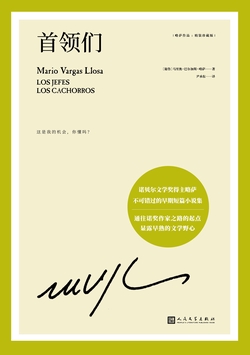
As Llosa's literary starting point, this book foreshadows many core themes of his later work: the subtle workings of power relations, the individual's struggle under collective pressure, and the contradictions and absurdities peculiar to Latin American society. Though less intricate and polished than his later works, its plain realist style and sincere emotional impact constitute its unique reading value. Readers can see the prototype of a future literary master and feel his earliest exploration of literary form and protest against social injustice.
From the perspective of literary history, "The Leaders" is a harbinger of Latin America's "Boom" period. In this work Llosa already began trying to break linear narrative and employ multiple perspectives and interwoven time and space; these experimental elements were fully developed in his later masterpieces such as "The City and the Dogs" and "The Green House." Reading this work is not only to enjoy a group of excellent short stories but also to witness the origin of the literary genes of a Nobel laureate.
Who it's for
A good fit for
- Readers interested in works from the Latin American literary Boom
- Literary researchers hoping to understand the origins of Llosa's creation and the formation of his literary style
- Readers who enjoy observing society through short story collections
- Readers with a preference for depictions of power structures and interpersonal relationships
Not a good fit for
- Readers expecting highly complex narrative structures and postmodern techniques
- Readers seeking light, entertaining reading experiences
Reading tips
- It is recommended to first read Llosa's chronology of works to understand this book's place in his career
- Pay attention to the representative figures of different social classes in each story and their interactions
- While reading, note the plainness of the young Llosa's language and the directness of emotion
About the publisher
People's Literature Publishing House publishes across classical literature, foreign literature, documentary writing and folk literature, with 492 titles in its catalogue. Representative books range from the Chinese classic Romance of the Three Kingdoms to Lao She's Teahouse and Longxu Ditch in the Selected Works of Lao She, as well as translated foreign literature such as Faulkner's The Sound and the Fury, Dante's Divine Comedy and Elena Ferrante's Neapolitan Novels, alongside documentary and fictional works including Primo Levi's If This Is a Man and João Guimarães Rosa's The Devil to Pay in the Backlands. Its authors include Chinese writers such as Lao She, translators such as Shen Emeri and Li Wenjun, and foreign authors such as James Wood. Overall, the house has a strong record in editing classic works and translating foreign literature, with a publishing character that bridges Chinese and foreign writing and values textual quality.
Contents
- 版权信息
- 自序
- 首领们
- Ⅰ
- Ⅱ
- Ⅲ
- Ⅳ
- Ⅴ
- 挑战
- 兄弟
- 星期天
- 来访者
- 祖父
- 崽儿们
- Ⅰ
- Ⅱ
- Ⅲ
- Ⅳ
- Ⅴ
- Ⅵ
- 译后记
FAQ
How does this book compare with Llosa's later works?
Who exactly do "the leaders" refer to in the book?
What place does this book hold in Llosa's career?
Related on WeRead
 略萨作品:首领们
 杨鹏科幻精品系列(全6册)/中国首位迪士尼签约作家 少年科幻小说创作领军人物杨鹏献给孩子们的科幻
 梦回古蜀
 人与诸神:荷马的世界图景
 人类不平等的起源:通往奴隶制、君主制和帝国之路
 苏联历史档案选编 第15卷
 上海译文大学译丛精选集(套装共26本)
Comments
Find this book
This site is an index: you start “Search all sources” in your browser, and the entries it lists all point to third-party sites; please judge their availability yourself.
About the author
Mario Vargas Llosa (1936–2025) was a Peruvian novelist and essayist, a representative figure of Latin America's "Boom" literature and the winner of the 2010 Nobel Prize in Literature. His major works include The City and the Dogs, The Green House, Conversation in The Cathedral, The Feast of the Goat, The War of the End of the World, Captain Pantoja and the Special Service, Aunt Julia and the Scriptwriter, and the memoir A Fish in Water. His novels often unfold through interwoven multiple storylines and shifting time frames, dealing with military school life, the urban underclass, dictatorship and the workings of power, in a coldly observant and satirical style. Beyond fiction, he wrote essays, documentary literature and literary criticism, probing Latin American social reality and power structures with wide influence. The library holds 18 of his works.
Yin Chengdong is an author associated with foreign literature as recorded in Chinese book materials; publicly available information is limited, and details such as nationality and dates of birth and death cannot yet be confirmed. Five works are listed under this name, including Aunt Julia and the Scriptwriter, Blood and Sand, The Cubs, The Leaders, and The Bad Girl. All fall under foreign literature and classic works, and most are related to the writings of Nobel laureate Mario Vargas Llosa. These works touch on social reality, human conflict, and choices of fate, showing the narrative tension and critical awareness characteristic of Latin American literature, and readers can approach Llosa's literary world through these translations. Based on the available information, Yin Chengdong's contribution lies mainly in the translation and dissemination of foreign literary works.
