

Han Feizi
Tags
Summary
Editor's review
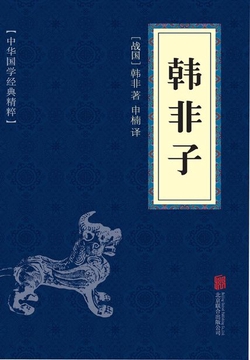
For contemporary readers, the significance of reading Han Feizi goes far beyond a single ancient text. It provides an extremely sharp perspective for understanding ancient Chinese political philosophy, organizational management wisdom, and insights into human nature. Han Fei's profound discussions of institutions (law), leadership art (technique), and the basis of power (position) still provoke reflection on the rule of law, leadership, and organizational efficiency. Of course, one should maintain critical thinking when reading and understand it within its specific historical context. This Zhonghua Book Company edition, in the form of complete text, complete annotation, and complete translation, is clearly typeset and very suitable as an entry step for in-depth study or systematic understanding of Legalist thought. It is not only a must-have for lovers of literature and history but also an important reference for those engaged in management, law, or political science research.
Who it's for
A good fit for
- Lovers of literature and history with a strong interest in Legalist thought and pre-Qin philosophy
- Learners who wish to systematically understand ancient Chinese political and management wisdom
- Students and researchers in Chinese, history, philosophy, and related fields at universities
- Management practitioners seeking inspiration for management and leadership from classical wisdom
Not a good fit for
- Readers seeking only light entertainment who lack patience for classical Chinese
- Readers who want quick modern success "secrets" and reject deep thinking
Reading tips
- It is recommended to first read through the translations to build a macro impression of Han Feizi's overall thought and chapter structure, then select core chapters such as "Five Vermin," "Prominent Schools," "Defining the Law," and "Refuting Position" for close reading of the original text and annotations
- When reading, connect with the historical background of the late Warring States period and Qin's unification of the six states, reflect on the practical soil from which Han Fei's theory emerged and its ultimate practical consequences, and absorb it critically
- Read Han Fei's theory of "law, technique, and position" in comparison with related propositions of Confucianism and Daoism to deepen understanding of the pre-Qin intellectual landscape
About the publisher
Zhonghua Book Company is a publisher known for collating ancient texts and academic publishing, with its output centered on Eastern philosophy, culture, classic works, art, and historical reading. Its library contains 532 titles, including Chen Shou's Records of the Three Kingdoms, Guo Qingfan's Collected Commentaries on Zhuangzi, the four-volume Chinese Literature: Four Great Classical Novels, and the two-volume Table of Seal and Clerical Script Forms from Qin, Han, Wei, and Jin. These titles span historical classics, commentaries on the philosophers, classical novels, and philological reference works. Representative authors include Chen Shou, Guo Qingfan, Wu Cheng'en, Shi Nai'an, Cao Xueqin, Luo Guanzhong, Xu Wenwu, and the Hanyu Dazidian character-form group, reflecting a focus on primary sources and scholarly editors. Its publishing character lies in combining authoritative editions and annotated texts with both accessible classics and specialized research. Public information on its fuller catalog is limited; this note describes only the directions evident in the library's holdings.
Contents
- 版权信息
- 前言
- 难 言
- 主 道
- 二 柄
- 扬 权
- 孤 愤
- 说 难
- 备 内
- 内储说上七术
- 内储说下六微
- 外储说左上
- 外储说左下
- 外储说右上
- 外储说右下
- 难 一
- 难 势
- 五 蠹
- 显 学
FAQ
Is this edition abridged? Is it a complete translation?
What is the scholarly level of the annotations and translation? Is it suitable for citation in academic research?
As an ordinary reader, can I understand it without a classical Chinese foundation?
Related on WeRead


Comments
Find this book
This site is an index: you start “Search all sources” in your browser, and the entries it lists all point to third-party sites; please judge their availability yourself.
About the author
Gao Huaping is an author known for editing and interpreting classical Chinese philosophical texts; public information about him is limited, and his nationality, dates of birth and death, and personal background are not confirmed. Judging from the three works recorded in the database, his writing centers on pre-Qin Legalist classics and medieval Buddhist culture. Han Feizi and the edition of Han Feizi in the "Chinese Classics Pocket Library" series are popular-text and exegetical works aimed at general readers who wish to understand Legalist thought. Buddhist Doctrine and Literary Style: Medieval Literature from the Perspective of Buddhist Culture examines medieval literature in connection with Buddhist ideas, reflecting an interdisciplinary approach that bridges philosophy and literature. His works are commonly classified under Eastern philosophy and literary appreciation, combining explanation of original texts with cultural interpretation, and are suitable for readers interested in pre-Qin thought and medieval Chinese literature.
