

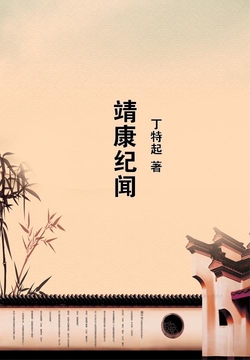
A Record of Things Heard in the Jingkang Era
Tags
Summary
Editor's review
Who it's for
A good fit for
- Readers new to the Jingkang Incident who want first to establish a timeline of events
- Students and researchers of Song history who need annalistic sources to verify the sequence of events
- Readers of traditional culture who enjoy brief documentary classical Chinese and clear, orderly records
- Readers interested in ancient military offense and defense and the process of city falls
Not a good fit for
- Readers hoping for deep causal analysis or evaluation of figures
- General casual readers who prefer vernacular narrative and do not wish to engage with classical Chinese
- Readers expecting detailed war narrative or a complete general-history framework
Reading tips
- Read through once without worrying about full comprehension, grasping the key time nodes—first month, second month, ninth month, tenth month, eleventh month—to build an overall framework.
- On the second reading, use a historical map of the Song dynasty to mark the locations of Taiyuan, Zhending, Huazhou, and the capital mentioned in the book, so as to understand the advance of the offensive.
- Keep paper and pen to excerpt events item by item, forming your own brief chronology, then read it against Jingkang Chuanxin Lu.
- After finishing, retell the order of the year's major events in a few sentences to test whether you have truly grasped the narrative thread of the record style.
Contents
- 版权信息
- 靖康纪闻 序
- 靖康纪闻卷上
- 靖康纪闻卷下
- 靖康纪闻 拾遗
FAQ
Is this book suitable as an introduction to the Jingkang Incident?
The title says "record of hearsay"—are these the author's personal experiences?
Does reading this book require other books?
Related on WeRead



Comments
Find this book
This site is an index: you start “Search all sources” in your browser, and the entries it lists all point to third-party sites; please judge their availability yourself.
About the author
Very little is known about Ding Teqi; his birth and death years, native place and nationality are not clearly recorded, and the available public information is limited. What can be confirmed is only that he is the author of Jingkang Jiwen (A Record of the Jingkang Era), a work classified as a philosophical reading. The book takes the Jingkang Incident as its background and belongs to the genre of notes and records, dealing largely with events and observations of the time and combining historical value with personal commentary. On the evidence available, Ding Teqi's writing does not aim at elaborate rhetoric but favors factual recording and personal judgment, with plain language and clear organization. In later circulation the work was often used as a reference for understanding the social conditions and the mentality of scholars around the Jingkang period, and it thus gained a place in bibliographical tradition. Because relevant sources are insufficient, Ding Teqi's family background, acquaintances and official career cannot be examined in detail; readers should understand his work within the tradition of Song dynasty note-writing rather than relying excessively on the author's life to interpret the text.
