

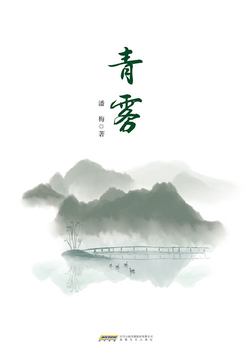
Blue Mist
Tags
Summary
Editor's review
Who it's for
A good fit for
- Readers who love southern regional literature and delicate depictions of everyday life
- Readers interested in family history and narratives of fate from a female perspective
- Those who appreciate literary writing rich in atmosphere and imagery
- Readers seeking calm and reflection amid a fast-paced life
Not a good fit for
- Readers who prefer strong plots, fast pacing, and intense conflict
- Readers lacking patience for regional culture and slow-paced narrative
Reading tips
- Read in a relatively quiet, undisturbed setting to better enter the atmosphere the work creates.
- Pay attention to how the author interweaves natural scenery with characters' psychology, and appreciate the imagery and symbolic meaning of the prose.
- After reading, reflect on the deeper connections between individual fate, the historical background, and regional culture.
About the publisher
Founded in 1984, Anhui Literature and Art Publishing House is a professional literary and art publisher. Its collection of 389 titles spans classic works, essays and miscellaneous writings, Eastern philosophy, folk literature, classical literature and design. Representative books include Lao She's Camel Xiangzi, Laozi's Dao De Jing, Luo Guanzhong's Romance of the Three Kingdoms, and the Shakespeare drama collection featuring Hamlet, King Lear, Macbeth and Othello, with Zhu Shenghao's translations adding luster to the series. Its author resources range from classic Chinese and foreign writers such as Lao She, Laozi, Luo Guanzhong and William Shakespeare to translators and authors including Zhu Shenghao, Li Chensen and Liang Sicheng. The publisher is characterized by its balance of Chinese and foreign literary classics with traditional culture titles, combining scholarly value with popular reading. Public information is limited, and the above is based mainly on the books in the collection.
Contents
- 版权信息
- 序言
- 一
- 二
- 三
- 四
- 五
- 六
- 七
- 八
- 九
- 十
- 十一
- 十二
- 十三
- 十四
- 十五
- 十六
- 十七
- 十八
- 十九
- 二十
- 二十一
- 二十二
- 二十三
- 二十四
- 二十五
- 二十六
- 二十七
- 二十八
- 二十九
- 三十
- 三十一
- 三十二
- 三十三
- 三十四
- 三十五
- 三十六
- 三十七
- 三十八
- 三十九
- 四十
- 四十一
- 四十二
- 四十三
FAQ
What story does Green Mist mainly tell?
What is Pan Mei's writing style like?
Is the book's tone heavy or warm?
Related on WeRead

Comments
Find this book
This site is an index: you start “Search all sources” in your browser, and the entries it lists all point to third-party sites; please judge their availability yourself.
About the author
Pan Mei: publicly available information is limited, and at present it is known only that one work by this author, Qing Wu (Green Mist), survives and is classified as a social novel. Existing sources provide no clear information about the author's life, place of origin, education, or period of writing, so it is difficult to sketch a complete personal trajectory or literary path. As for Qing Wu, its positioning as a social novel suggests that the writing tends to observe real life and depict human relations and social manners, rather than relying on fantasy or legend. Social novels usually emphasize the authenticity of characters' circumstances and the presentation of the spirit of the times, from which readers may infer that Pan Mei's narrative may give weight to everyday details interwoven with personal destiny. Since only this one work is held in the collection, the full picture of her style, the range of her subjects, and any changes in her writing cannot be judged, nor can it be confirmed whether she wrote under other pen names or produced other works. Given the scarcity of materials, an introduction to Pan Mei can only take Qing Wu as its clue and regard her as an author who entered readers' view through social themes, while the rest of her life and creative background await further public information.
