

Green Orange
Tags
Summary
Editor's review
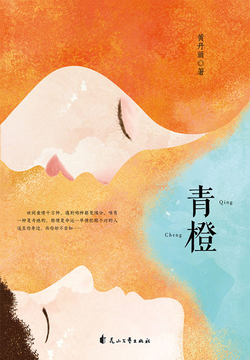
In literary terms, Green Orange is most commendable for its precise grasp of the adolescent psychological state. The author avoids the clichés of youth literature, instead portraying with restrained and sincere strokes the many contradictions the protagonist faces while growing up: ideals versus reality, friendship versus betrayal, the self versus others' expectations. These contradictions are not unique to adolescence but are dilemmas everyone experiences to some degree while growing up.
Published by Huashan Literature and Art Publishing House, the book maintains a high standard in both binding design and content quality. Huang Danli's writing has a distinctive texture—neither overly ornate nor flat—conveying the subtle emotions of adolescence just right. This work is especially recommended to readers who look for emotional resonance in their reading; it is not merely a story about youth but a mirror reflecting the essence of growing up.
Who it's for
A good fit for
- Literary readers who enjoy delicate emotional writing and coming-of-age themes
- Young readers currently experiencing or recalling adolescence
- Readers interested in narrative from a female perspective
- Readers seeking emotional resonance and self-reflection
Not a good fit for
- Readers who prefer fast pacing and strong plot
- Readers expecting a traditional romance story pattern
Reading tips
- Read in a quiet setting and immerse yourself in the emotional flow between the lines
- Reflect on it in light of your own growing-up experiences
- Take notes on passages that resonate with you
About the publisher
Huashan Literature and Art Publishing House is a local literature and art publisher whose main publishing focus is literary and artistic works, covering categories such as classic works, philosophical readings, social sciences, foreign literature, Eastern philosophy, and applied psychology. Judging from the books in the database, the house publishes modern literary classics such as Xiao Hong's The Story of Hulan River, as well as Aisin Gioro Yu Yun's "Yu Laoshi Speaks" series and titles from the "People and Classics" series, including The Great Learning and The Commentary on the Xici of the I Ching, with an emphasis on interpreting traditional classics. In foreign literature, it offers Michael Cunningham's The Hours, Hemingway's The Snows of Kilimanjaro, and Dave Pilkey's Dog Man series. Its authors include Xiao Hong, Aisin Gioro Yu Yun, Chen Jiong, Dave Pilkey, Michael Cunningham, and Wang Jiaxiang. Its publishing character lies in balancing literary classics, interpretations of traditional culture, and translations of foreign literature, forming a diverse reading structure for general readers. Public information is limited, and the above focuses on the publishing directions reflected by the books in the database.
Contents
- 版权信息
- 第一章 可青的谜之约会
- 1
- 2
- 3
- 4
- 5
- 6
- 7
- 8
- 第二章 你是我最深的心事
- 1
- 2
- 3
- 4
- 5
- 6
- 7
- 8
- 9
- 10
- 11
- 12
- 第三章 我不愿让你一个人
- 1
- 2
- 3
- 4
- 5
- 6
- 7
- 8
- 9
- 10
- 11
- 第四章 想简简单单爱
- 1
- 2
- 3
- 4
- 5
- 6
- 7
- 8
- 9
- 10
- 11
- 第五章 年龄是一道天沟
- 1
- 2
- 3
- 4
- 5
- 6
- 7
- 8
- 9
- 10
- 11
- 12
- 第六章 假如给我九天假期
- 1
- 2
- 3
- 4
- 5
- 6
- 7
- 8
- 9
- 第七章 放手是最后的依赖
- 1
- 2
- 3
- 4
- 5
- 6
- 7
- 8
- 9
- 10
- 第八章 飞鸟和鱼相爱
- 1
- 2
- 3
- 4
- 5
- 6
- 7
- 8
- 9
- 10
- 第九章 幸福来得太沉重
- 1
- 2
- 3
- 4
- 5
- 6
- 7
- 8
- 9
- 10
- 第十章 最痛的纪念品
- 1
- 2
- 3
- 4
- 5
- 6
- 7
- 8
- 9
- 尾声 谢谢你,遗忘我
FAQ
What is the book mainly about?
What are the characteristics of the author's writing style?
What age group is the book suitable for?
Related on WeRead

Comments
Find this book
This site is an index: you start “Search all sources” in your browser, and the entries it lists all point to third-party sites; please judge their availability yourself.
About the author
Huang Danli is an author about whom limited public information is available, and two of her works are currently included in this collection. Judging from her representative works Qing Cheng and Food Talk Through the Four Seasons: The Finest Flavors Hidden in the Changing Seasons, her writing spans two directions: social fiction and food writing. The former, categorized as social fiction, suggests an attention to real life and human relationships; the latter uses the changing seasons as a thread to connect food with the flavors of human life, carrying a quality of everyday observation and emotional writing. Her texts tend to start from daily experience, seeking resonance among food, seasons, and the fate of characters, with subjects that are plain and close to readers. Because basic information such as dates of birth and death and nationality is not yet available, a full picture of her creative output is difficult to outline, and the existing works mainly show her sustained interest in the details of life and social reality. They are suitable for readers interested in contemporary life writing and food-themed works.
