

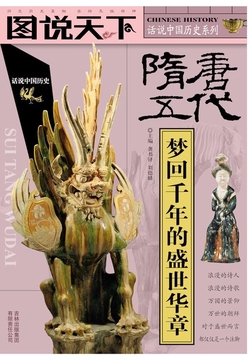
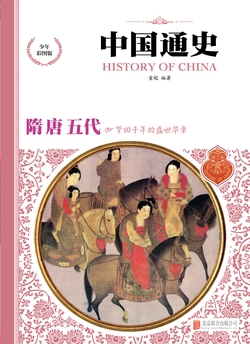
Sui, Tang and Five Dynasties
Tags
Summary
Editor's review
The book's core value lies in its clear organization and well-judged integration of narrative and historical analysis. It moves beyond the traditional framework of dynastic rise and fall, weaving together the evolution of political institutions, shifts in the economic order, the process of ethnic integration, and changes in culture and thought. It reveals why the Sui-Tang era became a peak of Chinese civilization and how the Five Dynasties and Ten Kingdoms served as a crucial transition to the Tang-Song transformation. Its analysis of the equal-field system and the two-tax law, its discussion of the social impact of the civil-service examination, and its portrait of cosmopolitan Chang'an help readers see through surface events to the deeper interaction between institutional design and the spirit of the age. Especially valuable is the authors' treatment of complex issues from the late Tang to the Five Dynasties—regional military governors, the decline of aristocratic clans, and the transformation of the literati—which balances expertise with accessibility and builds a three-dimensional, dynamic historical picture.
As a work of popular history, the book is concise and plain in style, with apt explanations of key concepts. Although it covers many figures and events, it keeps clear priorities and avoids triviality. It is like a key that opens the first door for readers who wish to understand medieval China in depth and offers reliable guidance for further exploration.
Who it's for
A good fit for
- General readers with an initial interest in medieval Chinese history (Sui, Tang, and Five Dynasties) who want a systematic overview
- Students at the secondary or university level who need supplementary historical background and a reliable aid
- Reflective readers who like to explore the connections among institutions, the economy, and society and culture in historical change
- Enthusiasts of history who want authoritative scholars' works combining reliability and readability
Not a good fit for
- Readers seeking highly dramatized, novelistic historical narrative
- Lovers of illustrated histories expecting many rare images or photographs of artifacts
Reading tips
- While reading, consult the Sui-Tang and Five Dynasties sections of Tan Qixiang's Historical Atlas of China to build a sense of geographical space
- Pay special attention to the summary discussions at the end of each chapter, where the authors' historical insight is concentrated
- Read alongside Sun Yinggang's History of the Sui, Tang, and Five Dynasties or Hagitani Yasunori's The Splendid World Empire to appreciate different historical perspectives
About the publisher
Jilin Publishing Group Co., Ltd. focuses on fine fiction, social sciences, literary appreciation, history, classical poetry and classical literature, with 1,141 titles in the library. Representative books include Dan Simmons's science fiction novels Hyperion and The Fall of Hyperion, Freud's works on psychology and society such as The Ego and the Id and Group Psychology, and classical literature ranging from Laozi and Zhuangzi, Romance of the Three Kingdoms and Three Hundred Poems of the Tang, Song and Yuan Dynasties to Lü Simian's A General History of China. Its authors include Dan Simmons, Freud, Laozi, Lü Simian, Hengtang Tuishi, Pan Zhenhua, Li Yi and Guan Shanming, reflecting a balance between translated works and domestic editions. Public information is limited; the above is based on the library's holdings.
Contents
- 版权信息
- 前言
- 隋朝
- 01 国丈登基
- 02 秉公执法的赵绰
- 03 独孤后独霸后宫
- 04 杨广篡位
- 05 名臣高颎
- 06 迂诞诗人薛道衡
- 07 炀帝修运河
- 08 巡游江都
- 09 长白山前知世郎
- 10 瓦岗英雄
- 11 炀帝之死
- 唐朝
- 12 晋阳起兵
- 13 洛阳之战
- 14 猛将尉迟敬德
- 15 玄武门之变
- 16 房谋杜断
- 17 天可汗
- 隋唐壁画艺术
- 18 一代诤臣
- 19 贞观之治
- 20 名将李靖
- 21 布衣宰相
- 22 文成公主入藏
- 23 玄奘西行
- 24 明君的选择
- 25 高宗废后
- 26 贪得无厌许敬宗
- 27 千古一女皇
- 唐代金银器
- 28 残忍的酷吏
- 29 国老狄仁杰
- 30 “模棱两可”苏味道
- 31 文章取幸宋之问
- 32 姑侄相争
- 33 救时宰相
- 34 宁移南山不改判
- 35 开元盛世
- 36 一行与《大衍历》
- 37 唐大和尚
- 38 口蜜腹剑
- 39 谪仙人
- 40 长生殿上两心许
- 唐代乐舞
- 41 绝域之战
- 42 渔阳鼙鼓动地来
- 43 洒泪马嵬驿
- 44 张巡守睢阳
- 45 颜杲卿骂贼完忠
- 46 诗圣杜甫
- 47 隐士李泌
- 48 郭子仪的保身之道
- 49 被刺杀的宰相
- 50 拜相倡俭的杨绾
- 51 段秀实治军
- 52 永贞革新
- 53 写诗致祸的刘禹锡
- 辉煌的书法
- 54 李愬雪夜袭蔡州
- 55 欲为圣明除弊事
- 56 胡儿能唱琵琶篇
- 57 牛李党争
- 58 甘露之变
- 唐代茶文化
- 59 一生襟袍未曾开
- 60 心机深沉的唐宣宗
- 61 张议潮收复河西
- 62 我花开时百花杀
- 63 酒仙皮日休
- 64 吃人魔王秦宗权
- 65 孤家寡人唐昭宗
- 唐三彩
- 五代
- 66 全忠不“全忠”
- 67 “随风倒”张全义
- 68 生子当如李亚子
- 69 不认父亲的刘皇后
- 70 儿皇帝石敬瑭
- 71 刘知远建后汉
- 72 郭威称帝
- 73 “长乐老”冯道
- 74 开国息兵“田舍翁”
- 75 韩熙载的夜宴
- 76 做个词人真绝代
- 77 “白马三郎”王审知
- 78 柴荣的北伐
- 79 花蕊夫人的悲歌
- 五代绘画
- 帝王世系表 隋·唐·五代
- 历史年表
FAQ
Is the book's narrative style more academic or more popular?
How does the book evaluate emblematic figures such as Wu Zetian, Emperor Xuanzong of Tang, and Zhu Wen?
Is this book suitable as a first book on Sui-Tang and Five Dynasties history?
Related on WeRead


Comments
Find this book
This site is an index: you start “Search all sources” in your browser, and the entries it lists all point to third-party sites; please judge their availability yourself.
About the author
Liu Delin, about whom limited public information is available, appears from the works in the library to be an author focused on popular Chinese history readings. His works are mainly historical in subject and commonly classified as history readings. The library holds ten of his works, covering the Three Kingdoms, Western and Eastern Jin, and Northern and Southern Dynasties; the Sui, Tang, and Five Dynasties; the Spring and Autumn and Warring States periods; the Qin and Han dynasties; the Qing dynasty; the Yuan dynasty; and the Liao, Western Xia, and Jin. Many belong to the "Talking About Chinese History" series. He tends to narrate by historical stage, organizing dynastic changes, figures and events, and social conditions into coherent, readable chapters. His language is accessible and readability-oriented, making his books suitable for general readers who want a systematic understanding of China's historical development. His writing proceeds from specific dynasties and periods, with a clear structure and steady output in popularizing historical knowledge, offering beginning readers the convenience of reading in chronological order.
Gong Shuduo (1929–2011) was a Chinese Marxist historian and educator from Quanzhou, Fujian. He was a professor at the School of History, Beijing Normal University, and served as vice president of the Chinese Historical Society, president of the Beijing Historical Society, and convener of the History Discipline Review Group of the State Council Academic Degrees Committee. He devoted himself to the study of modern Chinese history and modern cultural history, and edited works including Modern Chinese History, A General History of Chinese Culture, and A History of Qing Neo-Confucianism, exerting a profound influence on the field. His popular history books cover dynasties such as the Sui, Tang and Five Dynasties, the Three Kingdoms and Jin, Qin and Han, the Spring and Autumn and Warring States periods, Song, Yuan, Ming and Qing, written in a concise and plain style with clear historical context, and also touch on topics related to Eastern philosophy. Thirty-two of his works are held in the collection, spanning both academic research and public outreach.
