

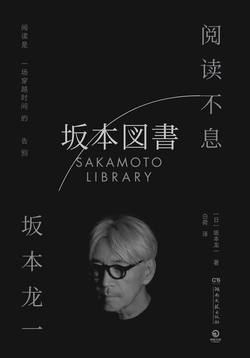
Endless Reading
Tags
Summary
Reading is a farewell that crosses time.
In this book, let us meet Ryuichi Sakamoto again through reading.
He was a man who lived for books.
In 2017, he built "Sakamoto Library."
Now, Ryuichi Sakamoto's private library opens to the public in written form for the first time.
In this book, Ryuichi Sakamoto shares with readers his reading experience, his past encounters with authors, and his reading taste through 36 beloved works selected from his personal library.
The book includes Natsume Sōseki, Derrida, Bresson, Tarkovsky, Ozu Yasujiro, Kurosawa Akira, Oshima Nagisa, Bada Shanren, and others.
Specially included is an exclusive interview with Ryuichi Sakamoto — "Sakamoto Library in 2023."
Readers can read about Ryuichi Sakamoto, shortly before his death, chatting about the 10 books he was reading and his thoughts on life and reading.
This book is Ryuichi Sakamoto's last signed work. Through the text, wander through Ryuichi Sakamoto's private library!
Editor's review
The editor believes the book's charm lies in its "anti-climactic" texture. Sakamoto's writing, like his music, is restrained, precise, and rich in negative space. He does not attempt to offer any answers about "how to succeed"; instead, he keeps raising fundamental questions about the nature of art and the human condition. For example, he explores the "thingness" of sound and considers how music can carry memory and time; he discusses reading as an important way to resist the flood of information and preserve spiritual independence. These reflections transcend the music world and have universal intellectual value.
For readers, reading this book is more like quietly sitting in on a wise man's musings and monologues at different stages of life. It does not offer easy entertainment but invites readers to join a serious and pleasurable intellectual ramble. The hunger for knowledge, concern for the world, and almost exacting sincerity toward creation shown in the book are another precious gift Ryuichi Sakamoto left the world besides his musical legacy.
Who it's for
A good fit for
- Music fans and art lovers interested in the thought and philosophy behind Ryuichi Sakamoto's music
- Creative professionals seeking cross-disciplinary inspiration and concerned with art, technology, and social issues
- Readers who appreciate introspective, restrained, and philosophically rich essays
- Deep readers who want to rethink the meaning of reading and learning in a fragmented age
Not a good fit for
- Readers expecting a complete personal life story or gossip about Ryuichi Sakamoto
- Those seeking practical music-writing techniques or quick-success formulas
Reading tips
- There is no need to read the pieces in order; start with any essay or conversation that interests you and feel the flow of his thought
- As you read, try recalling Sakamoto's representative works (such as the scores for Merry Christmas, Mr. Lawrence and The Last Emperor) and sense the affinity in temperament between his writing and his music
- The book touches on concepts from music, literature, philosophy, physics, and other fields; do not worry when you encounter unfamiliar material—treat it as an opportunity to expand the boundaries of your understanding
About the publisher
Hunan Literature and Art Publishing House is a publisher known for its literary titles, with a catalogue spanning foreign literature, world classics, classical Chinese literature, essays and miscellaneous writings, and mystery and detective fiction. Judging from the more than 1,100 books in the database, the press publishes foreign classics such as Crime and Punishment, Snow Country, The Complete Sherlock Holmes and Letter from an Unknown Woman, as well as Chinese classical and modern literary works including Lu Xun's Wandering and A Madman's Diary and Wu Jingzi's The Scholars. In terms of translators and authors, translations by Cao Guowei and Tan Jinghua appear in its foreign literature titles, and the authors involved include Dostoevsky, Kawabata Yasunari, Conan Doyle and Zweig. Its publishing character lies in introducing Chinese and foreign literary classics side by side, balancing popular and serious works and attending to both readability and literary value. Public information is limited; the above is a brief overview based solely on the books in the database.
Contents
- 版权信息
- 万物的声音
- 罗伯特·布列松
- 夏目漱石
- 雅克·德里达
- 小津安二郎
- 黑泽明
- 大岛渚
- 八大山人
- 李禹焕
- 九鬼周造
- 欧内斯特·费诺罗萨
- 福冈伸一
- 武满彻
- 尼古拉·A. 涅夫斯基
- 工藤进
- 安德烈·塔可夫斯基
- 桥元淳一郎
- 奥野健男
- 侯孝贤
- 杨德昌
- 中上健次
- 约翰·凯奇
- 上田正昭
- 卡洛·罗韦利
- 斋藤幸平
- 安富步
- 村上龙
- 今西锦司
- 米切尔·恩德
- 石川淳
- 乌苏比·萨科
- 藤原辰史
- 詹姆斯·C. 斯科特
- 冈田晓生
- 丹尼尔·奎因
- 安彦良和
- 大仓源次郎
- 2023年的坂本图书
- 坂本龙一年表
- 后记
FAQ
How is this book different from Ryuichi Sakamoto's autobiography Music Is Freedom?
Can I understand this book without a music background?
Is the content outdated because some of it dates from earlier years?
Related on WeRead


Comments
Find this book
This site is an index: you start “Search all sources” in your browser, and the entries it lists all point to third-party sites; please judge their availability yourself.
About the author
Ryuichi Sakamoto is a creator best known for his music, and his writing carries a distinctly personal mark as well. Public information about him is currently limited, and only one of his works is included here: the essay collection Endless Reading. This introduction therefore focuses on the subjects and style of that book. Judging from its title and its classification as essays and miscellaneous writings, the work takes reading as its theme and has the character of personal essays, recording the author's travels through the world of books and his reflections on them. The prose is composed and restrained, attentive to feeling and detail rather than systematic argument. Readers familiar with the temperament of his music will find this quiet, introspective and texturally careful manner of expression unsurprising. Because sources are limited, his life, education and awards are not discussed here; readers may approach his essay writing through Endless Reading.
Bai He is an author about whom limited public information is available; the library currently holds only one work under this name, Reading Without End. Classified as essays and miscellaneous writings, the book can be judged by its title and category to center on the theme of reading, and may also touch on the everyday feelings and reflections that accompany a life among books. Because records of the author's life, nationality, and creative background are lacking, outside knowledge of this author remains very limited, and the writing style and overall profile await further material. Reading Without End, as the only work currently known, is the main entry point for understanding Bai He's writing, and readers may sense the author's tone and interests in handling the subject of reading. On the available evidence, Bai He is an author who writes about the experience of reading in an essayistic style; though the output is small, the work offers the field of essays and miscellaneous writings a sample that attends to reading itself.
