

Accountability
Tags
Summary
Editor's review
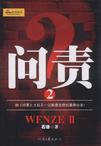
The novel's most outstanding value lies in its de-typecast characterization—whether it is a local official eager to escape trouble, a discipline inspection cadre who sticks to principles, or an entrepreneur caught between conscience and profit, all are given complex, three-dimensional psychological motives. The author does not simply attribute the problem to individual character but seeks to show how a set of operating mechanisms affects and even distorts individual choices. The book's exploration of the tension between "procedural correctness" and "result justice," and its revelation of the dilution of responsibility behind "collective decision-making," both reflect a depth of thought that transcends genre fiction.
In terms of reading experience, the novel is well paced, with the unraveling of the investigation and the interspersed character recollections complementing each other, maintaining suspense while providing reasonable emotional groundwork for key turns. One slight regret is that some professional scenes are presented in somewhat abbreviated detail, but this does not diminish the overall narrative force. For readers concerned with the governance challenges of contemporary China's social transition, this book offers an entry point for reflection that combines real-world reference with literary imagination.
Who it's for
A good fit for
- Readers interested in contemporary Chinese political ecology and the logic of grassroots governance
- Literary enthusiasts who enjoy stories exploring the interaction between institutions and human nature
- Readers seeking to go beyond surface plot and focus on the deeper logic of how society operates
- Practitioners working in public administration or law-related fields
Not a good fit for
- Readers expecting pure officialdom power struggles or wish-fulfillment plots
- Readers completely unfamiliar with and unwilling to engage with narratives set within the system
Reading tips
- Can be read alongside recent reports on public incidents to appreciate the mirroring relationship between fiction and reality
- Pay attention to the fates of secondary characters, who often embody the author's concern for those on the margins of the system
- As you read, consider: if you were in the protagonist's position, what choice would you make?
About the publisher
Founded in 1989, Qunyan Publishing House has long been committed to publishing academic and educational books for mid- and high-level readers, and has built up a certain presence in Eastern philosophy, classical literature, and classic works. Representative titles available in the database include Records of the Grand Historian, Dream of the Red Chamber, Selections of Refined Literature, Complete Song Ci, Strange Tales from a Chinese Studio, Record of Daily Knowledge, Taiping Huimin Hejiju Fang, and The Collected Works of Wang Yangming, covering common categories such as ancient poetry, medicine, and examinations. Its author resources include Sima Qian, Cao Xueqin, Xiao Tong, Li Shan, Pu Songling, and Gu Yanwu. The press also offers distinctive series such as the Biographical Series of the China Democratic League and the Historical Documents Series of the China Democratic League, and publishes research on historical documents, biographies, memoirs, and textbooks and academic works by League members. Public information is limited, and its overall publishing scale and complete catalogue require further verification.
Contents
- 第一章:不速之客(上)
- 第一章:不速之客(下)
- 第二章:大麻烦(上)
- 第二章:大麻烦(下)
- 第三章:“土特产”(上)
- 第三章:“土特产”(下)
- 第四章:枪伤?(上)
- 第四章:枪伤?(下)
- 第五章:一石二鸟(上)
- 第五章:一石二鸟(下)
- 第六章:不得不走的棋(上)
- 第六章:不得不走的棋(下)
- 第七章:迷雾渐开(上)
- 第七章:迷雾渐开(下)
- 第八章:瞬息万变(上)
- 第八章:瞬息万变(下)
- 第九章:以大局为重(上)
- 第九章:以大局为重(下)
- 第十章:罪魁祸首(上)
- 第十章:罪魁祸首(下)
- 第十一章:四面楚歌(上)
- 第十一章:四面楚歌(下)
- 第十二章:最后一班岗
- 尾声
FAQ
How is this book related to Provincial Party Standing Committee?
Is the content too heavy or depressing?
Is this book suitable for young readers?
Related on WeRead



Comments
Find this book
This site is an index: you start “Search all sources” in your browser, and the entries it lists all point to third-party sites; please judge their availability yourself.
About the author
Xu Kaizhen, born in Gansu in 1966, is a contemporary Chinese novelist and a contracted writer with the Gansu Provincial Literature Academy. He previously served as a government secretary and a deputy general manager of a state-owned enterprise before resigning from public office in 2002 to devote himself to writing, an experience that gave him close insight into the workings of officialdom and state-owned enterprises. His works are mostly drawn from real social life, commonly categorized as social fiction, fine fiction, and war and military fiction. Representative works include The Political and Legal Secretary, The Provincial Party Committee Team, Crackdown on Organized Crime, and Past Events in Liangzhou. In 2011 he ranked 22nd on the sixth Chinese Writers Rich List, and several of his works have been adapted for film and television. The library holds 30 of his works, noted for their realistic observation and narrative tension.
