

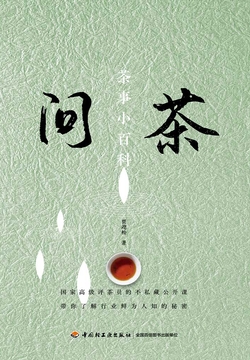
Inquiring About Tea
Tags
Summary
Editor's review
Who it's for
A good fit for
- Readers with a budding interest in Chinese tea culture who seek a systematic humanistic perspective
- Lovers of lifestyle aesthetics and literary arts who find spiritual solace in tea and reading
- Readers interested in cross-disciplinary writing (such as music and tea) who appreciate distinctive literary beauty
- Urban dwellers wishing to practice contemplation and introspection amid busy daily life to enhance their quality of life
Not a good fit for
- Readers seeking a practical manual with detailed tea brewing steps, varietal identification, or market purchasing guidance
- Readers expecting rigorous academic scholarship or strongly dramatic narrative fiction
Reading tips
- Best enjoyed with a cup of light tea, experiencing the colors, aromas, and flavors described by the author in sync with the text
- Need not be read in order; choose chapters by mood, treating the book as a series of tranquil prose vignettes
- After reading, try recording your own tea-tasting moments, combining the book's insights with personal experience
About the publisher
Shanghai Music Publishing House focuses on music and dance books and textbooks, with a brand identity built around piano literature and music classics. Its catalogue of about 592 titles includes categories such as film and television and theory. Representative works include the Norton series on music history by period—Twentieth-Century Music, Romantic Music, Classical Music and Baroque Music—as well as Feinberg on the Art of Piano Playing, A History of European Music and Beethoven's Symphonies: An Artistic Vision. Its contributors include authors and scholars such as Philip Downs, Leon Plantinga, Robert Morgan and Richard Hoppin, along with translators and scholars Liu Danni, Chen Hongduo, Gan Fangmeng and Liang Qing. The press emphasizes translations of Western music scholarship while also supporting Chinese-language writing on music history and theory, giving its list a core strength in period histories, style histories and performance art; public information on other areas is limited.
Contents
- 版权信息
- 作者简介
- 作品简介
- 乐队编制
- 问茶
- 正文一
- 正文二
- 正文三
- 正文四
- 正文五
FAQ
Is this book suitable for complete beginners to tea?
Does the book cover specific tea origins or brand recommendations?
How does the author's musical background manifest in the book?
Related on WeRead


Comments
Find this book
This site is an index: you start “Search all sources” in your browser, and the entries it lists all point to third-party sites; please judge their availability yourself.
About the author
Wu Na is an author about whom limited public information is available. Two works are currently known under her name: Asking About Tea (Wen Cha) and Poetic and Picturesque Zhejiang (Shihua Zhejiang). Judging from the titles and the common classification, her writing centers on tea culture and regional humanities. Asking About Tea points to tea, its flavors, and the pleasures of life surrounding it, while Poetic and Picturesque Zhejiang turns to the landscapes, scenery, and cultural life of Zhejiang, showing a clear spirit of travel and observation. Within the database her works are grouped under film and television, suggesting these subjects may be presented through moving images or cross-media forms rather than as purely textual books. Since no reliable records of her birth and death dates, nationality, education, or career are available, no speculation is made here. Based on the existing works, Wu Na's writing tends toward a combination of cultural documentary and local scenery, conveying aesthetic feeling through specific places and objects. Her work may appeal to readers interested in tea culture, the regional culture of Jiangnan, and visual expression.
