

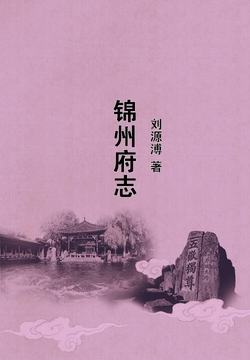
Gazetteer of Jinzhou Prefecture
Tags
Summary
Editor's review
Who it's for
A good fit for
- University faculty and researchers in western Liaoning local history and Northeast history
- Local gazetteer and cultural-history workers in Jinzhou, Huludao, Panjin, and nearby areas
- Readers tracing family genealogies or the evolution of place names
- Deeply interested enthusiasts of western Liaoning's history and culture
Not a good fit for
- General leisure readers seeking light stories or popular history
- Beginners without classical Chinese reading ability who are unwilling to consult reference works
Reading tips
- Read the table of contents, editorial principles, and preface first to understand the format and scope, then search by topic.
- Read alongside modern maps and administrative-division materials, noting differences between historical and current place names.
- Select sections such as officials, taxes and corvée, and notable persons according to research needs; do not read page by page.
- Look up unfamiliar official titles and place names in dictionaries as you go and take notes for later citation.
About the publisher
Founded in 1989, Qunyan Publishing House has long been committed to publishing academic and educational books for mid- and high-level readers, and has built up a certain presence in Eastern philosophy, classical literature, and classic works. Representative titles available in the database include Records of the Grand Historian, Dream of the Red Chamber, Selections of Refined Literature, Complete Song Ci, Strange Tales from a Chinese Studio, Record of Daily Knowledge, Taiping Huimin Hejiju Fang, and The Collected Works of Wang Yangming, covering common categories such as ancient poetry, medicine, and examinations. Its author resources include Sima Qian, Cao Xueqin, Xiao Tong, Li Shan, Pu Songling, and Gu Yanwu. The press also offers distinctive series such as the Biographical Series of the China Democratic League and the Historical Documents Series of the China Democratic League, and publishes research on historical documents, biographies, memoirs, and textbooks and academic works by League members. Public information is limited, and its overall publishing scale and complete catalogue require further verification.
Contents
- 版权信息
- 序
- ●目錄
- ●序
- ○錦州府志序
- ○河西志序
- ○序
- ●修志姓氏
- ●錦州府志圖
- ●輿地圖
- ●醫巫閭山圖
- ●府城圖
- ●府署圖
- ●廳署圖
- ●府學圖
- ●圖記
- ●錦州府志卷一
- ○星野
- ○沿革
- ○疆域
- ○形勢
- ○山川
- ○風俗
- ●錦州府志卷二
- ○名勝
- ○古蹟
- ●錦州府志卷三
- ○城池
- ○公署
- ○學校
- ●錦州府志卷四
- ○社甲
- ○驛鋪
- ○關梁
- ○坊表
- ○寺廟
- ○陵墓
- ○漏澤園
- ●錦州府志卷五
- ○地畝
- ○戶口
- ○糧稅
- ○徭役
- ○經費
- ○物產
- ●錦州府志卷六
- ○公式
- ○秩祀
- ○籩實
- ○豆實
- ○簠實
- ○簋實
- ○豋實
- ○鉶實
- ○賓興
- ●錦州府志卷七
- ○軍實
- ○邊防
- ●錦州府志卷八
- ○職官
- ○名宦
- ●錦州府志卷九
- ○薦辟
- ○科貢
- ○武階
- ○忠節
- ○孝義
- ○宦蹟
- ○學術
- ○隱逸
- ○列女
- ○流寓
- ●錦州府志卷十
- ○御製
- ○記
- ○序
- ○賦
- ○詩
- ●跋一
- ●跋
FAQ
Is this book suitable for readers with no classical Chinese background?
What present-day areas does the region covered in the book include?
Can this book be used for genealogy or place-name research?
Related on WeRead


Comments
Find this book
This site is an index: you start “Search all sources” in your browser, and the entries it lists all point to third-party sites; please judge their availability yourself.
About the author
Liu Yuanpu, about whom public information such as his life and nationality is limited, is known primarily for his work in compiling local gazetteers. Two works by him are held in the collection: Jinzhou Fu Zhi and the traditional-character edition of the same title, which are in fact different editions or title forms of a single gazetteer. The book belongs to the genre of local gazetteers and covers the administrative history, geography, customs, local products, notable figures, and literature of the Jinzhou area, making it an important source for the study of local history in Northeast China. Liu Yuanpu's writing follows the gazetteer format, emphasizing the compilation and arrangement of source materials in a plain style with little literary embellishment. Such works are usually classified as classics and historical reading, and are of reference value for understanding the social conditions of the Jinzhou region in the Qing period. Due to the loss of historical records, further details of his life remain to be discovered.
Sun Chengxiu is an author about whom little verifiable public information is available; details such as his place of origin, dates of birth and death, and educational background are not clearly recorded. What is known is that a work titled Jinzhou Prefectural Gazetteer is attributed to him, and it is commonly classified as a historical reading. A prefectural gazetteer is a form of local history that typically records a region's administrative evolution, geography, cities and government offices, taxation and population, notable figures, and literature, making it an important source for studying regional history. Through this work, readers can learn about the local development and social conditions of the Jinzhou area. Owing to the lack of reliable records concerning the author's life and the circumstances in which the book was compiled, it is difficult to assess his writing style or scholarly influence with certainty; Jinzhou Prefectural Gazetteer is best regarded as a reference work of local historical documentation, and its compilation process and source value await further investigation.
