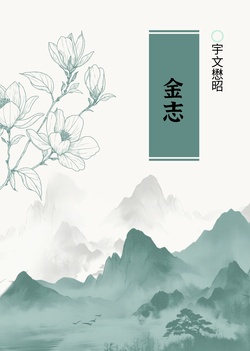
Records of the Jin cover

Records of the Jin

Rating 4.2
Word count
5K words
Chapters
17

Tags

Summary

Chinese traditional culture has a long intellectual history, marked by a high degree of originality, inventiveness, and literary quality. Early forms of thought are highly distinctive, and the religious theology, classical texts of Chinese medicine, ancient military strategy, Confucian, Daoist, Buddhist, and Hundred Schools thought, feng shui and metaphysics, the Twenty-Four Histories, and customs and local gazetteers are all broad and profound in content. This "Essence of the Classics of Chinese Studies: Original Texts" series preserves the appearance of the original books and focuses on preserving and transmitting traditional Chinese thought and culture. By reading the literary essence left by ancient sages, readers can cultivate their temperament and subtly appreciate the classics of Chinese studies.

Editor's review

This book is one of the "Essence of the Classics of Chinese Studies: Original Texts" series, written by Yuwen Maozhao and published in 2024. The series aims to preserve the appearance of the original books and focuses on preserving and transmitting traditional Chinese thought and culture, covering a broad range of fields such as religious theology, classical texts of Chinese medicine, ancient military strategy, Confucian, Daoist, Buddhist, and Hundred Schools thought, feng shui and metaphysics, the Twenty-Four Histories, and customs and local gazetteers. As one volume in this series, this book offers readers an entry point for encountering traditional texts in their original form and is suitable for readers who wish to experience the literary and intellectual qualities of the Chinese studies classics within limited time. Its value lies not in providing modern academic annotation or vernacular translation, but in presenting the original appearance of the text so that readers may appreciate for themselves the literary essence left by ancient sages. It is best read with an attitude of understanding and appreciation; there is no need to read every part, and chapters may be chosen according to personal interest. For readers who wish to study Chinese studies systematically but lack experience in reading original texts, this book can serve as a bridge for initial contact, but it should be used together with other annotated editions or introductory materials to better understand the content. Overall, this is a reader that emphasizes cultural preservation and transmission and is suitable as a desk reference for dipping into as an introduction to Chinese studies.

Who it's for

A good fit for

  • General readers with a preliminary interest in traditional Chinese culture who wish to encounter the original classics of Chinese studies
  • Readers of history and literature who enjoy browsing original texts and do not rely on modern translations or annotations
  • Readers who need a desk reference on Chinese studies for occasional daily reading
  • Readers who wish to cultivate their temperament through classic texts and experience the charm of traditional literature

Not a good fit for

  • Beginners in Chinese studies who need detailed vernacular translation and academic annotation
  • Specialist readers who wish to study a particular field systematically (such as Chinese medicine or military strategy)
  • Researchers who prefer modern scholarly editions or collated editions

Reading tips

  1. There is no need to read the whole book; begin by browsing the table of contents and choosing chapters of interest.
  2. Keep a notebook while reading and jot down terms or concepts that are difficult to understand, then look them up afterward.
  3. Read alongside comparable anthologies of Chinese studies to appreciate the differences between the original appearance and scholarly editions.
  4. Read a short section at a fixed time each day, focusing on persistence and appreciation rather than reading speed.

Contents

  1. 版权信息
  2. 初兴本末
  3. 初兴风土
  4. 男女冠服
  5. 婚姻
  6. 饮食
  7. 皂隶
  8. 浮图
  9. 道教
  10. 科条
  11. 赦宥
  12. 屯田
  13. 田猎
  14. 兵制
  15. 旗帜
  16. 车伞
  17. 服色

FAQ

Does this book include vernacular translation and annotation?
According to the materials, this series aims to preserve the appearance of the original books and focuses on preserving and transmitting traditional thought and culture; no vernacular translation or detailed annotation is mentioned. Readers who need help understanding the text are advised to prepare relevant reference works or consult other annotated editions.
Is this book suitable for beginners in Chinese studies with no background?
It can serve as a preliminary reader for encountering the original classics of Chinese studies, but because it preserves the appearance of the original books and lacks modern annotation, readers with no background may encounter difficulties. It is better used together with introductory books or annotated editions.
What does the "Essence of the Classics of Chinese Studies: Original Texts" series include?
According to the materials, the series covers a broad range of fields including religious theology, classical texts of Chinese medicine, ancient military strategy, Confucian, Daoist, Buddhist, and Hundred Schools thought, feng shui and metaphysics, the Twenty-Four Histories, and customs and local gazetteers. This book is one volume in the series; the specific contents should be based on the actual table of contents.

Related on WeRead

Comments

Find this book

This site is an index: you start “Search all sources” in your browser, and the entries it lists all point to third-party sites; please judge their availability yourself.

About the author

宇文懋昭 Author

Yuwen Maozhao is the author to whom the book Jin Zhi (A Treatise on the Jin) is attributed. Beyond this, very little is known about his life: public sources are extremely limited, and his dates of birth and death, native place, and official career are all unrecorded, while even his nationality cannot be reliably determined. On the available evidence, the only work associated with him is Jin Zhi, a text generally regarded as an account of the institutions and historical events of the Jin dynasty. In traditional catalogues it is usually classified under the history section or among works on regional regimes, while modern readers often place it among classic works. Because no biographical material about the author survives, scholars citing the book can usually discuss only its content and editorial structure, and cannot reconstruct the circumstances of its compilation or the author's personal standpoint. The name Yuwen Maozhao therefore survives chiefly through Jin Zhi; readers wishing to understand him should begin with that book's record of Jin institutions and events and consult it alongside related historical sources, so as to form a careful judgment of its value and limitations.

Top rated in the same category