

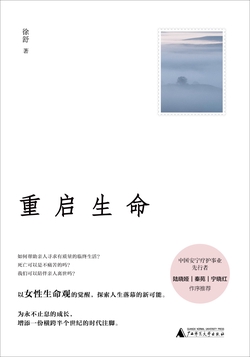
Restarting Life
Tags
Summary
Editor's review
From an editor's professional perspective, the book's value lies first in the authenticity and rarity of its subject. Writing in the first person, the author candidly and sensitively records the entire process from diagnosis to treatment to recovery; this "writing by someone who lived it" is especially precious among books on similar subjects. It does not deliberately dramatize suffering; instead, in a calm, restrained voice, it lays before readers the dual trauma of body and mind, the hope and helplessness of the medical process, and the smallness and resilience of the individual within a vast medical system. The book's discussion of modern medical technology, doctor-patient relationships, family support systems, and personal willpower rises above a mere record of illness to the level of social observation and philosophy of life.
Second, the author's writing has a "diagnostic" clarity and sensitivity. She not only describes symptoms and feelings but tries to analyze the physiological, psychological, and social mechanisms behind them. This approach keeps the book from becoming an emotional diary of self-pity and makes it a thought-provoking case study of one person's life history. It offers an extremely concrete yet broadly relevant entry point for understanding "illness" as a shared human experience.
The value of reading Restarting Life is, for the healthy, a profound rehearsal regarding vulnerability and resilience; for those in difficulty or who have experienced trauma, it may be a precious source of resonance and reference. It offers no simple inspirational answers but shows a complex process of seeking meaning amid brokenness and rebuilding order amid loss of control. The book reminds us that "restarting" life is not returning to the starting point but moving toward a different, perhaps clearer future, bearing scars and insights.
Who it's for
A good fit for
- Readers interested in illness narratives and life-writing nonfiction
- People going through major life transitions or difficulties, seeking resonance and inner strength
- Thinkers concerned with medical humanities, doctor-patient relationships, and social support systems
- Readers who appreciate calm, sensitive, reflective nonfiction writing
Not a good fit for
- Readers seeking light entertainment or purely fictional stories
- Readers who feel strong discomfort with or avoid detailed descriptions of illness and medical procedures
Reading tips
- Set aside continuous, quiet reading time and follow the author's narrative pace to experience her inner journey deeply
- While reading, reflect on your own understanding of health and life rather than rushing to conclusions
- After finishing, revisit the meaning of the title "Restart" and consider what it might mean for you personally
About the publisher
Guangxi Normal University Press is a publisher known for literature, foreign literature and history titles. Its 1,175 books in the database show a solid accumulation in classics and prose collections, including foreign literary works such as Les Fleurs du mal: Annotated Poems of Baudelaire, Snow Country, Dubliners and The Wild Palms, as well as modern prose compilations like The Complete Prose of Zhou Zuoren. History and philosophy also hold a notable share, with titles such as Running Dogs: Clerks and Runners in Qing County Yamen and The History and Thought of the Taiping Heavenly Kingdom reflecting attention to Qing local administration and modern history. In art literature there is the 16-volume Ten Bamboo Studio Painting and Calligraphy Manual. Its author resources include foreign writers Charles Baudelaire and Yasunari Kawabata, translators and annotators Liu Nanqi and Zou Bo, and scholars such as Zhong Shuhe, Bradly W. Reed and You Chenjun. As public information is limited, this characterization is based only on the books in the database, which together present a profile balancing Chinese and foreign literary classics with academic works in the humanities and social sciences.
Contents
- 版权信息
- 献词
- 推荐序1
- 推荐序2
- 推荐序3
- 自序
- 第一章 我对死亡的认知——从无所畏惧到惊恐无助
- 1 小孩子起初是不害怕死亡的——死亡是游戏
- 2 真正接触死亡是从小动物的死亡开始的
- 3 儿时,令我印象深刻的人类死亡
- 4 僵尸与厉鬼的故事,让天不怕地不怕的我谈“死”色变
- 5 老董太太死了,我的猫也死了
- 6 家庭和社会对死亡的污名化
- 第二章 现实中,很多人未能善终
- 1 姥姥死在医院的走廊里
- 2 用机器维持姨父的生命——不肯放手之痛
- 3 三姨选择自主控制死亡进程
- 第三章 母亲坦然面对癌症,却没逃过痛苦的死亡
- 1 她的生命她做主
- 2 帮妈妈完成心愿
- 3 身体逐步衰弱,特别依赖家人
- 4 生命末期将至,刺激母亲的求生欲
- 5 妈妈的第一次病危通知与生存奇迹
- 6 一段美好时光
- 7 妈妈身体断崖式恶化
- 8 再次病危,被剧痛折磨
- 9 来不及告别
- 10 什么都不是我们想要的——悔恨与自责
- 11 不想像妈妈那样死
- 第四章 我的至暗时刻
- 1 自责和负罪感
- 2 没有让父亲与母亲告别所导致的结果
- 3 我们被深埋内心的悲伤击垮
- 4 我也得了癌症,以及意外“收获”
- 5 寻找更好的死亡方式——遇见“海医”安宁
- 第五章 生死教育是一场救赎
- 1 王扬老师的生死教育心理课
- 2 与母亲的告别仪式
- 第六章 生死教育对我的滋养
- 1 生死教育课启发我思考生命与死亡
- 2 学习芳香心灵呵护,修炼内心
- 3 读书、参加各平台的学习
- 4 每一位临终患者都是我的老师
- 第七章 我的癌症复发了?
- 1 疫情期间发现异常
- 2 自救、住院治疗
- 3 去医院复查——被“判”晚期乳腺癌
- 4 为死亡做点准备
- 第八章 好好爱自己
- 1 心理层面的滋养——自我疗愈
- 2 好好爱自己,给自己灵性关怀
- 第九章 用安宁理念送父亲安然离世
- 1 父亲未完成的心愿
- 2 父亲的临终
- 第十章 墓地还是大海
- 第十一章 活成自己想要的样子
- 1 修复关系,与家人和解
- 2 从爱好中获得滋养与快乐
- 后记
FAQ
Is the book too heavy or sad?
Do I need a medical background to understand this book?
How is this book different from common "inspirational recovery stories"?
Related on WeRead


Comments
Find this book
This site is an index: you start “Search all sources” in your browser, and the entries it lists all point to third-party sites; please judge their availability yourself.
About the author
Xu Shu is an author about whom only limited public information is available. Few details can be confirmed, and no clear record has been found regarding nationality, dates of birth and death, or an English name. One work by this author is held in the collection: the nonfiction book Restarting Life. Judging from the title and its classification as nonfiction, the book is likely to center on turning points, difficulties, and fresh beginnings in life, with a strong emphasis on personal observation and factual recording. Nonfiction of this kind is usually based on personal experience or real events and values authentic detail and plain narration, so it may be inferred that Xu Shu's writing tends to present themes through concrete experience rather than fictional elaboration. Because only this one work is currently available for reference, it is difficult to judge the author's overall creative trajectory or stylistic development, or to assess influence in literary circles. Readers who wish to learn more about Xu Shu may do so by engaging with the text of Restarting Life.
