

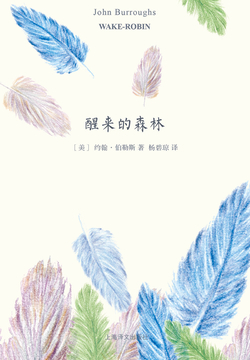
The Waking Forest
Tags
Summary
Editor's review
In the editor's view, the core value of this book lies in the 'immersive' way of knowing nature that it offers. Burroughs teaches you not only to 'look' at birds with your eyes but also to 'listen' to the forest with your ears—the trill of the bluebird, the ethereal flute song of the hermit thrush, the drumming rhythm of the woodpecker... He turns each bird's song, habits, season, and place of appearance into poetic prose, so that the act of reading itself becomes a natural initiation. This kind of writing breaks down the barrier between people and the wild, transforming readers from passive spectators into participants who can perceive nature's subtle pulses.
Literarily, Burroughs's prose is graceful and unhurried, combining the rigor of a naturalist with the sensitivity of a poet. The nature he depicts is not a remote wilderness far from human habitation but an accessible 'second nature' interwoven with rural life and personal memory. For readers living in modern cities who long to reconnect with nature, this perspective is especially healing and illuminating. The translation is fluent and preserves the literary flavor and factual accuracy of the original to the greatest extent; the edition from Shanghai Translation Publishing House is reliable in quality. Reading Wake-Robin is a 'stroll' of the mind; it can awaken our dormant perception of nature and teach us anew to find wonder and beauty in ordinary things.
Who it's for
A good fit for
- Readers eager to escape urban noise and find solace in nature through words
- Beginners with a budding interest in birdwatching or natural history who hope for a humanistic guide
- Literature lovers who enjoy graceful, tranquil, and thoughtful nature essays
- Parents or educators who hope to cultivate children's perception of nature and aesthetic sensibility
Not a good fit for
- Utilitarians seeking quick bird-identification guides or purely practical handbooks
- Readers expecting intense plots or highly dramatic narratives
Reading tips
- Read in seasonal order, following the author's pen through a full year of the forest's cycle and feeling the rhythm of time.
- Slow down while reading, and even try reading aloud certain passages that describe birdsong to appreciate the musical beauty of the prose.
- Pair the reading with simple local birdwatching; comparing the book's descriptions with real experience will double the reward.
About the publisher
Shanghai Translation Publishing House is a Chinese publisher oriented mainly toward translation and publishing. Its publications cover foreign literature, world classics and classic works, as well as social culture, folk literature and classical poetry. The database contains 2,618 titles, including Never Let Me Go, Les Misérables (2 volumes), Don Quixote (illustrated collector's edition), The Complete Comedies of Molière (4 volumes), The Complete Novels of Kafka (3 volumes), The Collected Works of Dostoevsky (9-volume set), Reason and Persons, and Oedipus Rex (Translation Classics). Its author resources include foreign writers such as Kazuo Ishiguro, Victor Hugo, Cervantes and Molière, as well as translators such as Zheng Kelu, Sun Jiameng, Li Jianwu and Zhang Kun. The publisher has brands such as "Translation Classics Selections" and "Translation Documentary," and emphasizes translated works in foreign literature and the humanities and social sciences, while also publishing bilingual dictionaries and foreign-language educational books. Public information is limited; the above is based on the book information in the database.
Contents
- 版权信息
- 河边本导言
- 序言
- 第一篇鸟儿归来
- 第二篇铁杉林中
- 第三篇阿迪朗达克山
- 第四篇鸟巢
- 第五篇春都观鸟
- 第六篇桦山漫游
- 第七篇蓝鸲
- 第八篇自然之邀
- 附录 鸟类索引
FAQ
What are the similarities and differences between this book and Fabre's Souvenirs Entomologiques?
Can I understand this book without any birdwatching experience?
How is the edition and translation quality of this book?
Related on WeRead
Comments
Find this book
This site is an index: you start “Search all sources” in your browser, and the entries it lists all point to third-party sites; please judge their availability yourself.
About the author
Public information about John Burroughs is limited, and only one of his works, The Awakening Forest, is currently included in the collection. Judging from this work, Burroughs belongs to the category of essay and miscellaneous writers, and his writing centers on nature and the forest. His tone tends toward observation and essayistic record, leading readers into the woodland world and letting them feel the subtle changes of seasons and living things. This kind of nature essay often does not rely on plot, but rather presents the author's observations and feelings in plain language, giving readers a reading experience close to nature. As his representative work, The Awakening Forest broadly reflects this writing orientation and offers a glimpse of Burroughs's creative profile as someone who attends to nature and takes pleasure in writing about it. Because biographical information remains insufficient, more materials are still needed to fill in the full picture of his life and work.
