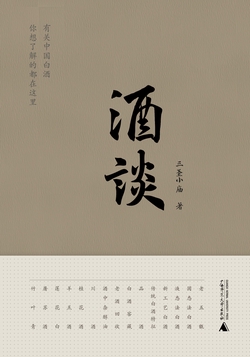
Wine Talk cover

Wine Talk

Rating 3.6
Word count
148K words
Chapters
53
ISBN
9787559836663

Tags

Summary

Wine Talk is a collection of essays on Chinese wine culture. It offers a detailed introduction to the culture of Chinese baijiu—its production techniques, tasting and appraisal, and historical origins—and also examines and reflects on the problems currently seen in the domestic baijiu market, such as the recycling of old liquor, exaggerated claims by distilleries, and old wine in new bottles. In addition, from such subjective perspectives as drinking snacks, drinking companions, and post-drinking reflections, it vividly depicts one by one the wine towns, wine people, wine pleasures, and wine lore, reflecting the true temperament of those who love wine. The book is both professional and literary, accessible yet profound, lively and engaging. It popularizes baijiu culture and helps readers fully understand Chinese wine culture.

Editor's review

This is a collection of essays steeped in the spirit of wine, and the author is clearly someone who truly understands and loves it. The book moves from brewing techniques and the appraisal of aroma types to the chaos of the market, then settles into drinking snacks, drinking companions, and post-drinking thoughts, combining expertise with temperament. What is valuable is that it does not endorse liquor companies: it speaks plainly about old-liquor recycling, exaggerated promotion, and old wine in new bottles, with a well-judged balance that neither sacrifices professional judgment nor lapses into indignation. The sections on wine towns and wine lore have a relaxed tone, reading like the casual talk of an old drinker, with interest beyond mere knowledge. The book is accessible yet profound, easy to follow even without a tasting background, and suitable for reading over a meal or before bed. If you have drunk baijiu but cannot explain what is good about it, or want to understand the tricks behind the labels on the shelf, this book offers a plain and useful framework for judgment.

Who it's for

A good fit for

  • General readers interested in Chinese baijiu culture who want to understand basic techniques and appraisal
  • Consumers who drink regularly but lack systematic knowledge and hope to build a framework for judgment
  • Readers who enjoy food and drink essays and prefer writing that combines knowledge with temperament
  • People in catering, liquor retail, and similar fields who need to know the basics of baijiu

Not a good fit for

  • Readers who do not drink at all and have no interest in wine culture
  • Readers expecting a strictly academic monograph or industry research report
  • Readers looking for specific brand purchase recommendations or investment advice

Reading tips

  1. Read the sections on techniques and appraisal first to build a framework, then read about market chaos and wine people and lore; understanding will be smoother.
  2. Treat the chapters on drinking snacks and drinking companions as leisure reading, to dip into before bed or before a meal, without rushing.
  3. When reading the section on market chaos, compare it with liquor advertising you have seen and practice making independent judgments.
  4. Readers who do not drink can skip the tasting details and focus on cultural origins and personal stories; they will gain just as much.

Contents

  1. 版权信息
  2. 引言
  3. 老五甑
  4. 一
  5. 二
  6. 三
  7. 四
  8. 迷航
  9. 固态法白酒
  10. 液态法白酒
  11. 新工艺白酒
  12. 品酒物语
  13. 话说从头
  14. 少喝点,喝好点
  15. 一
  16. 二
  17. 三
  18. 四
  19. 五
  20. 传统白酒的显著特征
  21. 白酒窖藏概要
  22. 老酒回收
  23. 闲谈酱香及其他
  24. 一
  25. 二
  26. 三
  27. 四
  28. 酒中杂醇油
  29. 川酒
  30. 雾里看花
  31. 一
  32. 二
  33. 三
  34. 四
  35. 五
  36. 六
  37. 世人皆醒我独醉
  38. 白酒小作坊
  39. 桂花酒
  40. 药问五难
  41. 渔家傲
  42. 羊羔酒
  43. 莲花白
  44. 屠苏酒
  45. 竹叶青青
  46. 海棠无香
  47. 荷叶粥
  48. 到底意难平
  49. 一次别离
  50. 人在旅途
  51. 春风佐酒三两杯
  52. 往往醉后
  53. 后记

FAQ

Will readers who know nothing about wine have trouble with this book?
Not much trouble. The author deliberately writes accessibly, explaining techniques and appraisal in everyday language without piling on jargon. Complete beginners can start with chapters on drinking snacks and drinking companions, first experiencing the lived side of wine culture, then return to the technical knowledge; the barrier to reading will be lower.
Is the book's criticism of the baijiu market extreme?
On the whole it is fairly restrained. The author points out problems such as old-liquor recycling, exaggerated promotion, and old wine in new bottles based on technical and industry common sense, focusing on explaining the reasoning rather than naming and attacking, with a literati irony that does not overstep. Readers can treat it as a consumer warning rather than an industry verdict.
Can this book be used as a baijiu buying guide?
Not directly as a buying guide. It discusses technical principles, appraisal approaches, and market phenomena, and does not offer specific brand recommendations or price advice. What readers gain is a framework for judgment and a sense of caution; actual purchasing still requires information from legitimate channels and one's own taste.
Does the essay form make the knowledge scattered?
There is some sense of scattering, but the book broadly unfolds through techniques, appraisal, market, people, and reflections, so a thread can be followed. The author writes knowledge in an essayistic style, with fragments linked by theme. If readers first look at the table of contents to grasp the framework, then read according to interest, the sense of scattering will be noticeably reduced.

Related on WeRead

Comments

Find this book

This site is an index: you start “Search all sources” in your browser, and the entries it lists all point to third-party sites; please judge their availability yourself.

About the author

三圣小庙 Author

Sansheng Xiaomiao is an author about whom little public information is available; only one work by this name is held in the collection, Jiutan (Talks on Wine). The pen name itself carries a distinctly classical flavor, evoking temples, countryside, and old-time scenery, yet the author's real identity, nationality, and dates of birth and death cannot be confirmed, and should not be guessed at. Based on the available information, the author comes to readers' attention through Jiutan, a work classified among classic titles and centered on wine—a book of talk about wine, or of reflections inspired by it. Writing of this kind usually values wit and insight, favoring an unhurried narrative pace that moves between anecdotes, daily life, and personal reflection, making it suitable for casual reading while offering readers a fuller sense of wine culture. As the only verifiable work to date, Jiutan is the main entry point for understanding this author; a complete picture of the writing style and influence must await further material.

Top rated in the same category