

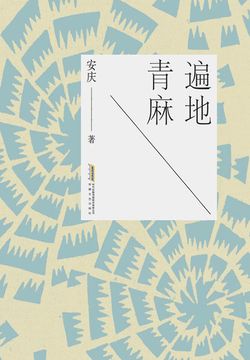
Green Ramie Everywhere
Tags
Summary
Editor's review
Who it's for
A good fit for
- Readers with a strong interest in contemporary Chinese rural literature and narratives of the underclass
- Readers who hope to glimpse a microcosm of social change through family history
- Readers who appreciate restrained, delicate literary language rich in imagery and tension
- Those seeking a quiet, deep reading experience amid a fast-paced life
Not a good fit for
- Readers seeking strong plot, fast pace, and entertaining reading
- Readers with little basic interest in rural themes and historical depth
Reading tips
- It is recommended to read during a relatively quiet period without interruption, so as to enter the slow, calm atmosphere the work creates.
- Pay appropriate attention to the repeated appearances and variations of the core image of "green hemp" in the text, and appreciate its symbolic meaning.
- There is no need to rush the plot; savor the author's fine depiction of scenes, actions, and psychology—that is where the book's essence lies.
About the publisher
Founded in 1984, Anhui Literature and Art Publishing House is a professional literary and art publisher. Its collection of 389 titles spans classic works, essays and miscellaneous writings, Eastern philosophy, folk literature, classical literature and design. Representative books include Lao She's Camel Xiangzi, Laozi's Dao De Jing, Luo Guanzhong's Romance of the Three Kingdoms, and the Shakespeare drama collection featuring Hamlet, King Lear, Macbeth and Othello, with Zhu Shenghao's translations adding luster to the series. Its author resources range from classic Chinese and foreign writers such as Lao She, Laozi, Luo Guanzhong and William Shakespeare to translators and authors including Zhu Shenghao, Li Chensen and Liang Sicheng. The publisher is characterized by its balance of Chinese and foreign literary classics with traditional culture titles, combining scholarly value with popular reading. Public information is limited, and the above is based mainly on the books in the collection.
Contents
- 版权信息
- 在瓦塘呼吸
- 遍地青麻
- 父子花
- 林晓菲的格子铺
- 贵人的罂粟
- 挑花生
- 穿过雨季的前方
- 我们和一头驴的生活
FAQ
What is the story background and main plot of this book?
What are the characteristics of the author An Qing's writing style?
What kind of psychological preparation might be needed for reading this book?
Related on WeRead
Comments
Find this book
This site is an index: you start “Search all sources” in your browser, and the entries it lists all point to third-party sites; please judge their availability yourself.
About the author
Currently, public information about An Qing is limited: the author's name, nationality, and dates of birth and death are not clearly documented and await further verification. According to the library's holdings, only one work appears under the name An Qing, the novel Qing Ma Everywhere (Biandi Qingma), commonly classified as a social novel. On the available evidence, this work is the main window into the author's creative output. Social novels typically focus on the fate of characters and the varied conditions of life in realistic settings, and the title Qing Ma Everywhere carries a distinct flavor of rural life and everyday existence, suggesting that its narrative may be rooted in a specific regional environment and the ordinary experiences of common people. Because materials such as the author's biography and reflections on writing are lacking, a full assessment of An Qing's style and literary influence is difficult; only preliminary inferences can be drawn from the subject matter. Readers who wish to understand An Qing better may begin with Qing Ma Everywhere and discover in the text how the author observes society and portrays characters. Should more information come to light, the author's profile may become clearer.
