

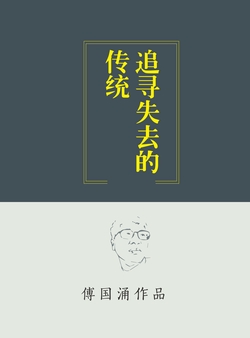
In Search of a Lost Tradition
Tags
Summary
Editor's review
As an independent scholar long devoted to modern Chinese history, especially the history of intellectuals and public opinion, Fu Guoyong combines solid archival research with deep humanistic concern. The figures he portrays, such as Zhang Jiluan, Hu Zhengzhi, and Chu Anping, are not mere historical symbols; placed within specific historical contexts and press practices, they are shown striving to realize the ideal of "scholars discussing politics" amid complex political situations and social change, seeking to influence society, supervise power, and enlighten the public through speech. This discussion moves beyond mere press history or biography and addresses a core question in the construction of modern China's public space—how rational, responsible public discussion is possible.
The book's value lies not only in its rich historical detail but also in its strong contemporary relevance. Through the act of "searching," the author himself implies a tension between the "loss" and "reconstruction" of a certain tradition. For today's readers, reading this book is both a rediscovery of a obscured or simplified history and a profound reflection on intellectuals' social role, the boundaries and responsibilities of speech, and the spirit of public reason. Fu Guoyong's writing is plain and restrained, yet the judgments and concerns within give his work lasting intellectual weight.
Who it's for
A good fit for
- Readers interested in modern Chinese history, especially intellectual and cultural history and press history
- Thinkers concerned with the fate of intellectuals, the public sphere, and freedom of speech
- Readers of literature and history hoping to understand the integrity of Republican-era journalists and the tradition of "scholars discussing politics"
- Professionals in media, publishing, and public writing
Not a good fit for
- Readers seeking light entertainment or novelistic storytelling
- Researchers expecting systematic theoretical construction or rigorous scholarly monographs
Reading tips
- Suggested reading by theme or figure rather than necessarily from cover to cover; consult specific historical background to deepen understanding
- Read alongside Fu Guoyong's other works, such as A Century of Dream-Seeking and Waves Beneath the Pen, for a more complete picture
- Note how the author sketches figures' spiritual character and the mood of the era from primary sources such as newspaper texts, letters, and diaries
About the publisher
Hangzhou Blue Lion Culture & Creative Co., Ltd. is a cultural institution dedicated to planning and publishing books on finance and business. Its publishing focuses on finance and management while also covering social psychology, history, travel and biography, with 130 titles currently in the catalog. Representative books include The Middle Passage, the Boiling Trilogy: China's Internet 1995–2020 and Everyone Is a Product Manager, as well as Fu Guoyong's Lead and Supporting Roles, The Confidence of Literati and Misunderstandings Deep in History, and Wu Xiaobo's What Kind of Monster Is the Official-Merchant? Its authors include Wu Xiaobo, Lin Jun, Hu Zhe, Su Jie, Fu Guoyong and James Hollis, among Chinese and international writers. In terms of publishing style, it emphasizes accessible and case-based writing on business issues while balancing historical and humanistic perspectives. It should be noted that, apart from the catalog information, public materials on its full publishing history and institutional development are limited.
Contents
- 版权信息
- 追寻失去的传统
- 序
- 第一辑
- 风雨百年“苏报案”
- 秋瑾被杀害之后
- “还有一点人味儿”——1919:陈独秀被捕之后
- 《现代评论》:在“三·一八”之后
- 文网恢恢说鲁迅
- 1947年:傅斯年和中国言论界
- 南京《新民报》被封杀之后
- 第二辑
- 黄远生:划过夜空的流星
- 铁肩辣手:邵飘萍之死
- “说人话”和“说真话”:林白水之死
- “报有报格”:史量才之死
- “石不能言月渺茫”——费巩之死
- “一士头颅索不还”——再说费巩之死
- 第三辑
- 王韬:中国报纸“文人论政”第一人
- “梁启超时代”
- 民呼·民吁·民立
- 张季鸾:“文人论政的典型”
- 胡政之:开创百年报业“新路径”
- 王芸生:“文章报国之志”
- 成舍我:“我们这一时代的报人”
- 《生活》周刊与邹韬奋的道路
- 徐铸成与《文汇报》的“黄金时代”
- 俞颂华:无党无派一报人
- 往事如梦——中国言论史上的王造时
- 范长江离开《大公报》
- “文人论政”:一个已中断的传统(代后记)
FAQ
Is this book an academic work or popular reading?
Which historical periods and figures does the book mainly cover?
What prior knowledge is needed to read this book?
Related on WeRead


Comments
Find this book
This site is an index: you start “Search all sources” in your browser, and the entries it lists all point to third-party sites; please judge their availability yourself.
About the author
Fu Guoyong (1967–2025) was a historian, independent writer and education scholar from Yueqing, Zhejiang. He long focused on modern Chinese history, the history of public opinion over the past century, and questions concerning intellectuals, and his writing spans finance, history, culture, biography and travel. Among the eleven of his works held in the library, The Principles of Finance: Collected Remarks of Chen Guangfu examines the ideas and statements of a modern banker; Merchants of the Republic: 1912–1949 looks at the circumstances and choices of Republican-era merchants; Protagonists and Supporting Roles and The Confidence of Men of Letters focus on the roles and spiritual temperament of modern figures; Misunderstandings Deep in History and In Search of a Lost Tradition reflect his concern with distinguishing historical facts and recovering tradition; Discovering Nianbadu (Revised and Expanded Edition) has the character of a local cultural inquiry; and The Collected Works of Fu Guoyong (8 volumes) presents his multi-field writing in a more concentrated form. His prose attends to historical sources and human detail, combining research with readability, and has found readers in the fields of modern history and the history of public opinion. Public information is limited, so his biographical details should not be elaborated upon.
