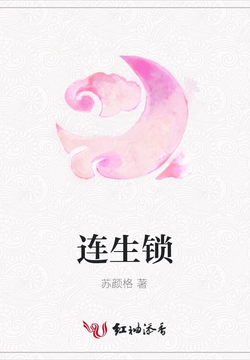
Lian Sheng cover

Lian Sheng

Rating 4.1
Word count
111K words
Chapters
13
ISBN
9787505724730

Tags

Summary

"Liansheng" tells of things that happen only once in a lifetime, and people whose fates become intertwined. Nineteen-year-old Lu Qingye meets Song Ximing, eight years her senior, while working at a restaurant. At that time they are strangers to each other, each with someone else in their heart. Lu Qingye is a law student at a Shanghai university; her father is imprisoned for a crime and her mother is in poor health. Life is hard for Lu Qingye, but she is stubborn by nature, using every possible opportunity to study and earn money. In the summer that soon arrives, Lu Qingye goes to Beijing to take part in a volunteer program for Sino-Japanese cultural exchange, and the person in charge of the program happens to be Song Ximing. This brings them new contact and mutual understanding. Unexpectedly, Lu Qingye has to return home early because of family matters. She next sees Song Ximing because of a exchange program to France. On the way, they travel together to France, and Song Ximing tells Lu Qingye all about his former love Chen Jiuxun, and about that love he was unable to protect. Song Ximing is not as she sees him: born into a wealthy family, he has no freedom, and love is an absurd luxury—yet he is not afraid and still chooses his own path. Lu Qingye is grateful to Song Ximing for giving her so many opportunities and dreams, and at the same time longs to know Chen Jiuxun and is determined to meet her. An nameless attraction is sparked at once—not tragic, not intense, but like a small gnawing, impossible to stop. Two people who were originally unrelated are thus joined together. The road ahead for the two is not smooth. Song Ximing, having known love's failure, inevitably carries psychological scars, and Song's father is even more unwilling to let go easily. Give up and turn away, or keep going? The two of them must ultimately bear their difficulties together.

Editor's review

"Liansheng" is a cultural essay collection that appears light but carries historical depth. Su Zhenshu continues her customary academic temperament and delicate touch, using Kyoto as a stage and, through the perspective of a fictional woman named "Liansheng," tracing hidden threads in the history of Sino-Japanese cultural exchange amid everyday walks, observation, and reading. In the editor's view, the book's value lies not in dramatic plot but in creating an immersive "walking and reading" experience. The author's ingenuity lies in seamlessly weaving personal fragments of life abroad with textual research on modern Japanese sinology, painting and calligraphy, and the history of book collecting, so that historical figures such as Naito Konan and Kano Naoki no longer feel remote. Following the text, the reader seems to stroll through Kyoto's townhouses, libraries, and secondhand bookshops, touching the lingering warmth of history in present-day scenery. The book's reflections on cultural circulation and the transfer of knowledge are especially profound, revealing the complex texture a civilization forms through contact, dialogue, and misreading—highly illuminating for understanding the East Asian cultural community. The volume is elegantly produced, with text and images in dialogue; reading it requires some patience, but the reward is intellectual pleasure and historical insight far beyond that of a travelogue.

Who it's for

A good fit for

  • Readers with a strong interest in Kyoto's history and culture and the history of Sino-Japanese cultural exchange
  • Readers who enjoy cultural essays combining literary beauty with intellectual depth
  • Those who enjoy slow reading and find pleasure in details and textual research
  • Enthusiasts curious about niche subjects such as book history, library collections, and the spread of sinology in Japan

Not a good fit for

  • Readers seeking strong plot and fast-paced storytelling
  • Readers expecting a pure guidebook-style travel guide or personal lyrical travelogue

Reading tips

  1. There is no need to read it in one sitting; it suits casual browsing in spare moments, following the author's pace and savoring slowly.
  2. Reading alongside a map or Kyoto-related visual material can enhance the sense of space and history.
  3. If the many people and events mentioned feel unfamiliar, you may skip over them at first, focusing on the overall atmosphere and line of thought, and look them up later to deepen your understanding.

About the publisher

China Friendship Publishing Company China · Founded in 1983

China Friendship Publishing Company is a comprehensive publisher known for its literary titles, covering classical Chinese literature, foreign literature, folk literature and cultural appreciation. According to the books in the database, its classical list includes celebrated dramas and novels such as The Peony Pavilion, The Romance of the Western Chamber and Strange Tales from a Chinese Studio, as well as note-style classics like Hong Mai's Rongzhai Suibi. In foreign literature it offers translations of Dostoevsky's Crime and Punishment, Kawabata Yasunari's Snow Country and Anne Frank's The Diary of a Young Girl, involving translators such as Zeng Siyi. It also publishes The Complete Literary Works of Lu Xun and titles associated with the "Xue'er Shuguan" editorial group, balancing the collation and popularization of classic texts. Public information on its publishing features and plans is limited; the above is summarized only from the books in the database.

Contents

  1. 版权信息
  2. 第一章
  3. 第二章
  4. 第三章
  5. 第四章
  6. 第五章
  7. 第六章
  8. 第七章
  9. 第八章
  10. 第九章
  11. 第十章
  12. 第十一章
  13. 第十二章

FAQ

How does this book differ from the author's other works, such as "Letters from Kyoto" and "The Deer Comes"?
Compared with earlier works such as "Letters from Kyoto," which lean toward personal life essays, "Liansheng" has a stronger fictional and historical-research character. Through a semi-fictional narrator, "Liansheng," it delves more systematically and focusedly into specialized fields such as the history of modern Japanese sinology and book collecting; its academic and structural qualities are more pronounced, and it can be seen as a deepening and transformation of the author's writing.
Will readers without relevant background knowledge find it difficult?
The author took this into account. Although the specialized knowledge is deep, it is woven into concrete scenes of exploration and personal reflection and told in an accessible way; the prose itself is clear and readable. Even if some figures and events are unfamiliar, it does not prevent appreciation of Kyoto's scenery and the flavor of cultural reflection—it may even inspire further exploration.
How should the book's genre be defined? Is it a novel or an essay collection?
It is a work of nonfiction incorporating fictional elements, perhaps best called "research essays" or "cultural documentary writing." The walks, research, and reflections at its core are real, but the narrator "Liansheng" and some of her experiences contain literary fiction. This technique aims to connect time and space more flexibly and enhance the narrative's appeal and intellectual depth, rather than to create a novel in the traditional sense.

Related on WeRead

Comments

Find this book

This site is an index: you start “Search all sources” in your browser, and the entries it lists all point to third-party sites; please judge their availability yourself.

About the author

苏枕书 Author

Su Zhenshu is an author about whom limited public information is available. Three of her works are currently included in the database: Liansheng, the Tian'gou Library edition of Inoue Yasushi's Collected Works: The Vagabond of Warring States, and Lanshan. Judging from these works, her writing spans social fiction, foreign literature, and youth literature, covering a fairly wide range of subjects: it reflects on social reality and individual circumstances, engages in the editing and translation of foreign literary works, and touches on the experience of youthful growth. Because her dates of birth and death, nationality, education, and awards are not clearly documented, details of her life cannot be reliably described; nevertheless, the existing works already show her interest in and capacity for moving across different literary genres. Through these three works, readers can sense her attention to character emotion and the atmosphere of the times, as well as her relatively delicate and restrained prose style.

More by the same author

Top rated in the same category