

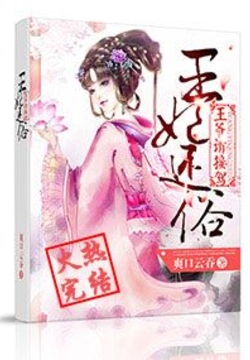
Returning to Secular Life
Tags
Summary
Editor's review
Who it's for
A good fit for
- Readers interested in the spiritual transformation of individuals during periods of contemporary social change
- Literary enthusiasts who appreciate delicate psychological portrayal and a calm narrative style
- Thinkers hoping to draw inspiration from the novel about life choices and the construction of meaning
- Readers concerned with the theme of the collision between traditional culture and modern life
Not a good fit for
- Readers seeking fast-paced, plot-driven entertainment with intense conflict
- Readers with no interest whatsoever in themes of spiritual exploration and inner growth
Reading tips
- It is recommended to read in a relatively quiet, undisturbed environment so as to better immerse yourself in the work's atmosphere and space for reflection.
- While reading, pay attention to the protagonist's subtle psychological changes and the details of his interactions with his surroundings; these are often the key to understanding the characters' behavior and the deeper meaning of the story.
- After reading, you might reflect on the definitions of and connections among 'faith,' 'the secular,' and 'the self' in your own context, which may bring additional insights.
About the publisher
China Publishing Group Digital Media Co., Ltd. takes digital publishing as its main business, with titles spanning traditional medical classics and classical literature. Its catalogue includes medical works such as Treatise on Cold Damage, Essential Prescriptions from the Golden Cabinet, and The Pulse Classic, involving writings by Zhang Ji, Wang Shuhe, Lin Yi, and Zhang Jiebin. In literature, it offers Wu Jingzi's The Scholars and Xiao Hong's Tales of Hulan River, as well as foreign literary translations such as Fu Lei's rendering of Voltaire's Candide. Its publishing focus thus falls roughly into medicine, social fiction, foreign literature, and fine fiction, reflecting a balance between collated ancient texts and general reading. As public information is limited, this summary is based only on the books in the catalogue and draws no further inferences.
Contents
- 版权信息
- 一
- 二
- 三
- 四
- 五
- 六
- 七
- 八
- 九
- 十
- 十一
- 十二
FAQ
What is the main content of this book?
What are the characteristics of Wang Yu's writing style?
Is the tone of this book heavy?
Related on WeRead

Comments
Find this book
This site is an index: you start “Search all sources” in your browser, and the entries it lists all point to third-party sites; please judge their availability yourself.
About the author
Wang Yu is a bestselling Chinese author who studied abroad and earned a master's degree in business administration. His writing covers a broad range of subjects, including personal finance, management, popular science, medicine, politics, and self-improvement. His representative work, The Way of the Wolf: The Wolf Spirit in Life, has appeared on bestseller lists for years and was named one of the ten most influential books in China. He is also the author of nearly one hundred works, among them Money Wars, Learning from History About Life, and A Little Economics in Everyday Life, and twenty-four of his books are included in this catalog. He is known for turning specialized topics into accessible, practical reading, which has won him a wide readership. Public information about the details of his life is limited.
