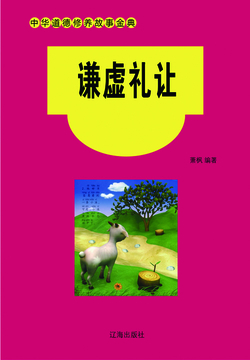
Modesty and Courtesy cover

Modesty and Courtesy

Rating 2.3
Word count
67 words
Chapters
7
ISBN
9787807117001

Tags

Summary

The content of this series has been selected chiefly according to the following principles: (1) Adhere to a critical and inheriting approach, taking the essence and discarding the dross. Neither affirm nor negate wholesale. Maintain abstract inheritance, deductive development, a contemporary footing, and use for our own purposes. (2) Adhere to a systematic and holistic principle. Attend to distribution across historical periods; attend to progressive figures of all ethnic groups; attend to figures at all levels; attend to all sides of figures. Achieve the following: viewing history vertically across five thousand years, forming a line lengthwise; viewing virtue horizontally with emphasis on practice, leaving no aspect uncovered horizontally. (17) Adhere to the principle of using the past for the present and for our own purposes. In exploring resources of virtue, especially explore stories and sayings of ancient figures, and focus on discovering and exploring the traditional public virtue, common virtue, and shared virtue of all classes and ethnic groups; attend to popular character, democratic character, progressiveness, development, universality, and abstractness, without seeking completeness in antiquity or completeness in individuals.

Editor's review

Compiled by Xiao Feng and published by Liaohai Publishing House, Qian Xu Li Rang (Modesty and Courtesy) is a self-cultivation reader centered on traditional Chinese virtues. It explores in depth the core value of modesty and courtesy in personal cultivation, interpersonal interaction, and social harmony. The book is not an academic monograph; in plain language and with historical allusions and real-life examples, it systematically explains the meaning and practice of these two qualities, aiming to offer modern readers a spiritual guide they can refer to. In today's fiercely competitive and strongly individualistic social atmosphere, the book is like a clear stream, reminding us to reexamine the relationship between self and others, and between success and growth. Its content is solid and its argumentation clear, with particular attention to translating ancient wisdom into practicable everyday principles; it is highly practical and thought-provoking. For readers seeking inner peace, hoping to improve interpersonal relationships, or wishing to elevate their personal outlook, this book provides a valuable framework for thought and behavioral reference.

Who it's for

A good fit for

  • Readers hoping to improve personal cultivation and moral awareness
  • Those interested in traditional Chinese virtues and culture
  • Managers and professionals in teams or communities who wish to improve interpersonal relationships
  • Young readers seeking inner peace and focused on spiritual growth

Not a good fit for

  • Readers expecting novelistic plots or strong storytelling
  • Scholars seeking deep academic theory or philosophical systems

Reading tips

  1. Reflect in light of your own experience and connect the book's views with everyday situations
  2. There is no need to finish quickly; reading one short section a day and digesting it is ideal
  3. Read alongside modern books on communication and psychology for a more three-dimensional perspective

About the publisher

Liaohai Publishing House China · Founded in 1996

Liaohai Publishing House is a comprehensive publisher known for textbooks and the collation of ancient works. Its publishing scope covers state-approved textbooks, local curriculum materials, supplementary educational books, and national and local ancient-text compilation projects, while also extending into humanities fields such as Eastern philosophy. Its catalog contains about 4,694 titles, with representative works including the multi-volume Records of the Grand Historian (Shiji), and its author resources include classic writers and works such as Sima Qian and Confucius. Grounded in educational publishing and the transmission of traditional culture, the press maintains sustained investment in ancient-text collation, forming a publishing profile that balances textbooks and scholarship. Due to limited public information, its more specific publishing directions and features require further supplementation.

Contents

  1. 版权信息
  2. 1
  3. 2
  4. 3
  5. 4
  6. 5
  7. 6

FAQ

Is this book preachy moralizing?
It is not empty preaching. The book explains its principles through historical stories and life cases, striving to stay close to reality and provide concrete behavioral reference rather than mere theoretical indoctrination.
Is the content too traditional and out of touch with modern society?
When explaining traditional virtues, the author often analyzes them in the context of modern life, striving to uncover their timeless universal value; they still offer strong guidance for modern interpersonal interaction and workplace cooperation.
Is it suitable as a gift?
It is suitable for friends or younger people who value personal growth and identify with traditional culture—a spiritual gift with good connotations and positive content.

Related on WeRead

Comments

Find this book

This site is an index: you start “Search all sources” in your browser, and the entries it lists all point to third-party sites; please judge their availability yourself.

About the author

Xiao Feng Author · China · 1926–2001

Xiao Feng (1926–2001) was born in Pinglu, Shanxi, and graduated from the Department of Chinese Literature at Peking University in 1946. He worked as a reporter and editor for China Youth Publishing House and the magazine Traveler, taught at Renmin University of China and Beijing Normal University, later served as deputy editor-in-chief and editor-in-chief, and joined the Chinese Writers Association in 1984. He co-edited works such as A Comprehensive Guide to Chinese Tourism, Fifty Famous Travel Essays, and Beautiful China, and published hundreds of essays, travel pieces, and literary reviews. His works span inspirational growth, classic literature, and prose miscellany. The library holds over a thousand of his titles, including selected editions of Lu Xun's works and Les Misérables. Public information is limited, but his writing and editorial work were aimed at general readers and helped popularize classics and promote prose and travel writing.

More by the same author

Top rated in the same category