

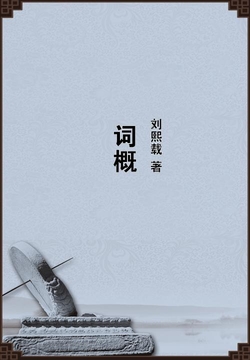
An Outline of Ci Poetry
Tags
Summary
Editor's review
Who it's for
A good fit for
- Readers who have read a certain amount of Tang and Song ci and wish to understand traditional ci criticism
- University students of Chinese studying ancient literary theory or ci studies
- Poetry lovers who enjoy short, note-style criticism and value insight and judgment
- Teachers of Chinese who need supplementary knowledge of the origins and development of the ci genre
Not a good fit for
- Readers with no foundation in reading ci who are new to classical poetry
- Readers seeking a systematic history of ci or line-by-line appreciative explanations
- Researchers who prefer long-form argument and require a rigorous modern scholarly framework
Reading tips
- Begin with famous ci by poets you already know, then compare the relevant comments in the book to appreciate its critical perspective.
- Keep a pen at hand and note the book's judgmental aphorisms; after finishing, review whether you agree.
- Read alongside an anthology of ci or a reference work on ci prosody, and look up prosodic terms as they arise.
- The book is short; read it closely in two or three sittings, leaving time after each for reflection and comparison.
About the publisher
Nanhai Publication Company is a comprehensive publisher known for its literature and arts titles, covering fields such as classical poetry, martial arts fiction, and folk literature. Judging from the more than 1,600 books in the database, the company has released classical poetic works including the Nineteen Old Poems and the Nine Songs, as well as multiple volumes of Huanzhulouzhu's series The Swordsmen of Mount Shu, along with related writings by authors such as Guan Hanqing, Qu Yuan, Zuo Si, and Wang Zhihuan. Its publishing character lies in balancing the organization of classic texts with the dissemination of popular literature, placing poetry anthologies alongside long martial arts novels and presenting a relatively diverse literary profile. Public information is limited, and further details about its editorial practices and series planning remain to be supplemented.
Contents
- 版权信息
- 词概 [清] 刘熙载
FAQ
Can I read Ci Gai directly without any foundation in ci studies?
How should "ci is the study of sound" be understood?
Is this book suitable as an introductory textbook for ci studies?
Related on WeRead



Comments
Find this book
This site is an index: you start “Search all sources” in your browser, and the entries it lists all point to third-party sites; please judge their availability yourself.
About the author
Liu Xizai was a Qing-dynasty literary critic. Public information about his life and official career is limited, and existing accounts rest mainly on his transmitted works. Four of his works are held in this collection: Yigai Cigai, Yigai Ciqu Gai, Shigai, and Cigai, all of which are evaluative studies of poetry, prose, ci, and qu, showing that his scholarly focus lay in the forms, compositional methods, and appreciation of these genres. His criticism usually begins with specific works, distinguishing generic features, tonal and verbal rules, and relative levels of artistic conception; his language is concise and his judgments clear, carrying the systematic awareness and philosophical reflection characteristic of traditional Chinese literary theory. His works are classified under literary appreciation and Eastern philosophy, indicating that his discussions combine aesthetic evaluation with theoretical generalization. Liu Xizai's literary criticism is frequently cited in later ci studies and literary criticism, making him an important reference for understanding the Qing tradition of ci and qu criticism.
