

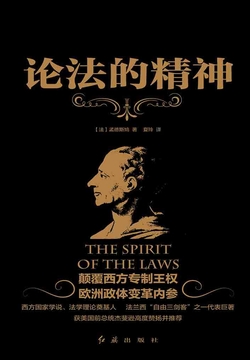
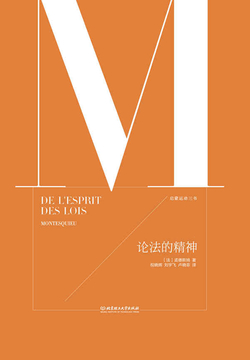
The Spirit of the Laws
Tags
Summary
Editor's review
Who it's for
A good fit for
- Deep readers with a strong interest in political philosophy, jurisprudence, and Enlightenment thought
- Students and researchers in the social sciences seeking to build a foundational theoretical framework
- Thoughtful observers of public issues concerned with the design of social institutions and the logic of how power operates
- Readers hoping to strengthen systematic, interdisciplinary analytical skills
Not a good fit for
- Casual readers looking for light stories or practical tips
- Readers wholly unfamiliar with early modern European history and intellectual background who have no wish to learn about it
Reading tips
- Begin with the translator's preface or an accompanying introduction to grasp the work's historical background and core structure, so as not to get lost in details on a first reading
- Keep notes as you read and try to trace lines such as "law and X"—law and climate, law and trade, and so on—to build your own map of understanding
- You may compare the book's discussion of the classification of governments and the balance of powers with the political practice of contemporary states, while bearing in mind differences in historical context
About the publisher
Red Flag Publishing House focuses on books in current affairs, Party building, finance and economics, and the humanities and social sciences. Its library currently contains 146 titles, covering politics, law, documentary literature, philosophy, biography and management. Representative works include current-affairs and legal-education titles such as A Concise Reader of the History of the Communist Party of China: 1921–2016 and the Study Reader for the Seventh Five-Year Popularization of Law, as well as financial and humanities translations and biographies such as Reminiscences of a Stock Operator, Democracy in America, The Republic and Li Hongzhang. Its authors include Zhang Shiyi, Liu Hu, Jiang Shangqing and Zhong Jie, together with writing groups, while works by foreign authors such as Tocqueville, Plato and Edwin Lefèvre appear in translation. The publisher emphasizes current-affairs and Party-building publishing while also covering finance and the humanities and social sciences through both translations and original works, forming brand series such as the Faith Series and the Interpreting China Series; public information on further details of its publishing characteristics is limited.
Contents
- 版权信息
- 说 明
- 序
- 第一编
- 第一章 普通法
- 第二章 从政体性质直接起源的法
- 第三章 不同政体的原则
- 第四章 教育法要适应政体原则
- 第五章 立法应该与政体原则相统一
- 第六章 民法和刑法的繁简、审判形式和制定刑罚与各种政体原则的后果有什么关系
- 第七章 奢侈、节俭法、妇女地位与各种政体原则的关系
- 第八章 三种政体原则的腐败
- 第二编
- 第九章 法与抵制能力的关系
- 第十章 法与攻击力的关系
- 第十一章 政治制度与确立政治自由的法律之间的关系
- 第十二章 确立政治自由的法与公民的关系
- 第十三章 自由与税收及国库收入多少的关系
- 第三编
- 第十四章 气候之于法律
- 第十五章 气候何以影响民事奴隶法
- 第十六章 家庭奴役行为与气候性质的关系
- 第十七章 为何政治奴役法会跟气候的性质有关
- 第十八章 法与土质的关系
- 第十九章 作为一个民族的普遍精神、习俗和行为原则
- 第四编
- 第二十章 从贸易的性质及特征来看法与贸易的关系
- 第二十一章 从世界贸易的变革来看法与贸易的关系
- 第二十二章 法之于货币的使用
- 第二十三章 法与人口的关系
- 第五编
- 第二十四章 各国宗教及其规条与法律的关系
- 第二十五章 法对各国宗教创建、宗教外事机构的影响
- 第二十六章 法是如何影响受其管制的事物的次序的
- 第六编
- 第二十七章 罗马继承法的根源和发展
- 第二十八章 法国公民法的发生和发展
- 第二十九章 如何制定法律
- 第三十章 法兰克人在法律方面的封建思想与构建君主政体的联系
- 第三十一章 法兰克人的封建法律体系与法兰克君主制发生重大变革之间有何关联
- 附录
- 为《论法的精神》辩护
- 对《论法的精神》的一些解释
- 交予神学院的回答和解释
- 注释
FAQ
How is this book fundamentally different from ordinary books on law?
Can non-specialist readers understand it?
How does Montesquieu set out his idea of the "separation of powers" in the book?
Related on WeRead
Comments
Find this book
This site is an index: you start “Search all sources” in your browser, and the entries it lists all point to third-party sites; please judge their availability yourself.
About the author
Montesquieu (1689–1755) was a French Enlightenment thinker and jurist, and one of the founders of the Western doctrine of the separation of powers and of classical natural law theory. He served as president of the Parlement of Bordeaux and was elected to the Académie française. His major works include Persian Letters, an epistolary work that observes and satirizes social customs and institutions; Considerations on the Causes of the Greatness of the Romans and Their Decline, which examines Rome's rise and fall through political and moral factors; and The Spirit of the Law, which systematically discusses the relations between law and forms of government, geography, and customs. His idea of the separation of powers profoundly influenced modern Western constitutional systems. His works span foreign literature, politics, social culture, military affairs, and social sciences, and are available in Chinese in collected and individual volumes. Public information is limited, but scholars generally regard him as a major political and legal thinker of the Enlightenment.
Xia Ling is an author about whom limited public information is available. The library holds only one work under this name, namely The Spirit of the Laws. Judged by its common classification, the book falls under social culture, suggesting that its writing touches on law, institutions, and social order. On the basis of the available information, Xia Ling's nationality, dates of birth and death, educational background, and professional identity cannot be confirmed, and no English name has been recorded; her life should therefore not be inferred in detail. When reading this work, it is better to focus on the text itself: it discusses the spirit of the laws and the relationship between law and social culture, and belongs to reflective writing on ideas. Since only this one work is held, Xia Ling's writing style and overall body of work cannot yet be fully outlined, and her intellectual context and later writings await further disclosure. This introduction is based on the available bibliographic information and strives to be faithful without fictional additions.
