

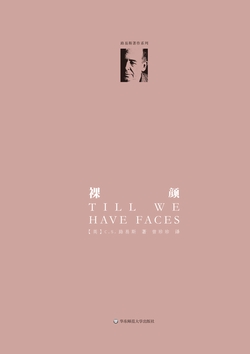
Bare Face
Tags
Summary
Editor's review
Who it's for
A good fit for
- Readers interested in mythological retellings and literary adaptations of classical subjects
- Fans seeking a deeper understanding of C. S. Lewis's thought and the diversity of his writing
- Thinkers who enjoy exploring philosophical questions of faith, doubt, human nature, and the divine within a story
- Literature lovers who appreciate elegant and reflective prose
Not a good fit for
- Readers looking for fast-moving plots, action scenes, or light entertainment
- Readers impatient with first-person interior monologue, psychological analysis, and religious-philosophical metaphor
Reading tips
- It is advisable first to gain a basic familiarity with the original myth of Cupid and Psyche; this will greatly enhance the pleasure of comparison and reflection while reading.
- While reading, pay attention to the 'reliability' of the narrator Orual and consider how her perspective shapes and may distort 'the truth.'
- The density of theological reflection increases in the latter half of the book; slow down and read it against the background of other works by Lewis (such as The Problem of Pain).
About the publisher
Adhering to the publishing purpose of "broad education," East China Normal University Press extends beyond its three main areas of textbooks, academic works and general-interest books, and its catalogue clearly reflects a vision that bridges Chinese and foreign humanities and social sciences. In foreign literature it offers classics such as Yasunari Kawabata's Snow Country and The Old Capital (translated by Chen Dewen), Jane Austen's Pride and Prejudice, and Rilke's annotated edition of The Notebooks of Malte Laurids Brigge (translated by Chen Zao); in architecture, Chen Congzhou's two-volume Appreciation Dictionary of Chinese Gardens; in social psychology, The Social Animal: 12th Edition; and it also includes philosophy titles, traditional-culture works such as the six-volume Paintings for the Protection of Life, and education books. Its authors include renowned Chinese and foreign writers and skilled translators, showing a publishing profile that balances classic translation, scholarly accumulation and public reading. Public information is limited; the above is based only on the books in the catalogue.
Contents
- 版权信息
- 译者序 托梦——梦觉边缘的启示
- 第一部
- 第一章
- 第二章
- 第三章
- 第四章
- 第五章
- 第六章
- 第七章
- 第八章
- 第九章
- 第十章
- 第十一章
- 第十二章
- 第十三章
- 第十四章
- 第十五章
- 第十六章
- 第十七章
- 第十八章
- 第十九章
- 第二十章
- 第二十一章
- 第二部
- 第一章
- 第二章
- 第三章
- 第四章
- 后记
FAQ
What is the connection between Till We Have Faces and The Chronicles of Narnia?
Does this book take an explicit religious stance?
Why is the book titled Till We Have Faces?
Related on WeRead


Comments
Find this book
This site is an index: you start “Search all sources” in your browser, and the entries it lists all point to third-party sites; please judge their availability yourself.
About the author
C. S. Lewis (Clive Staples Lewis) was born in Belfast, Ireland, in 1898 and died in Oxford in 1963. He was a British scholar, novelist and Christian apologetic writer. He served as a fellow of Magdalen College, Oxford, and from 1954 held the Chair of Medieval and Renaissance English at Cambridge. His writing spans fantasy, science fiction, allegory, apologetics and literary criticism: The Chronicles of Narnia build a world of clear moral contrasts through fairy-tale fantasy, The Screwtape Letters examine human nature through an epistolary allegory, The Problem of Pain and The Four Loves explore faith and love, and Of Other Worlds collects his literary essays. His work combines lucid reasoning with fertile imagination and has influenced both general readers and scholars.
Zeng Zhenzhen is an author for whom only limited public information is available. The one work currently confirmed is Naked Face, a book usually classified under foreign literature. Because no clear records have been found regarding her nationality, dates of birth and death, educational background, or writing career, only a brief note on the work itself is possible here. Naked Face appears as a work of foreign literature, tending in subject matter toward the portrayal of characters' circumstances and emotional worlds; its narrative style emphasizes detail and atmosphere, and its language strives to stay close to the inner lives of its characters. Although only this single work has been seen so far, making it difficult to sketch a complete creative trajectory, the classification and the orientation suggested by the title indicate that the author is concerned with the more subtle aspects of human nature, and the work carries a certain spirit of literary exploration. For readers wishing to learn about Zeng Zhenzhen, Naked Face is currently the main text available for reference, while its actual influence and reader reception await the accumulation and verification of further material.
