

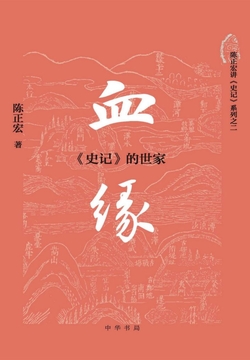
Bloodline
Tags
Summary
Editor's review
From a professional reading perspective, the novel's narrative structure is ingeniously conceived, advancing along multiple threads and organically integrating the perspectives of characters from different generations, preserving the story's layers while enhancing its overall tension. In characterization, the main figures all have complex psychological motivations and trajectories of growth, avoiding the pitfall of flat stereotypes. Especially in handling conflicts within the family, the author does not fall into the simple trap of moral judgment but presents the real dilemmas and choices of human nature under specific historical conditions.
Notably, the novel offers keen observation of changes in family relations during China's social transformation since reform and opening up. The maintenance and deformation of traditional blood ties under the impact of modern values constitute the most thought-provoking part of the book. This discussion transcends the mere family story and rises to a philosophical reflection on cultural inheritance and individual identity.
In literary terms, Blood Relations has a steady, restrained language style and well-controlled narrative pacing, excelling especially in emotional expression. Although some plot arrangements may seem slightly melodramatic, the work overall retains the weighty texture of realism. For contemporary literary readers, this work offers a rare deep-reading experience, satisfying the expectation of a good story while prompting deeper reflection on family and social relations.
Who it's for
A good fit for
- Readers interested in family saga fiction
- Those concerned with the evolution of Chinese society and family relations
- Literary fans who enjoy deep psychological character exploration
- Mature readers seeking emotional resonance and exploration of human nature
Not a good fit for
- Entertainment-oriented readers who prefer fast pacing and strong plot conflict
- Young readers with little patience for family ethics themes
Reading tips
- Read in chapter order and note the gradual unfolding of character relationships
- Pay attention to the interplay between the historical background and the characters' fates
- While reading, reflect on how the meaning of "bloodline" has changed in modern society
About the publisher
Chongqing Publishing House is a comprehensive publisher known for its titles in the humanities, social sciences, literature and arts, with about 940 books in its catalogue. Its publishing areas cover world history, science fiction, foreign literature, architecture and philosophy. Representative titles include Xiang Da's A History of Communications Between China and the West, Liang Sicheng's Rules of Qing-Style Construction, Liu Cixin's The Three-Body Problem II: The Dark Forest and III: Death's End, Ann Rand's The Fountainhead (25th Anniversary Edition), and Brandon Sanderson's Stormlight Archive series. Its authors include Xiang Da, Liu Cixin, Liang Sicheng and Ann Rand. The press has developed distinctive strengths in historical source editing, the introduction and creation of science fiction, the translation of foreign literature, and architecture and philosophy titles, balancing scholarly value with general readership. As public information is limited, this profile outlines its publishing directions based only on the books in the catalogue.
Contents
- 序
- 第一章
- 第二章
- 第三章
- 第四章
- 第五章
- 第六章
- 第七章
- 第八章
- 第九章
- 第十章
- 第十一章
- 第十二章
- 第十三章
- 第十四章
- 第十五章
- 第十六章
- 第十七章
- 第十八章
- 第十九章
- 第二十章
- 后记
FAQ
What is the main narrative thread of this book?
What are the characteristics of the work's literary style?
How long a period does the story span?
Related on WeRead



Comments
Find this book
This site is an index: you start “Search all sources” in your browser, and the entries it lists all point to third-party sites; please judge their availability yourself.
About the author
Wang Yu is a Chinese author known mainly for his full-length novels. Publicly available information about him is limited, and his nationality, dates of birth and death, and educational background are not clearly recorded. Judging from the sixteen works included in the collection, his writing tends to focus on social history and local life, with a clear sense of regional character and historical depth. Representative works such as Tian Sichuan (Filling Sichuan), Kaibu (Opening the Port), Xiang Si Er Sheng (Living Toward Death), Shibati, and Bei (The Stele) either trace the historical processes of migration and urban opening, or portray the ups and downs of ordinary people amid life, death, and change. His style leans toward realism, using specific characters and scenes to carry a long historical span. His works are often classified as quality fiction and social fiction, indicating sustained engagement with long-form narrative and social themes. It should be noted that public information about Wang Yu's personal experience and creative career remains very limited; the above introduction is based mainly on the themes and categories of his collected works.
