

The Toad King
Tags
Summary
Editor's review
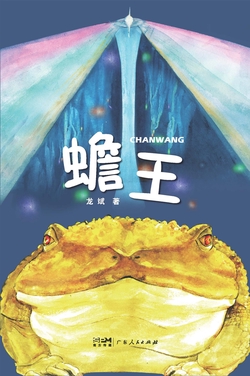
From the perspective of professional reading value, the book’s highlights lie in its successful construction of a symbolic system and its creation of narrative atmosphere. The image of the “toad” is open to multiple interpretations—it can be a totem of primal vitality, a wild force not disciplined by civilization, or a metaphor for greed and transformation in human nature. The author does not stop at the level of the curious, but tries to use this marginalized image to interrogate eternal questions of center and margin, civilization and savagery, conquest and reverence. Its literary style is distinctive, blending the solidity of regional narrative with the sharpness of modern parable; the reading process requires some capacity for symbolic interpretation and patience.
Overall, The Toad King is a literary work that challenges conventional reading experience and merits careful savoring. It may not offer a smooth, fast-paced, entertaining reading experience, but the unique aesthetic world it constructs and the profound questions it raises give it significant reading value for readers seeking intellectual friction and aesthetic innovation.
Who it's for
A good fit for
- Readers interested in the combination of Chinese folk tales of the strange and modern literature, and seeking narrative innovation
- Serious literature enthusiasts who prefer strongly symbolic works with a heavy philosophical bent
- Readers with deep reading expectations for themes such as human nature, power, and the relationship between humanity and nature
- Readers who appreciate literary works with a distinctive language style and high textual density that require repeated savoring
Not a good fit for
- Readers of traditional story-driven fiction who expect light entertainment and fast-moving plots
- Readers less receptive to relatively obscure symbolic narrative and a gritty aesthetic style
Reading tips
- It is advisable to set aside questions of “realism” for the time being and first immerse yourself in the symbolic and atmospheric world the author constructs, experiencing its overall aesthetic impact.
- During reading, pay appropriate attention to the transformations and extensions of the core image of the “toad” in different contexts; this helps in understanding the work’s deep structure.
- After finishing, try reflecting in light of theories of mythic archetypes or ecocriticism; this may yield richer interpretive perspectives.
About the publisher
China Publishing Group Digital Media Co., Ltd. takes digital publishing as its main business, with titles spanning traditional medical classics and classical literature. Its catalogue includes medical works such as Treatise on Cold Damage, Essential Prescriptions from the Golden Cabinet, and The Pulse Classic, involving writings by Zhang Ji, Wang Shuhe, Lin Yi, and Zhang Jiebin. In literature, it offers Wu Jingzi's The Scholars and Xiao Hong's Tales of Hulan River, as well as foreign literary translations such as Fu Lei's rendering of Voltaire's Candide. Its publishing focus thus falls roughly into medicine, social fiction, foreign literature, and fine fiction, reflecting a balance between collated ancient texts and general reading. As public information is limited, this summary is based only on the books in the catalogue and draws no further inferences.
Contents
- 版权信息
- 一、初遇蟾王?
- 二、放生途中的怪事
- 三、企盼的事要实现?
- 四、一个令人无限遐想的洞
- 五、一闯山洞
- 六、太公的秘密
- 七、真相要出现了吗
- 八、二闯山洞
- 九、神秘的猴头鹰
- 十、三闯山洞
- 尾声
FAQ
Is The Toad King a horror novel?
Is this book related to Mo Yan’s Frog?
What is the creative background of the author Long Bin?
Related on WeRead



Comments
Find this book
This site is an index: you start “Search all sources” in your browser, and the entries it lists all point to third-party sites; please judge their availability yourself.
About the author
Long Bin is an author about whom little public information is currently available: his nationality, dates of birth and death, and English name are not clearly recorded. What can be confirmed comes mainly from the two works held in the library. Classified under social fiction, his representative works are The Great Man (Da Renwu) and The Toad King (Chan Wang), which form the main basis for understanding his writing at this stage. Judging from their subject matter, Long Bin's work tends toward realistic social narrative, focusing on how characters are placed within and relate to their social surroundings rather than on purely imaginative writing. Because biographical materials, author statements and reviews are lacking, it is difficult to trace his overall development or the evolution of his style, or to confirm any writing beyond these two works. On present evidence, Long Bin is an author with a modest number of works listed on Chinese book sites, known for social fiction, whose writing deserves continued attention and reading within that category.