

Supreme Impartiality
Tags
Summary
Now to be impartial with the empire—its virtue is great indeed. Extended here, applied there, it is what the myriad people uphold and later ages take as their model. As for the impartiality of ministers: in handling official affairs they do not manage private household matters; within the public gate they do not speak of goods and profit; when administering public law they do not favor relatives; in serving the public and recommending the worthy they do not avoid enemies. Loyal in serving the ruler, benevolent in benefiting those below, extending it through the way of forbearance, acting without partisanship—such were Yi and Lü. Thus their illustrious names endure to this day; this is what is called impartiality.
Editor's review
Who it's for
A good fit for
- Readers studying ancient Chinese political ethics and official admonition literature
- History and literature enthusiasts who need short classical Chinese texts for close-reading practice
- Readers interested in the traditional concept of "gong" and issues of public responsibility
- Teachers and students preparing to discuss the modern transformation of traditional thought on clean governance
Not a good fit for
- Readers expecting a systematic institutional history or a complete compilation of historical sources
- Beginners in classical Chinese who need modern vernacular annotation and sentence-by-sentence explanation
Reading tips
- First read through the whole text and mark where the character "gong" appears, sorting out the levels of the ruler's impartiality and the ministers' impartiality.
- Extract the classical phrases and historical events cited in the text separately, and check their contexts to understand the argumentation.
- May be read alongside the entries on ministers serving the public, organized into itemized notes for easier comparison of different standards of conduct.
- After reading, write a short commentary connecting to contemporary topics of public responsibility, testing the boundaries of transferring the concept.
About the publisher
Jinzhang Book Company (Jinzhang Shuju) was a private publishing and distribution house in Shanghai during the late Qing and early Republican periods, issuing traditional works by lithographic printing. Judging from the 1,194 titles in the collection, its publishing focused on classical poetry, Eastern philosophy, historical reading, traditional Chinese medical texts, and canonical works, along with books on literary appreciation. Representative titles include the poetry and prose collections of Du Fu and Ouyang Xiu; historical works such as the Book of Han and Zizhi Tongjian; classical texts such as the Book of Documents and Mencius; and specialized and literary classics such as Treatise on Cold Damage and Li Sao. Its author resources cover major figures across the ages, including Du Fu, Ban Gu, Sima Guang, Zhang Zhongjing, Qu Yuan, Ouyang Xiu, and Tang Shenwei, reflecting the house's characteristic reliance on traditional scholarship and medical literature while serving general readers. Public information on its early history and operational details is limited, so no conjecture is offered here.
Contents
- 版权信息
- 正文
FAQ
What issue does this text mainly discuss?
Can I understand it without annotations for names and places?
Is it suitable as classroom discussion material?
Related on WeRead
 至公
 剑桥中国秦汉史(公元前221年至公元220年)
 世界佛教通史(第1卷)印度佛教:从佛教起源至公元7世纪
 希腊史:迄至公元前322年
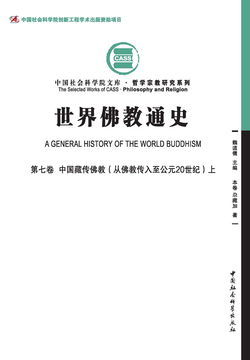 世界佛教通史·第七卷:中国藏传佛教(从佛教传入至公元20世纪)上
Comments
Find this book
This site is an index: you start “Search all sources” in your browser, and the entries it lists all point to third-party sites; please judge their availability yourself.
About the author
Liu Xiang (77 BCE–6 BCE), courtesy name Zizheng and originally named Gengsheng, was a member of the Western Han imperial clan and a scholar of the classics, a bibliographer, and a literary figure. Publicly available details of his life are limited, and even his birth and death years are disputed, yet his place in the history of Chinese bibliography and literature is clear. Under Emperor Cheng he led the collation of the imperial library and compiled the Bielu, a systematic catalogue and edition of court texts, and later generations honored him as the founder of Chinese bibliography. He edited and compiled the Intrigues of the Warring States and the Songs of Chu, helping to preserve both works, and wrote such books as the Xinxu, Shuoyuan, and Lienü Zhuan, which often use historical anecdotes and the words and deeds of figures to expound political and ethical teachings, combining historical value with literary interest. His editorial and compilation work spans literary appreciation, folk literature, Eastern philosophy, and documentary prose, and has greatly aided later understanding of thought and writing from the pre-Qin through the Han period.
