

A General Introduction to Laozi
Tags
Summary
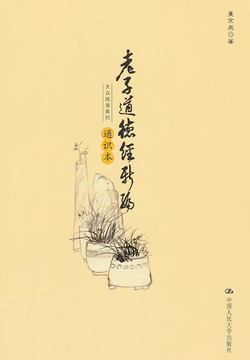
In his General Introduction to the Laozi, Professor Guo Yongbing of the Department of Chinese Language and Literature at Fudan University uses accessible scholarly language and draws fully on transmitted and excavated texts, allowing multiple versions to complement and corroborate one another. On this basis, he carefully unravels such questions as who Laozi was; the nature and essential teachings of the Laozi; how today's readers should read it; its influence on ancient political culture; and how we should choose among the complex textual versions—guiding general readers into the wondrous and mysterious world of the Laozi.
Editor's review
For ordinary readers, the book's greatest value lies in serving as a reliable “map of thought,” helping them avoid the pitfalls of literal-minded reading and over-interpretation and grasp the complexity and many-sidedness of Laozi's philosophy. Guo Yongbing's prose is plain and restrained, avoiding any pretense of profundity, and organically combines textual criticism with philosophical exposition, so that readers naturally deepen their understanding of Laozi's thought through learning “how the Laozi came to be what it is.” Whether as a first guide for beginners or as advanced reference for those with some background, the book offers a solid textual foundation and broad intellectual horizons—an excellent work that withstands repeated reading and reveals new depths each time.
Who it's for
A good fit for
- Readers with a strong interest in ancient Chinese philosophy, especially Daoist thought
- Readers of literature and history who wish to systematically understand the textual origins, core concepts, and scholarly research on the Laozi
- University students in literature, history, and philosophy, for whom it serves as a high-quality introduction and reference for in-depth study of the Laozi
- Readers dissatisfied with popular interpretations who seek more solid scholarly support and rational inquiry
Not a good fit for
- Readers expecting inspirational life lessons or simple success-formula applications
- Readers seeking only fragmented, superficial, speed-read-style familiarity with the Laozi
Reading tips
- Read through the whole book first to gain an impression of the overall framework of Laozi studies, then return to specific chapters alongside the original text of the Laozi
- While reading, pay particular attention to the author's comparative analysis of different versions of the Laozi and reflect on the intellectual-historical significance behind textual differences
- The book involves considerable scholarly discussion; if you encounter difficult points, do not feel obliged to digest them all at once—grasp the core arguments first and return to them as your reading deepens
About the publisher
Zhonghua Book Company is a publisher known for collating ancient texts and academic publishing, with its output centered on Eastern philosophy, culture, classic works, art, and historical reading. Its library contains 532 titles, including Chen Shou's Records of the Three Kingdoms, Guo Qingfan's Collected Commentaries on Zhuangzi, the four-volume Chinese Literature: Four Great Classical Novels, and the two-volume Table of Seal and Clerical Script Forms from Qin, Han, Wei, and Jin. These titles span historical classics, commentaries on the philosophers, classical novels, and philological reference works. Representative authors include Chen Shou, Guo Qingfan, Wu Cheng'en, Shi Nai'an, Cao Xueqin, Luo Guanzhong, Xu Wenwu, and the Hanyu Dazidian character-form group, reflecting a focus on primary sources and scholarly editors. Its publishing character lies in combining authoritative editions and annotated texts with both accessible classics and specialized research. Public information on its fuller catalog is limited; this note describes only the directions evident in the library's holdings.
Contents
- 版权信息
- 编者的话
- “光而不耀”的“巨著”《老子》
- 一 老子是谁
- 1.《史记·老子列传》:疑信之间
- 2.孔子与老聃、老子、老彭、彭祖:历史与传说之间
- 3.“南方之强”与南人的智慧渊源
- 二 《老子》这部书的性质
- 1.《老子》是一部完整的著作还是格言汇抄
- 2.谣谚体箴言的起源与《老子》的性质
- 3.老子站在何种立场创作《老子》
- 三 《老子》要义及要语
- 1.《老子》要义
- 2.《老子》要语
- 四 今天我们如何读《老子》
- 1.为何读《老子》一定要结合出土本
- 2.出土的本子是否有局限
- 3.对于疑难章句的纷纭众说当如何去取
- 4.注意文本中细节差异的合理解释
- 五 有无之间
- 1.从老子到“黄老”
- 2.老子何以与韩非同传
- 3.离用为体的庄列与离体为用的申韩
- 附录 北京大学藏西汉竹书《老子》校定释文
- 参考文献
- 后记
FAQ
How is this book different from other books interpreting the Laozi on the market?
Can I understand this book without a foundation in classical Chinese?
Is this book suitable as an introduction to the Laozi?
Related on WeRead



Comments
Find this book
This site is an index: you start “Search all sources” in your browser, and the entries it lists all point to third-party sites; please judge their availability yourself.
About the author
Public information on Guo Yongbing is limited, and his nationality, dates of birth and death, and full career cannot be confirmed at present. Still, the two works held in the collection offer a rough picture of his writing interests. He focuses on classical Chinese texts and the study of language and writing. His representative work Jinshi You Sheng: Wenxian yu Wenzi Duansxiang ("The Sound of Bronze and Stone: Reflections on Texts and Writing") centers on reflections about documents and script, showing an interest in traditional scholarship such as epigraphy and textual criticism. Laozi Tongshi ("A General Introduction to Laozi") turns to a popular reading of the Daoist classic Laozi, guiding general readers through its intellectual threads. The two books fall under the categories of culture and philosophical reading, suggesting that his writing is both scholarly and accessible: he engages with textual detail while also offering general readers an introductory guide. Overall, Guo Yongbing is an author whose writing centers on traditional Chinese culture and the interpretation of classics; more material is needed to describe the length and style of his works.
