

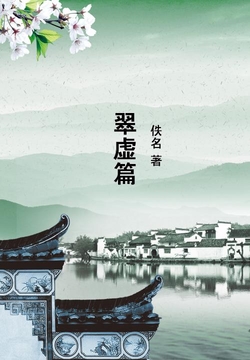
Chapters of the Emerald Void
Tags
Summary
Editor's review
Who it's for
A good fit for
- Academic readers studying Daoist inner alchemy and Song dynasty cultivation thought
- Interested readers with basic knowledge of classical health practices and Daoist culture
- Teachers of religion and culture who need a short inner alchemy primary text as course material
- Practitioners who have read Wuzhen Pian and similar works and wish to extend their reading
Not a good fit for
- General readers with no grounding in Daoist inner alchemy who expect an accessible introduction
- People hoping to learn concrete health cultivation practices directly from this book
- Readers who prefer narrative literature and lack patience for term-dense philosophical texts
Reading tips
- First learn the basic meanings of inner alchemy terms such as lead and mercury, the cauldron and furnace, and the nine turnings, then read the text section by section, avoiding literal misreadings.
- Read alongside kindred inner alchemy works such as the Wuzhen Pian to observe how different authors phrase the same formulas.
- Read only a short passage at a time, then restate its gist in your own words to check that you truly understand rather than skimming.
About the publisher
Nanhai Publication Company is a comprehensive publisher known for its literature and arts titles, covering fields such as classical poetry, martial arts fiction, and folk literature. Judging from the more than 1,600 books in the database, the company has released classical poetic works including the Nineteen Old Poems and the Nine Songs, as well as multiple volumes of Huanzhulouzhu's series The Swordsmen of Mount Shu, along with related writings by authors such as Guan Hanqing, Qu Yuan, Zuo Si, and Wang Zhihuan. Its publishing character lies in balancing the organization of classic texts with the dissemination of popular literature, placing poetry anthologies alongside long martial arts novels and presenting a relatively diverse literary profile. Public information is limited, and further details about its editorial practices and series planning remain to be supplemented.
Contents
- 版权信息
- 翠虛篇
FAQ
Can I understand the Cuixu Pian without a Daoist background?
Do lead and mercury in the book mean real metals?
Is this book suitable for learning health cultivation practices?
Related on WeRead



Comments
Find this book
This site is an index: you start “Search all sources” in your browser, and the entries it lists all point to third-party sites; please judge their availability yourself.
About the author
Song Chennan is an author about whom limited public information is available. Only one work by this author is currently held in the collection, Cuixu pian (The Cuixu Chapters), commonly classified under culture. Through this work, readers can chiefly glimpse the author's approach to cultural subjects: the title follows the style of a traditional classic, and the writing tends toward the informative and the interpretive rather than the personal or narrative. Cuixu pian is the main point of access to Song Chennan's writing and the only representative work that can presently be verified. Since no clear records exist for birth and death dates, place of origin, occupation, or educational background, the author's life and creative development cannot be described in detail, and the overall style and intellectual orientation can only be inferred from this single work. For researchers and general readers alike, it may serve as basic material for becoming acquainted with this author, while further judgment must await the disclosure and collation of more sources.
