

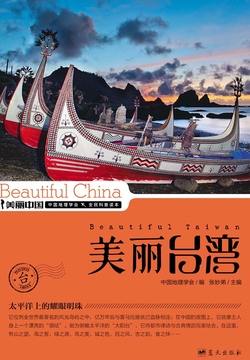
Beautiful Taiwan
Tags
Summary
Editor's review
In terms of content organization, the book's most outstanding value lies in its balance: it presents iconic natural wonders such as Taroko Gorge and the Alishan sea of clouds, while also offering in-depth interpretation of the historical context of cultural heritage sites such as Lukang Old Street and Tainan Confucian Temple. The combination of numerous high-definition photographs taken on location with precise geographical data enables readers to gain a visual experience approaching firsthand presence while understanding the geological causes or cultural significance behind the landscapes. This editorial approach of mutual verification between text and image elevates the book beyond the superficial level of ordinary scenic picture albums.
Notably, the author maintains a restrained academic tone when describing landscapes, avoiding the trap of excessive romanticized lyricism. For example, when introducing Sun Moon Lake, in addition to depicting the lake and mountain scenery, he analyzes in detail its functional transformation as a hydroelectric power hub; when discussing the Fo Guang Shan architectural complex, he presents its architectural aesthetics while also analyzing the localization of Han Buddhism in Taiwan. This multi-dimensional interpretive approach gives the book a knowledge density comparable to a human geography documentary.
For mainland readers, this book provides an observation window that transcends political narratives, presenting a Taiwan with warmth and detail through specific entry points such as geological structure, ecological systems, architectural styles, and folk traditions. This transmission of knowledge through the bond of cultural geography is particularly valuable in the current context of cross-strait exchange.
Who it's for
A good fit for
- People seeking a systematic understanding of Taiwan's natural landscapes and cultural history
- Travel enthusiasts planning in-depth visits to multiple regions of Taiwan
- Educators engaged in geography teaching or regional cultural research
- Visual learners who prefer acquiring knowledge through combined text and images
Not a good fit for
- Short-term tourists who only need simple travel tips or food and shopping information
- Readers seeking in-depth analysis of cross-strait political issues
Reading tips
- Read alongside a topographic map of Taiwan to build a spatial cognitive framework
- After reading each regional chapter, try drawing your own cultural geography map of Taiwan
- Pay special attention to the "Cultural Interpretation" sections in each chapter, which often contain in-depth information absent from ordinary guidebooks
About the publisher
Blue Sky Publishing House is a publisher known for its travel geography and historical and cultural reading materials. Public information about it is limited, but the books in our catalog show that its publishing focuses mainly on travel, world history, foreign literature, and history reading. Representative titles include Beautiful Tibet, Beautiful Yunnan, Beautiful Jiangsu, Beautiful Hong Kong, and Beautiful Taiwan from the "Beautiful" series, as well as Illustrated World: Lost Civilizations and Greek Myths: Youth Edition, covering geographical features, the history of civilizations, and classic reading for young people. In terms of authors, the Geographical Society of China, the editorial board of the Illustrated World: National Geography Series, and authors such as Zhang Miaodi, Dong Hengnian, Wang Yue, and Gustav Schwab support its popular geography and humanities content. Overall, the publisher emphasizes accessible, illustrated presentation and brings geographical and historical-cultural knowledge to general readers.
Contents
- 版权信息
- 总序 天人协和,穷极造化
- 第一章 印象台湾
- 东山中陵西平原
- 开发多沧桑
- 隔海同根,多元包容
- 亚洲四小龙之一
- 第二章 自然奇观
- 阿里山
- 日月潭
- 玉山
- 清水断崖
- 太鲁同
- 阳明山
- 太平山
- 垦丁国家公园
- 野柳地质公园
- 澎湖渔火
- 宝岛的六大河流
- 第三章 人文胜迹
- 国父纪念馆
- 台北故宫博物院
- 明延平郡王祠胃
- 赤崁楼
- 安平古堡
- 红毛城
- 台南台北孔庙
- 指南宫
- 南鲲鯓代王府
- 恒春古镇
- 筠园
- 第四章 繁华都市
- 台北
- 高雄
- 基隆
- 新竹
- 台中
- 嘉义
- 台南
- 花莲
- 第五章 离岛之美
- 金门岛
- 马祖
- 澎湖
- 兰屿
- 绿岛
- 小琉球
- 龟山岛
- 第六章 少数民族
- 雅美族
- 阿美族
- 排湾族
- 市农族
- 赛夏族
- 泰雅族
- 卑南族
- 第七章 多彩民俗
- 妈祖信奉
- 关圣帝祭拜
- 城隍庙祭拜置
- 佛教在台湾
- 市袋戏
- 平溪天灯
- 歌仔戏
- 盐水蜂炮
- 东港送王船
- 台湾美食
FAQ
What is the image quality like in this book?
Does the content involve sensitive political statements?
What are the distinguishing features of this book compared with similar books on Taiwan?
Related on WeRead
Comments
Find this book
This site is an index: you start “Search all sources” in your browser, and the entries it lists all point to third-party sites; please judge their availability yourself.
About the author
Zhang Miaodi (born December 1944), a native of Pudong, Shanghai, is a geographer, professor and former president of Beijing Union University, chief expert of the Beijing Studies Research Base, and a member of the Beijing Municipal Institute of Culture and History. A graduate of the Department of Geography at Peking University, he has long engaged in research on physical geography, human geography, and Beijing culture, combining solid academic grounding with experience in writing about geography for general readers. Nineteen of his works are held in the collection, mainly in the categories of travel and popular science, including the series Chinese National Geographic Encyclopedia and Beautiful China, which he edited. Volumes in these series cover Guangdong, Guangxi, Hainan, Chongqing, Hebei, Shanxi, Inner Mongolia, Shandong, Anhui, Jiangxi, Henan, Hubei, and Hunan, alongside Beautiful Tibet, Beautiful Taiwan, Beautiful Sichuan, and Beautiful Hainan. His writing integrates the natural and cultural features of each region, with detailed, clearly organized material that helps ordinary readers gain a systematic understanding of local geography and cultural characteristics.
The Geographical Society of China is credited here as the collective author of this series of geography popular-science and travel books. Publicly available information is limited, and the specific compilers and the process of producing these books are not explained in the library records. The four works currently held—Beautiful Tibet, Beautiful Jiangsu, Beautiful Taiwan, and Beautiful Tianjin—show that the society takes provinces, regions, and localities as its units, systematically introducing the physical geography, landscapes, and cultural sights of each place while balancing scientific accuracy with readability. Such books generally serve the needs of general tourism and cultural understanding, helping readers form an overall impression of a destination before or after a trip. As far as the works in this library are concerned, the editorial direction is consistent and focused on spreading regional geographical knowledge; the books circulate under the travel category and are suitable as introductory references for understanding local conditions and customs.
