

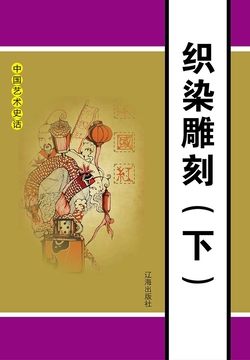
Weaving, Dyeing and Carving (Part Two)
Tags
Summary
Editor's review
Who it's for
A good fit for
- Readers interested in the development history of traditional Chinese arts and crafts (textiles, dyeing and printing, and carving)
- Students at art colleges or design professionals who need to understand traditional craft techniques and patterns
- History and culture enthusiasts who wish to gain a systematic understanding of the relationship between ancient handicrafts and social culture
- Those involved in intangible cultural heritage protection or folk craft research
Not a good fit for
- Readers seeking light, entertaining reading or fictional stories
- Pragmatists looking for modern design cases or commercial application guides
Reading tips
- It is recommended to first browse the illustrations and captions in the book to build an intuitive impression of finished craft works
- Read in conjunction with regional cultural contexts, such as the local characteristics of Suzhou imperial weaving or Huizhou carving
- There is no need to delve excessively into technical terms; focus on grasping the historical trajectory and cultural significance of craft development
About the publisher
Liaohai Publishing House is a comprehensive publisher known for textbooks and the collation of ancient works. Its publishing scope covers state-approved textbooks, local curriculum materials, supplementary educational books, and national and local ancient-text compilation projects, while also extending into humanities fields such as Eastern philosophy. Its catalog contains about 4,694 titles, with representative works including the multi-volume Records of the Grand Historian (Shiji), and its author resources include classic writers and works such as Sima Qian and Confucius. Grounded in educational publishing and the transmission of traditional culture, the press maintains sustained investment in ancient-text collation, forming a publishing profile that balances textbooks and scholarship. Due to limited public information, its more specific publishing directions and features require further supplementation.
Contents
- 前言
- 隋唐织染雕刻工艺
- 宋元织染雕刻工艺
- 明清织染雕刻工艺
- 后记
FAQ
Does this book require a professional art background to understand?
How is the content divided between the two volumes?
Does the book include content on modern crafts?
Related on WeRead
Comments
Find this book
This site is an index: you start “Search all sources” in your browser, and the entries it lists all point to third-party sites; please judge their availability yourself.
About the author
Xing Chunru is a Chinese full-time book editor about whom publicly available information is limited. He has long compiled popular series for institutions such as Liaohai Publishing House. His output is considerable, with more than 700 titles held in the collection, covering fields such as art history, science and military affairs, politics and history, language and writing, and film and television. Representative works include Chinese Martial Arts (Part II), A History of Chinese Art, A History of Chinese Science and Technology, A Course in the Art of Language, Famous Paintings and Masterpieces, and the series A Grand Garden of Chinese Cultural Knowledge. These books present specialized knowledge in an accessible style, emphasizing systematic organization and readability, and are intended for young readers and general audiences, helping to popularize and guide understanding of traditional culture, art appreciation, and language expression.
