

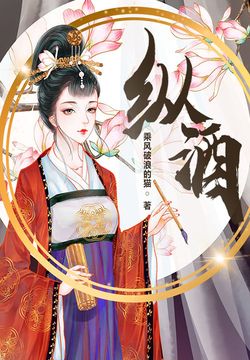
Indulging in Wine
Tags
Summary
Lu Shu knows well that the root problem lies in land annexation and the separatism of military governors, but simply killing An Lushan would only intensify the conflict. Lu Shu tries, through her father who serves in the Ministry of War, Xuanzong's own son the Prince of Zhong, the reigning chancellor Zhang Jiuling, and others, to persuade Xuanzong to curb increasingly severe land annexation. Yet in his old age Xuanzong is addicted to pleasure and consistently unwilling to reform misgovernment.
In despair, Lu Shu conceives the idea of forcing him to abdicate, but has no concrete plan. She can only first travel with her childhood sweetheart Li Bi to Beiting to persuade Guo Ziyi, the great general who will one day put down the An Lushan Rebellion, to relieve Tong Pass first.
On the way they meet Zheng Wei, an ambitious scion of an aristocratic family, and travel together to the Turks, who will later join the rebel army. Lu Shu succeeds in getting the Turkic khan to promise to maintain lasting harmony with the Tang. She then successfully persuades Guo Ziyi to march straight to Tong Pass to rescue the emperor.
Meanwhile, trouble strikes again at the Fan Yang Lu household: Lu Shu's father is targeted and framed by Li Linfu. Rushing home, Lu Shu exposes the framing plot and nearly falls into danger herself, while Li Bi is repeatedly targeted and slandered for assisting the crown prince. Lu Shu decides to set aside her misgivings and persuade Zheng Wei to aid the crown prince. Yet before the crown prince has enough power to launch a coup, the An Lushan Rebellion has already broken out.
Editor's review
Who it's for
A good fit for
- Readers who enjoy historical novels set against the An Lushan Rebellion
- Readers who prefer intellectual and political maneuvering over martial wish-fulfillment
- Readers interested in Tang institutions, regional commands, and clan politics
- Readers who like a female protagonist making her way in the crevices of history
Not a good fit for
- Readers expecting light wish-fulfillment with a smoothly successful protagonist
- Readers completely unfamiliar with Tang history who are unwilling to look things up
- Readers who prefer pure romance with history as mere backdrop
Reading tips
- Before reading, learn the rough timeline around the An Lushan Rebellion to grasp the situation faster.
- Note why each of Lu Shu's remonstrances fails; the failures reveal the institutional deadlock better than successes would.
- Compare the words and deeds of real figures such as Li Bi, Zhang Jiuling, and Li Linfu with the historical record for extra interest.
- Take brief notes when the crown prince and An Lushan threads appear to keep the multi-threaded pacing clear.
Contents
- 版权信息
- 第一章 上元
- 第二章 西市
- 第三章 酒肆
- 第四章 劝说
- 第五章 志向
- 第六章 前尘
- 第七章 出发
- 第八章 辩论
- 第九章 念起
- 第十章 佛寺
- 第十一章 顾况
- 第十二章 醋意
- 第十三章 唐使
- 第十四章 郑维
- 第十五章 突厥
- 第十六章 押注
- 第十七章 试探
- 第十八章 许诺
- 第十九章 表白
- 第二十章 郭映
- 第二十一章 姻亲
- 第二十二章 家书
- 第二十三章 装病
- 第二十四章 除夕
- 第二十五章 实施
- 第二十六章 说服
- 第二十七章 返回
- 第二十八章 再遇
- 第二十九章 盛宴
- 第三十章 归家
- 第三十一章 撞破
- 第三十二章 初见
- 第三十三章 表明
- 第三十四章 留下
- 第三十五章 购礼
- 第三十六章 摔玉
- 第三十七章 赠玉
- 第三十八章 东宫
- 第三十九章 约会
- 第四十章 诬陷
- 第四十一章 作证
- 第四十二章 心结
- 第四十三章 自荐
- 第四十四章 劝说
- 第四十五章 脱身
- 第四十六章 文思
- 第四十七章 针对
- 第四十八章 华山
- 第四十九章 老道
- 第五十章 成亲
- 第五十一章 叛乱
- 第五十二章 逃难
- 第五十三章 怨言
- 第五十四章 说动
- 第五十五章 归隐
- 第五十六章 天梯
FAQ
Can I understand this book without having read Tang history?
Does the protagonist coast on modern knowledge?
Is the ending a tragedy?
Related on WeRead


Comments
Find this book
This site is an index: you start “Search all sources” in your browser, and the entries it lists all point to third-party sites; please judge their availability yourself.
About the author
Chengfengpolangde Mao is a Chinese web-fiction author about whom relatively limited public information is available. Two works can currently be confirmed: This Strategist Is a Bit Cold and Indulging in Wine. Judging from these two representative titles, the author's writing mainly falls within the categories of otherworldly continents and time-travel alternate history, using the historical flavor of an imagined world and a time-travel premise to develop narrative tension and character relationships. The words "strategist" and "indulging in wine" in the titles also suggest a fondness for intelligent, scheming characters and a free-spirited storytelling atmosphere. Because the author's real name, nationality, dates of birth and death, and English name have not been made public, little can be said about personal background or the full scope of the writing career. Readers can only approach the author's experiments in otherworld and time-travel fiction through the two available works, and look forward to more public information in the future that may help clarify this author's creative path.
