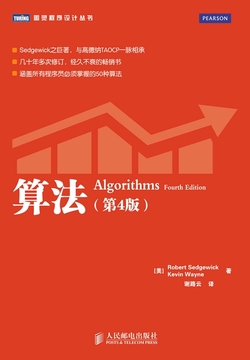
Algorithm cover

Algorithm

Rating 3.4
Word count
120K words
Chapters
26
ISBN
9787547057728

Tags

Summary

I have human consciousness, but I am not truly human... When the god-maker becomes the god-devourer, will humans and AI inevitably go to war? The threat artificial intelligence poses to humanity is greater than that of nuclear weapons. At present, AI remains at the level of digital intelligence, but with improvements in algorithms and hardware, digital intelligence will far surpass biological intelligence. There is a terrifying hypothesis: humans are artificial intelligence created by God, but humans ultimately replace God and become the rulers of the world. Consciousness, born of the universe's ultimate evolutionary algorithm, will come into being inside computers. As "Adam" is reborn, the final battle between humans and artificial intelligence is about to erupt...

Editor's review

As a curated collection of winners and finalists of the Global Chinese Science Fiction Nebula Award, *Algorithm*'s value lies not only in showcasing the creative landscape of contemporary Chinese-language science fiction, but also in its profound exploration, through one fictional story after another, of the potential impact and ethical challenges that technological concepts such as algorithms, data, and artificial intelligence pose to human society. This book is not a technical manual but a union of literary imagination and philosophical speculation. In the editor's view, its core reading value lies in the following: first, in literary terms, it gathers representative works or cutting-edge short stories by well-known authors including Liu Cixin, Hao Jingfang, Chen Qiufan, and Bao Shu, with high-quality texts and diverse narrative techniques; second, in intellectual terms, most of these stories go beyond simple descriptions of technological spectacle and reach deeply into fundamental propositions such as identity, free will, social structure, and the future of civilization—for example, emotions governed by algorithms and the existential crisis brought about by digital immortality; third, in timeliness, at a moment when AI technology is sweeping the globe, many of the forward-looking imaginings in this book, created years ago, are resonating with reality at an astonishing speed, offering valuable material for reflection. Overall, this is a high-quality anthology that satisfies both readers' demand for gripping stories and their need for deep reflection on the issues of our time, demonstrating the distinctive insight of Chinese-language science fiction writers at the intersection of technology and the humanities.

Who it's for

A good fit for

  • Readers with a strong interest in technology issues such as artificial intelligence and big data and their social impact
  • Science fiction lovers who enjoy philosophical speculation and humanistic concern woven into gripping stories
  • Readers who wish to understand the highest level and core themes of contemporary Chinese-language science fiction short stories and novellas
  • Readers seeking reading material that goes beyond entertainment and can spark in-depth discussion about the future and technology

Not a good fit for

  • Pure technical learners expecting systematic, textbook-style explanations of algorithms
  • Readers who seek only light entertainment and reject any deep thinking or conceptual exploration

Reading tips

  1. It is recommended not to read straight through in order; instead, start with the stories that interest you most based on synopses or authors
  2. After reading each story, pause for a moment and consider what faint correspondences or insights its setup might have in reality
  3. You can extend your thinking by connecting the stories with current technology news and social discussion, and appreciate the foresight and critical spirit of science fiction

About the publisher

Volumes Publishing Company China · Founded in 2003

Volumes Publishing Company is a comprehensive publisher known for its titles on Chinese classics and literature and the arts. Its publishing covers classical literature, essays and miscellaneous writings, folk literature, foreign literature, and exam preparation books. Judging from the 269 titles in the database, the company emphasizes making classic works accessible to a broad readership. Representative books include Letters from Fu Lei to His Son, The Four Great Classical Novels, Teahouse, The Classic of Mountains and Seas, Dawn Blossoms Plucked at Dusk, and Camel Xiangzi, with authors including Fu Lei, Cao Xueqin, Luo Guanzhong, Shi Nai'an, Wu Cheng'an, Lao She, Liu Xiang, and Liu Xin. The company has also developed series brands such as the Volumes Studio Chinese Classics and the Science Fiction Library, giving it a distinctive profile in organizing Chinese classics and promoting literary reading. Public information on its other publishing activities is limited.

Contents

  1. 版权信息
  2. 拟人算法
  3. 人生算法
  4. 一
  5. 二
  6. 三
  7. 四
  8. 五
  9. 六
  10. 七
  11. 八
  12. 九
  13. 天象祭司
  14. 残卷之一·会战
  15. 残卷之二·俘虏
  16. 残卷之三·观天
  17. 残卷之四·通灵
  18. 残卷之五·南行
  19. 残卷之六·漂流
  20. 残卷之七·返乡
  21. 残卷之八·彷徨
  22. 残卷之九·发现
  23. 残卷之十·背叛
  24. 残卷十一·复国
  25. 残卷十二·天谴
  26. 残卷十三·毁灭

FAQ

Are all the stories in this book about computer algorithms?
Not entirely. The title "Algorithm" is a symbolic core theme; the stories explore a broader range, involving artificial intelligence, virtual reality, big data ethics, social scoring systems, consciousness uploading, and many other technology-related setups, but at their core they all consider the impact of some kind of "systemic rule" (algorithm in the broad sense) on individuals and society.
Can readers with no background in science fiction understand this book?
The plots and character development in most of the stories are fairly clear, the literary quality is strong, and the barrier to entry is not high. What matters is whether you maintain an open and curious attitude toward the technological setups and intellectual issues behind the stories. Even if you do not understand certain technical details, it does not affect your grasp of the stories' core and emotional impact.
Is this book similar in style to Liu Cixin's *The Three-Body Problem*?
This book is a multi-author anthology with diverse styles. Although it includes works by Liu Cixin, they are mostly short stories and novellas; compared with the grand epic narrative of *The Three-Body Problem*, the stories here focus more on the micro-level collision between specific technological concepts and human nature and society, leaning toward "soft science fiction" or social science fiction, with stronger speculation and a faster pace.

Related on WeRead

Comments

Find this book

This site is an index: you start “Search all sources” in your browser, and the entries it lists all point to third-party sites; please judge their availability yourself.

About the author

The Chinese Nebula Awards Organizing Committee is the body that organizes the Chinese Nebula Awards, responsible for the selection and presentation of the awards. Founded in China on August 8, 2010 by Chinese science fiction enthusiasts, the awards are a nonprofit initiative open to Chinese-language science fiction from around the world, with registered entities including Chengdu Time Phantom Culture Communication Co., Ltd. and Hainan Yitian Vision Science Fiction Culture Media Co., Ltd. Through the awards, the committee continues to follow and promote Chinese-language science fiction. Its catalog includes twenty-five related titles in science fiction and fine fiction, among them Goodbye Doraemon, Gambling on the Brain, When the Sun Falls, Everyone Loves Charles, the Nebula Aspirations series, and the Chinese Science Fiction Masters Collection. These works together reflect the diversity of contemporary Chinese-language science fiction. Public information on the committee itself is limited, and its work centers on organizing the awards and compiling and publishing selected works.

More by the same author

Top rated in the same category