The thought of traditional Chinese culture has a long history and is highly original, inventive, and literary. Early forms of thought are highly distinctive: religious theology, medical classics, ancient military texts, Confucianism, Daoism, Buddhism, and the Hundred Schools, feng shui and metaphysics, the Twenty-Four Histories, customs and local gazetteers, and so on—all are profound and vast. This "Essence of Classical Chinese Learning: Original Texts of Culture" series preserves the original appearance of the books, focusing on preserving and transmitting traditional Chinese thought and culture. By reading the literary essence left by ancient sages, one cultivates temperament and quietly absorbs the classics of Chinese learning.
Editor's review
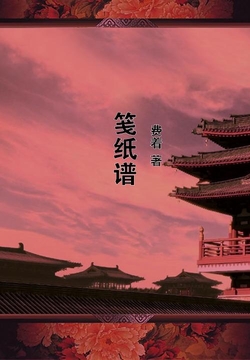
Jian Zhi Pu is included in the "Essence of Classical Chinese Learning: Original Texts of Culture" series. Its value lies not in offering popular stories but in preserving and transmitting traditional knowledge of letter-paper culture in the original book's form, letting readers come into direct contact with records of names and objects in ancient documents. As a specialized catalog-style text, it turns its attention to writing paper, a detail of the scholar's studio often overlooked, and is suitable for readers interested in ancient material culture, literati refinement, and the original appearance of documents. The content leans toward the traditional knowledge system and the presentation of primary sources; reading requires some patience, and it should not be treated as fast-consumption reading. Its highlight is "preserving the true": retaining the original book's format and wording, so readers can appreciate how ancients recorded objects, crafts, and aesthetics, and from there extend their understanding to the side of traditional thought and culture concerned with the investigation of things and elegance. The reading setting suits a quiet desk, read slowly with reference books or notes; it is also suitable as auxiliary material for research on studio culture, book history, and folklore. Overall, this is a reader oriented toward documents and cultural accumulation, emphasizing the feel of the original text rather than plot.
Who it's for
A good fit for
Readers interested in the Four Treasures of the Study and ancient letter-paper culture
Humanities students who need primary-source materials to support research
Classics enthusiasts who like reading ancient books slowly and appreciating the original appearance of texts
Researchers in book history, printing history, or material culture
Not a good fit for
Ordinary readers expecting light stories or plot-driven reading
Beginners hoping for modern vernacular sentence-by-sentence explanation
Readers lacking patience for traditional documentary formats and Classical Chinese expression
Reading tips
First read through the table of contents and the original book's format, then read entries of interest selectively.
Keep a pen at hand to note object names and craft terms for easy reference.
Read alongside reference books on studio culture or book history to lower the threshold of understanding.
Read only a small section at a time, then restate the main points in your own words to deepen the impression.
Contents
版权信息
笺纸谱
FAQ
Is this book suitable for readers with zero background to read directly?
Not very suitable for complete beginners. The book belongs to a series of original classics that preserves the original appearance of the text, and its style and expression are rather traditional; without some experience in reading Classical Chinese, it can be heavy going. It is suggested to first acquire common knowledge of studio culture, or use reference books and annotated editions as aids, before entering this book, which will make it easier to appreciate its value.
What can one gain from reading this book?
Mainly an original-text understanding of traditional letter-paper culture, and the ways ancients recorded names of objects, crafts, and aesthetics. It does not offer modern-style interpretation, but it lets you come into direct contact with the original appearance of the documents; it is suitable as material for cultural accumulation and subsequent research, and also helps in understanding the daily refinement of traditional literati.
The book is titled Jian Zhi Pu—is it about papermaking technology?
It cannot simply be equated with a papermaking technology manual. According to the material, it belongs to a series of original classics of Chinese learning, focusing on preserving and transmitting traditional thought and culture and preserving the original appearance of the book. Readers should regard it as a traditional catalog-style document and pay attention to its records of letter paper and related named objects, rather than expecting a modern explanation of technical processes.
This site is an index: you start “Search all sources” in your browser, and the entries it lists all point to third-party sites; please judge their availability yourself.
Fei, courtesy name Kezhao, was a native of Huayang (present-day Shuangliu, Chengdu) and a historian of the Yuan dynasty. Public information about his birth and death years is limited. He passed the imperial examination and served successively as an instructor at the Imperial College, a surveillance commissioner of Hanzhong, and a prefect of Chongqing, rising to the posts of clerk in the Imperial Astronomical Commission and Hanlin Academician. Four of his works survive, including Suihua Jili Pu, Shujin Pu, and Jianzhi Pu, which chiefly record the seasonal customs, brocade weaving, and papermaking of Chengdu during the Tang and Song dynasties and are important sources for the study of Sichuan's folkways and crafts. These works combine historical value with literary appreciation; their prose is concise and focused on the examination of objects and customs, and they are often mentioned under Eastern philosophy and classic works.