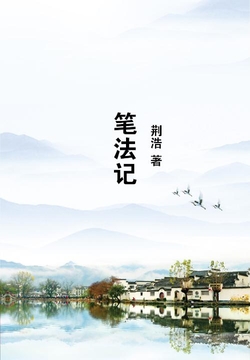
Record of Brush Methods cover

Record of Brush Methods

Rating 4.0
Word count
2K words
Chapters
3

Tags

Summary

Traditional Chinese thought and culture has a long history and is highly original, innovative, and literary. Early forms of thought are highly distinctive, including religious theology, traditional Chinese medicine classics, ancient military texts, Confucianism, Daoism, Buddhism and the Hundred Schools of Thought, feng shui and metaphysics, the Twenty-Four Histories, and local customs and geography—all profound and extensive. This series, "Essence of Chinese Classics: Original Texts," preserves the original appearance of the books, with a focus on preserving and transmitting traditional Chinese thought and culture. Through reading the literary essence left by ancient sages, readers can cultivate their character and quietly appreciate the classics of Chinese learning.

Editor's review

"Notes on Brushwork" is a famous treatise on landscape painting by the Five Dynasties painter Jing Hao. Written in a question-and-answer form, it discusses brushwork, composition, and painting theory, and holds an important place in the history of Chinese painting theory. This book is included in the "Essence of Chinese Classics: Original Texts" series, which preserves the original appearance of the text and focuses on preserving and transmitting traditional thought and culture. Readers therefore encounter a text close to the original classic rather than a fully vernacular rewriting. Its highlight lies in proposing core propositions of painting with extremely concise brushwork; the language is condensed and the concepts dense, making it suitable for repeated reading. In terms of reading context, it is better suited as a desk book for studying painting theory, read alongside landscape paintings and annotations to the original text, so as to appreciate how the ancients thought about painting. For readers studying Chinese painting, art history, or traditional aesthetics, this is an unavoidable classic text; those merely flipping through it in hopes of a light story may find it daunting. It is advisable to read with questions in mind and take notes as you go, without rushing.

Who it's for

A good fit for

  • Readers studying Chinese painting and art history who need to study painting theory
  • Upper-level students interested in traditional aesthetics and art theory
  • Enthusiasts willing to read the original text closely alongside works and annotations

Not a good fit for

  • Readers hoping for light stories or popular introductions to art
  • Those lacking patience for classical Chinese and unwilling to look up terminology
  • Readers who only want modern vernacular rewrites and do not want to engage with the original text

Reading tips

  1. First learn about Jing Hao and the background of Five Dynasties landscape painting; the main text will then be much easier to understand.
  2. Read alongside landscape paintings and connect the painting theory in the text with specific images.
  3. Keep a notebook, excerpt key concepts, and write down your questions for a second reading.

Contents

  1. 版权信息
  2. 正文一
  3. 正文二

FAQ

What is "Notes on Brushwork" mainly about?
It is a treatise on landscape painting written by Jing Hao in question-and-answer form, discussing core issues such as brushwork, composition, and painting theory. The language is condensed and the concepts dense, and it is an important text in the history of Chinese painting theory. For specific arguments, refer to the original text in the book, and it is recommended to study it with annotations.
Can I read this book without a foundation in painting?
You can, but it will be difficult. The book involves painting practice and terminology, and without a foundation it is easy to remain at the literal level. It is recommended to first read some general introductions to Chinese landscape painting, or read alongside paintings, so that your understanding becomes more concrete.
How is this edition different from ordinary anthologies of painting theory?
This book belongs to the "Essence of Chinese Classics: Original Texts" series, which focuses on preserving the original appearance of the text and transmitting traditional thought and culture. It is therefore closer to a presentation of the original classic rather than a fully vernacular interpretation. It suits readers who want direct access to the original text; beginners will need annotations.

Related on WeRead

Comments

Find this book

This site is an index: you start “Search all sources” in your browser, and the entries it lists all point to third-party sites; please judge their availability yourself.

About the author

荆浩 Author

Jing Hao: little is known about his life, and public information is limited. His birthplace, dates of birth and death, and specific experiences are not reliably recorded. Two works are extant under his name, Bifa Ji (Notes on Brushwork) and Hua Shanshui Fu (Rhapsody on Painting Landscape), and they are commonly classified under Eastern philosophy. Both concern landscape painting: the first, in note form, discusses brushwork, conception, and the merits and faults of painting methods, while also evaluating earlier painting styles; the second, in rhapsodic form, sets out the atmosphere and compositional arrangement of landscape painting, combining theoretical discussion with literary quality. His writing avoids cumbersome textual scholarship, preferring concise statements that highlight key principles of painting and raise technical questions to the level of harmony between mind and nature, for which he is often cited and discussed in the tradition of painting theory. Given the limited material, details of his life and artistic lineage await further study.

More by the same author

Top rated in the same category