

Detailed Talks on Planting
Tags
Summary
Editor's review
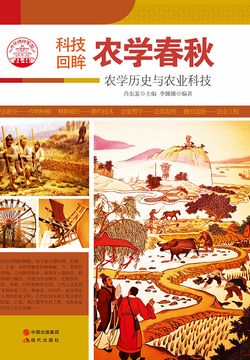
In today's fragmented information age, the book offers a rare systematic reading experience. Rather than listing dry historical facts, it uses vivid historical snapshots—such as the ancient 'encouraging agriculture' system, species exchange along the Silk Road, and the precise alignment of solar terms with farming—to show how planting has profoundly shaped our social structure, dietary habits, and cultural psychology. Its excavation of traditional ecological farming wisdom is especially illuminating for exploring sustainable lifestyles today.
For general readers, the prose is plain and fluent, both informative and readable; for enthusiasts in related fields, the detailed historical sources and unique analytical perspective offer new knowledge. This is a book to read quietly: it offers no instant 'techniques,' but it plants in your mind a seed for understanding the underlying logic of civilization.
Who it's for
A good fit for
- Cultural enthusiasts interested in Chinese agrarian civilization and agricultural history
- Thinkers seeking to understand current dietary and ecological issues from a historical perspective
- Readers who enjoy interdisciplinary reading that combines history, technology, and the humanities
- Teachers, students, and others needing related humanities enrichment materials
Not a good fit for
- Pure pragmatists seeking immediate planting guides and operation manuals
- Readers expecting abundant color illustrations and light, entertaining material
Reading tips
- Read chapter by chapter to grasp the historical development of agrarian civilization.
- Relate the content to local produce or traditional festivals for a more vivid experience.
- After reading, note two or three points that struck you and check them against your own observations of life.
About the publisher
Founded in 1982, Modern Press is a Chinese publisher that serves general readers across a diverse range of subjects. Judging from its catalog, its publishing focuses on classical poetry, Eastern philosophy, psychological research and application, popular science, and modern poetry, along with history, biography, and children's books. The Book of Songs, the illustrated vernacular edition of the Classic of Mountains and Seas, The Complete Poems of Dai Wangshu, and Buddhism in the Vegetable Roots reflect efforts to make traditional culture and poetry accessible; works by Carl Gustav Jung such as The Development of Personality and Understanding Your Psychological Type, together with titles from the Ivy International Education Alliance, show sustained attention to psychology and educational reading; and Stephen Hawking's works and the illustrated two-volume Brief History of Everything and A Brief History of Time indicate a commitment to popular science. Its authors include figures such as Qu Wanli, Xu Ke, Dai Wangshu, and Jung, and its publishing emphasizes retelling classics and accessible, illustrated presentation. Because public information is limited, this summary is based only on the titles in our catalog.
Contents
- 版权信息
- 序 言
- 稼穑之源—— 古代栽培
- 农作物种类与演变
- 稻作历史及栽培技术
- 小麦种植面积的推广
- 玉米的传入和推广
- 古代高粱种植技术
- 古代对大豆的栽培
- 甘薯的引种和推广
- 棉花的传入与推广
- 唐代以后的茶树栽培
- 耕种时代—— 古代农具
- 夏商周时的农具
- 春秋战国时铁农具
- 秦汉时期的农具
- 魏晋南北朝的农具
- 唐代成熟的曲辕犁
- 宋元明清的农具
- 古苑栽培—— 古代园艺
- 我国古代园艺发展
- 我国古代果树园艺
- 我国古代蔬菜园艺
- 我国古代花卉园艺
FAQ
Is this book about agricultural techniques?
Do I need agricultural or historical expertise to understand it?
How does this book differ from similar titles?
Related on WeRead
Comments
Find this book
This site is an index: you start “Search all sources” in your browser, and the entries it lists all point to third-party sites; please judge their availability yourself.
About the author
Xiao Dongfa (1949–2016), whose ancestral home was Tianjin and who was born in Shenyang, was a professor and doctoral supervisor at the School of Journalism and Communication, Peking University, and director of its Institute of Modern Publishing. An important scholar in editing and publishing studies, he focused on the history of Chinese books, publishing history, and yearbook studies. He edited the History of Chinese Editing and Publishing and Chinese Libraries of Book Collecting, and led the National Social Science Fund key project A General History of Chinese Publishing, laying a solid foundation for the organization and narration of Chinese publishing history. Beyond academic writing, he attended to Peking University's institutional history and humanistic traditions, writing works such as Character: From the Imperial University to Old Peking University, Exemplars: Former Residences and Anecdotes of Peking University Notables, and Scenes: Yanyuan Landscapes and Cultural Heritage, which recount campus memories and personal stories with warmth. His works also touch on the four treasures of the study, garden architecture, and academic writing standards. Some 491 of his titles are held in the library, spanning language and culture, biography, and architecture, and combining scholarly rigor with accessible readability.
Zhang Xuewen (born 1935), a native of Hanzhong, Shaanxi, is one of China's first National Masters of Chinese Medicine and a professor and chief physician at Shaanxi University of Chinese Medicine. He is a renowned expert in internal medicine and emergency medicine in traditional Chinese medicine. Born into a family of TCM practitioners, he graduated from the Shaanxi School of Chinese Medicine Advanced Studies in 1959. His long-term research covers TCM emergency medicine, brain disorders, warm diseases, and blood-activating and stasis-resolving therapy; he pioneered the theory of "cranial cerebral water-stasis" and authored works including *Treatment of Blood Stasis Syndromes* and *Treatment of Difficult and Complicated Cases*. The library holds 10 of his works, spanning agriculture and forestry, biography, culture, and education, including *A History of Aquaculture*, *Ancient Cultivation and Ancient Horticulture*, *Sacrificial Rites and Celebrations*, and *Bill Gates*. These works range widely, combining surveys of ancient agriculture and folk culture with public-oriented biographies, showing that beyond specialized medical writings the author also attends to the popularization of traditional culture and the spread of knowledge.
