

Leaving the Feast
Tags
Summary
Editor's review
Who it's for
A good fit for
- Readers willing to enter a text with questions and accept open-ended reading
- Independent readers with patience for short works or works with sparse information
- Readers who like to start from the title and structure and fill in the context themselves
Not a good fit for
- Readers who rely on detailed summaries and clear genre labels when choosing books
- People who want a complete plot synopsis before deciding whether to read
- Readers who need substantial external material to enter a text
Reading tips
- First leaf through several pages of the main text to get a feel for the language and structure before deciding how to read.
- While reading, take brief notes around "who leaves the table, and why."
- After finishing, return to the title and check whether your understanding has changed.
- If insufficient information affects your judgment, try a short read first before deciding whether to read the whole book.
About the publisher
Jinzhang Book Company (Jinzhang Shuju) was a private publishing and distribution house in Shanghai during the late Qing and early Republican periods, issuing traditional works by lithographic printing. Judging from the 1,194 titles in the collection, its publishing focused on classical poetry, Eastern philosophy, historical reading, traditional Chinese medical texts, and canonical works, along with books on literary appreciation. Representative titles include the poetry and prose collections of Du Fu and Ouyang Xiu; historical works such as the Book of Han and Zizhi Tongjian; classical texts such as the Book of Documents and Mencius; and specialized and literary classics such as Treatise on Cold Damage and Li Sao. Its author resources cover major figures across the ages, including Du Fu, Ban Gu, Sima Guang, Zhang Zhongjing, Qu Yuan, Ouyang Xiu, and Tang Shenwei, reflecting the house's characteristic reliance on traditional scholarship and medical literature while serving general readers. Public information on its early history and operational details is limited, so no conjecture is offered here.
Contents
- 版权信息
- 【齐梁晴云】李商隐
- 卷540_130【效徐陵体赠更衣】李商隐
- 卷540_131【又效江南曲】李商隐
- 卷540_132【月夜重寄宋华阳姊妹】李商隐
- 卷540_133【访人不遇留别馆】李商隐
- 卷540_134【雨中长乐水馆送赵十五滂不及】李商隐
- 卷540_135【汴上送李郢之苏州】李商隐
- 卷540_136【赠郑谠处士】李商隐
- 卷540_137【复至裴明府所居】李商隐
- 卷540_138【览古】李商隐
- 卷540_139【子初郊墅】李商隐
- 卷540_140【汉南书事】李商隐
- 卷540_141【当句有对】李商隐
- 卷540_142【井络】李商隐
- 卷540_143【写意】李商隐
- 卷540_144【随师东】李商隐
- 卷540_145【宋玉】李商隐
- 卷540_146【韩同年新居饯韩西迎家室戏赠】李商隐
- 卷540_147【奉和太原公送前杨秀才戴兼招杨正字戎】李商隐
- 卷540_148【池边】李商隐
- 卷540_149【贾生】李商隐
- 卷540_150【送王十三校书分司】李商隐
- 卷540_151【寄恼韩同年二首(时韩住萧洞)】李商隐
- 卷540_152【谒山】李商隐
- 卷540_153【钧天】李商隐
- 卷540_154【失猿】李商隐
- 卷540_155【戏题友人壁】李商隐
- 卷540_156【假日】李商隐
- 卷540_157【寄远】李商隐
- 卷540_158【王昭君】李商隐
- 卷540_159【旧将军】李商隐
- 卷540_160【曼倩辞】李商隐
- 卷540_161【所居】李商隐
- 卷540_162【高松】李商隐
- 卷540_163【访秋】李商隐
- 卷540_164【昭州】李商隐
- 卷540_165【哭刘司户蕡】李商隐
- 卷540_166【裴明府居止】李商隐
- 卷540_167【陆发荆南始至商洛】李商隐
- 卷540_168【陈后宫】李商隐
- 卷540_169【乐游原】李商隐
- 卷540_170【赠子直花下(令狐绹字子直)】李商隐
- 卷540_171【小园独酌】李商隐
- 卷540_172【思归】李商隐
- 卷540_173【献寄旧府开封公(开封公,令狐楚也)】李商隐
- 卷540_174【向晚】李商隐
- 卷540_175【春游】李商隐
FAQ
There is very little information—can this book still be read?
What reading direction does the title "Leaving the Table" suggest?
Is this book suitable for readers who need clear genre labels?
Related on WeRead
 离席
 离席
 离席
 历史的温度7:那些退隐、告别和离席
 中华古典文库典藏(套装40册)(古典文库)
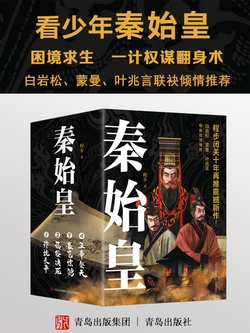 秦始皇(套装全四册)
 仪礼--中华经典名著全本全注全译丛书
 一套书读懂中国史(套装共35册)
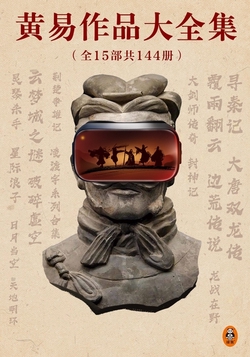 黄易作品大全集(全15部共144册)
Comments
Find this book
This site is an index: you start “Search all sources” in your browser, and the entries it lists all point to third-party sites; please judge their availability yourself.
About the author
Anonymous is not a real personal name but a general Chinese designation for authors whose names are unknown, lost, or unsigned. Neither nationality nor dates of birth and death can be verified, and available public information is limited, so the works attributed to this name are the only basis for description. The collection holds 2,078 works under Anonymous, spanning medicine, classics, historical readings, ancient poetry, classical literature, and philosophy. Representative works include The Yellow Emperor's Inner Canon: Lingshu, Mencius, The Book of Documents, Nineteen Old Poems, Complete Song Ci, and The Peacock Flies Southeast. Most of these works took shape through long transmission and editing, emerging either from collective folk creation or from authors whose names were lost over time. In ancient China, the Book of Songs, the Great Learning, and many popular storybooks and plays were signed Anonymous because their authors could not be traced. Anonymous works cross the classics, histories, philosophical writings, medical texts, and poetry; their subjects are broad, and their styles vary from archaic simplicity to clear naturalness, making them important and influential sources for understanding ancient Chinese thought, medicine, and literature.
