

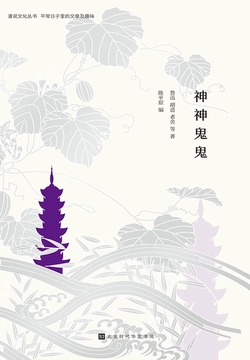
Gods and Ghosts
Tags
Summary
Editor's review
Who it's for
A good fit for
- Readers interested in modern Chinese literature, especially the works of Lu Xun, Lao She, and Hu Shi
- Readers who enjoy tales of the supernatural and folklore and wish to explore their cultural connotations and intellectual depth
- Researchers seeking to understand how Republican-era intellectuals reflected on tradition and national character through literary forms
- Literature lovers looking for short-story collections that combine literary beauty with intellectual impact
Not a good fit for
- Readers looking for pure horror or thrilling ghost stories and seeking sensory excitement
- Readers with little familiarity with modern Chinese literary history and its specific historical contexts, who may struggle to grasp the works' deeper meanings
Reading tips
- Reading in the order of the authors is recommended, to appreciate the interplay and contrast among Lu Xun's sharpness, Lao She's humor, and Hu Shi's rationality.
- It helps to read each piece alongside its background, the better to understand its metaphors and the targets of its critique.
- The book can serve as a starting point for cultural discussion, leading on to further reading in folklore studies or modern intellectual history.
About the publisher
Beijing Times Chinese Press takes classic works and prose miscellanies as an important publishing direction, along with foreign literature, social novels, Eastern philosophy and art books. Its catalogue includes such Chinese classics as Lu Xun's Call to Arms and Wandering, Xiao Hong's The Field of Life and Death, Zhang Dai's Reminiscences of Tao'an, Yuan Mei's Recipes from the Sui Garden and Hong Yingming's Caigentan, as well as foreign classics such as Ryunosuke Akutagawa's Rashomon. Among its translator resources is Wen Jieruo, whose translations provide reliable support for bringing foreign literary works into the Chinese-speaking world. While organizing traditional texts and reissuing classics, the press pays attention to readability and accessibility of editions, enabling ancient prose, notes and philosophical works to reach contemporary readers. Public information is limited; the above is only a brief account of the publishing directions reflected in the books held in the database.
Contents
- 版权信息
- 再记
- 序
- 附记
- 导读
- 有鬼论质疑
- 辟《灵学丛志》
- 送灶日漫笔
- 捣鬼心传
- 从拜神到无神
- 谈迷信之类
- 谈狐仙
- 土地和灶君
- 白昼见鬼——半间楼闲话
- 迷信——瓮牖剩墨之八
- 神的灭亡
- 人和鬼
- 再谈人和鬼
- 元帅菩萨
- 漫谈鬼神观念的枷锁
- 从神案前站起来
- 说鬼
- 鬼赞
- 我们的敌人
- 花煞
- 疟鬼
- 鬼的生长
- 刘青园《常谈》
- 说鬼
- 谈鬼论
- 失掉的好地狱
- “鬼的箭垛”
- 乡人说鬼
- 鬼学丛谈
- 鬼话连篇有序
- 美丽的吊死鬼
- 谈鬼者的哀悲
- 水母
- 中国的神统
- 文艺上的异物
- 五猖会
- 无常
- 女吊
- 鬼趣图
- 论《封神榜》
- 鬼与狐
- 画鬼
- 鬼话
- 德国老教授谈鬼
- 说鬼
- 鬼故事
- 略谈莎士比亚作品里的鬼
- 神 · 鬼 · 人——戏场偶拾
- 话中有鬼
- 有鬼无害论
- 怕鬼的“雅谑”
- 《鬼趣图》和它的题跋
- 编辑附记
- 著者简介
FAQ
Is this book a horror novel?
How are the three authors' works arranged in the book?
Is this book suitable for middle and high school students?
Related on WeRead


Comments
Find this book
This site is an index: you start “Search all sources” in your browser, and the entries it lists all point to third-party sites; please judge their availability yourself.
About the author
Chen Pingyuan, born in 1954 in Chaozhou, Guangdong, is a Boya Distinguished Professor in the Department of Chinese Language and Literature at Peking University, a Distinguished Professor under the Ministry of Education's "Changjiang Scholars" program, and a member of the Central Research Institute of Culture and History. He previously served as chair of the department. His research focuses on twentieth-century Chinese literature, the history of Chinese fiction, intellectual history, and the history of education. His writings are known for their clear problem awareness, solid use of sources, and lucid argumentation, and he excels at examining literary phenomena and intellectual issues within their historical contexts. His representative works include The Transformation of Narrative Modes in Chinese Fiction, The Starting Point of Modern Chinese Fiction: A Study of Late Qing and Early Republican Fiction, The Dream of the Scholar-Martial Artist (revised edition), and The Unfinished May Fourth: Historical Scene and Intellectual Dialogue. He is also the author of A Brief History of Chinese Fiction and A Brief History of Chinese Prose, and has annotated A Brief History of Chinese Fiction and compiled Materials on Fiction Theory in the Late Qing and Early Republican Periods, exerting wide influence in the fields of fiction history and May Fourth studies.
Lu Xun, originally named Zhou Shuren and styled Yucai, was a native of Shaoxing, Zhejiang, and a leading modern Chinese writer and thinker as well as a representative figure of the New Culture Movement. With works such as "A Madman's Diary" and "The True Story of Ah Q," he laid the foundation of modern Chinese fiction. His writing often focuses on the spiritual condition of ordinary people and on social reality, in a cold, concise style rich in critique and self-reflection. His story collections "Call to Arms" and "Wandering" and his prose collection "Dawn Blossoms Plucked at Dusk" are widely read, and his works are often classified as classics, social fiction, and documentary literature. The library holds as many as 499 editions of his works, showing that they continue to be read, anthologized, and circulated. Public information is limited, so this is only a brief account of his life's key points and creative character.
Hu Shi (1891–1962), courtesy name Shizhi, was a native of Jixi, Anhui, and a modern Chinese scholar and thinker. A leading figure of the New Culture Movement, he is known for advocating the use of vernacular Chinese. He served as a professor and later president of Peking University, and subsequently as president of the Academia Sinica. The library holds 213 of his works, spanning social culture, Eastern philosophy, essays and miscellaneous writings, and biography. His representative works include Tolerance and Freedom, An Outline of the History of Chinese Philosophy, A History of Vernacular Literature, and The Diaries of Hu Shi Abroad. His writing combines scholarly argument with personal essays, showing both intellectual sharpness and a plain, fluent style; he exercised a profound influence on modern Chinese thought and cultural development.
Lao She, born Shu Qingchun with the courtesy name Sheyu, lived from 1899 to 1966. A Manchu from Beijing, he is a major modern Chinese writer. His writing long centered on urban life in Beijing and on ordinary people at the lower levels of society. His works are mostly social novels and folk literature, and he also wrote essays and miscellaneous prose. His style is plain yet marked by irony and compassion, and he was skilled at using colloquial Beijing-flavored language to portray characters and their fates. His representative works include Camel Xiangzi, Four Generations Under One Roof, and Teahouse, which have had wide influence. In 1951 he received the title "People's Artist." The library holds 488 of his works, commonly classified under social fiction, classics, folk literature, essays and miscellaneous writings, and exam books, showing that his writing continues to circulate among readers and in teaching.
