

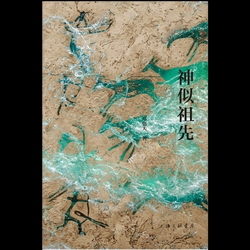
Resembling Our Ancestors in Spirit
Tags
Summary
Editor's review
Who it's for
A good fit for
- Social science readers interested in the mechanisms of human behavior and evolutionary perspectives
- Those who want to understand how biology enters anthropological and sociological discussion
- Readers willing to accept interdisciplinary conceptual challenges and dissatisfied with single explanations
- Thinkers concerned with the logic behind everyday behaviors such as running, mating, and altruism
Not a good fit for
- Readers expecting a strict biology textbook or a handbook of experimental data
- Those who accept only a single disciplinary framework and reject interdisciplinary argument
- Readers seeking concrete health plans or practical dating and marriage guides
Reading tips
- Begin with the author's definition of “spiritually resembling ancestors,” then move into the individual topics to avoid conceptual confusion.
- After each chapter, write one sentence summarizing that chapter's behavioral mechanism and an everyday example.
- Note unfamiliar biological concepts first, look up basic definitions in a focused way, then return to the argument.
- Read alongside works in sociology or anthropology to compare the differences in explanatory approaches
About the publisher
China Youth Press is a comprehensive publisher aimed at young readers, with publishing areas covering history, social sciences, modern romance, social fiction, management, and law. Its library currently contains 46 titles, including representative works such as Wang Chaozhu's three-volume Chiang Kai-shek and His Close Friends and Political Rivals, Zheng Yefu's social and cultural essays Resembling Ancestors, Lu Min's The Ring, Ma Xiaoyuan's Bank Archives, and practical titles such as Lu Heping's How to Talk and Act in Key Account Sales and Cheng Xianghui's Latest Practical Guide to Legal Risk Prevention in Compliant Entrepreneurship. Its authors include scholars and writers such as Wang Chaozhu, Zheng Yefu, Lu Min, Ma Xiaoyuan, Lu Heping, Cheng Xianghui, Shi Xianlong, and Wang Chunqiang, combining historical narrative, social observation, and practical knowledge to form a diverse publishing profile for young readers. As public information is limited, this introduction focuses on the publishing directions reflected in the library's titles.
Contents
- 版权信息
- 前言
- 第1章 阅读生物学的意义
- 第2章 说不完道不尽的达尔文
- 第3章 自然选择
- 第4章 性选择与炫耀
- 第5章 利己与利他
- 第6章 狭义利他的生物学基础
- 第7章 交换的进化
- 第8章 有性繁殖与婚配制度
- 第9章 美感
- 第10章 适应与进步观
- 第11章 生长、衰老与生命周期
- 第12章 病、痛、苦难
- 第13章 沉溺快乐与追求伟大
- 第14章 威慑、欺骗、猜忌、笑
- 第15章 感官、情绪、理性
- 第16章 语言是本能
- 第17章 遗传与环境
- 第18章 驯化与文明
- 第19章 趋异、分工与生态学
- 第20章 领地、部落性与大型共同体
- 第21章 两种进化:生物与文化
- 参考书目
FAQ
What exactly does “spiritually resembling our ancestors” mean?
Can I understand this book without a biology background?
Is this book suitable as a sociology textbook?
Related on WeRead



Comments
Find this book
This site is an index: you start “Search all sources” in your browser, and the entries it lists all point to third-party sites; please judge their availability yourself.
About the author
Zheng Yefu, born in Beijing in 1950, is a Chinese sociologist and a professor in the Department of Sociology at Peking University. He was among the first sociologists in China after reform and opening up to study intellectuals as a social group. His writing has long centered on education, trust, consumption, and social problems, often starting from everyday phenomena and probing the deeper logic of institutions and culture in a plain yet reflective style. The library holds three of his works, including On Scholarship and Academic Writing, Resembling Ancestors, and On Cost, which touch on research methods, comparisons between biological and social behavior, and the costs of social development, showing a scope that spans sociology and interdisciplinary discussion. His other books include On Trust, The Pathology of Chinese Education, Civilization as a By-product, and The Coming of the Post-Materialist Age, and he continues to influence Chinese-language readers of social science.
