

Etiquette China
Tags
Summary
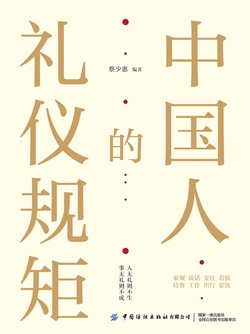
The author, Hai Ying, has long worked in etiquette education and training and has devoted more than twenty years to the study of traditional Chinese etiquette. Organized around walking, standing, sitting and lying down, speech and conduct, and receiving and seeing off guests, this book gives a comprehensive account of traditional Chinese etiquette and its cultural background, helping readers appreciate the essential value of traditional etiquette. The author also pays particular attention to making etiquette useful today, selecting from its many aspects those with contemporary value and explaining them in detail so that readers can put them into practice.
Editor's review
Who it's for
A good fit for
- Readers who want a systematic understanding of the origins and modern applications of traditional Chinese etiquette culture
- People in education, culture, service or international work who need to improve their professional conduct and social skills
- General readers interested in personal cultivation and family culture who seek to improve their interpersonal relationships
- Parents or youth educators looking for a reference book on etiquette education
Not a good fit for
- Readers seeking quick-success formulas or a purely Western step-by-step guide to business etiquette
- Readers expecting extensive photo demonstrations or an extremely simplified checklist of rules
Reading tips
- Read the preface and first chapter first to grasp the author's core definition of "etiquette" and the book's overall tone
- Choose chapters relevant to your own life or work for close reading and reflection; there is no need to follow the order strictly
- Take notes as you read, recording ideas that resonate with you or small suggestions you can apply right away
About the publisher
Beijing Normal University Press has a distinct focus on educational publishing, with basic education textbooks and teacher education materials forming a major part of its list, extending to preschool, children's, and vocational education. In the humanities and social sciences, the press has released the ten-volume General History of Foreign Educational Thought and other series on the history of education, as well as translations in Marxist philosophy such as Marx's Theory of Alienation and The New Dialectic and Marx's Capital. It has also published The Interpretation of Dreams, the ten-volume Collected Works of Kunio Yanagita, and studies on Ming-Qing society and ritual. Its authors include Bertell Ollman, Christopher J. Arthur, Shan Zhonghui, Zhang Binxian, Wu Shiying, and Zhu Xudong. Its common categories cover Marxist philosophy, social culture, foreign literature, education, and philosophy, balancing academic depth with general reading.
Contents
- 版权信息
- 壹 举止仪表篇
- 坐容
- 立容
- 色容
- 行走
- 衣冠
- 贰 向位礼仪篇
- 宫室建构
- 方位尊卑
- 叁 社交礼仪篇
- 跪拜礼
- 见面礼
- 拜见礼
- 待客礼
- 肆 饮食礼仪篇
- 进食礼
- 箸之礼
- 乡饮酒礼
- 伍 人生礼仪篇
- 诞生礼
- 冠礼
- 笄礼
- 昏礼
- 主要参考书目
FAQ
Is the etiquette in this book outdated or too traditional?
Is the content too theoretical to apply in practice?
Is it suitable as a book for teaching etiquette to young people?
Related on WeRead




Comments
Find this book
This site is an index: you start “Search all sources” in your browser, and the entries it lists all point to third-party sites; please judge their availability yourself.
About the author
Public information about Hai Ying is currently limited, and details such as nationality, dates of birth and death, education, and professional experience have not been clearly recorded and remain to be verified. Judging from the two works held in the collection, Hai Ying's writing spans the fields of culture and medicine; the subjects differ markedly yet both stay close to daily life. Ritual China explores Chinese ritual culture, tracing related traditions and everyday etiquette, while Can't Sleep? Chinese Medicine Can Help addresses sleep problems, offering conditioning approaches and practical suggestions from the perspective of traditional Chinese medicine. Both books are written in accessible language and emphasize practicality, targeting general readers rather than specialists, which suggests that the author has engaged with both traditional culture and traditional Chinese health preservation and tends to convey knowledge in a plain, easy-to-understand manner. Because confirmed information about the author is very limited, a full picture of the writing style and overall influence is difficult to assess; readers may consult the two works above to understand the author's areas of focus.
