

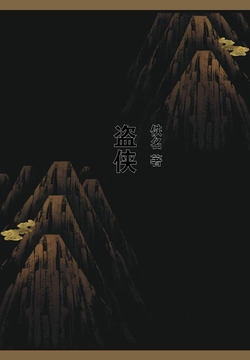
The Bandit Knight-Errant
Tags
Summary
Editor's review
Who it's for
A good fit for
- Ordinary readers who like the traditional swordsman-thief subject and want story-driven reading
- Readers interested in old-school popular reading matter and the publishing scene of Republican China
- Beginner readers who want a light way to approach traditional narrative works
Not a good fit for
- Researchers who need detailed textual criticism of the author's life and the edition's transmission
- Readers expecting rigorous literary criticism and deep textual analysis
- Readers who prefer modern, structurally complex novels
Reading tips
- First read straight through in story order, noting how the identities of "thief" and "swordsman" shift with the plot.
- While reading, record the characters' choices between moral duty and advantage, and observe the narrator's stance.
- Read alongside other works on the traditional swordsman-thief subject, comparing character setups and how endings are handled.
- Since the author is unknown, do not insist on authorial intent; base discussion on the characters' actions as presented in the text.
About the publisher
Jinzhang Book Company (Jinzhang Shuju) was a private publishing and distribution house in Shanghai during the late Qing and early Republican periods, issuing traditional works by lithographic printing. Judging from the 1,194 titles in the collection, its publishing focused on classical poetry, Eastern philosophy, historical reading, traditional Chinese medical texts, and canonical works, along with books on literary appreciation. Representative titles include the poetry and prose collections of Du Fu and Ouyang Xiu; historical works such as the Book of Han and Zizhi Tongjian; classical texts such as the Book of Documents and Mencius; and specialized and literary classics such as Treatise on Cold Damage and Li Sao. Its author resources cover major figures across the ages, including Du Fu, Ban Gu, Sima Guang, Zhang Zhongjing, Qu Yuan, Ouyang Xiu, and Tang Shenwei, reflecting the house's characteristic reliance on traditional scholarship and medical literature while serving general readers. Public information on its early history and operational details is limited, so no conjecture is offered here.
Contents
- 版权信息
- 正文一
- 正文二
- 正文三
FAQ
Will the unknown author affect reading?
Is this book suitable for children?
What is the point of reading this kind of traditional popular work?
Related on WeRead

Comments
Find this book
This site is an index: you start “Search all sources” in your browser, and the entries it lists all point to third-party sites; please judge their availability yourself.
About the author
Anonymous is not a real personal name but a general Chinese designation for authors whose names are unknown, lost, or unsigned. Neither nationality nor dates of birth and death can be verified, and available public information is limited, so the works attributed to this name are the only basis for description. The collection holds 2,078 works under Anonymous, spanning medicine, classics, historical readings, ancient poetry, classical literature, and philosophy. Representative works include The Yellow Emperor's Inner Canon: Lingshu, Mencius, The Book of Documents, Nineteen Old Poems, Complete Song Ci, and The Peacock Flies Southeast. Most of these works took shape through long transmission and editing, emerging either from collective folk creation or from authors whose names were lost over time. In ancient China, the Book of Songs, the Great Learning, and many popular storybooks and plays were signed Anonymous because their authors could not be traced. Anonymous works cross the classics, histories, philosophical writings, medical texts, and poetry; their subjects are broad, and their styles vary from archaic simplicity to clear naturalness, making them important and influential sources for understanding ancient Chinese thought, medicine, and literature.
