

The Salt Family
Tags
Summary
Editor's review
Miao Kegou's writing is restrained and precise, his words crystallizing like grains of salt, carrying both the brackish sting of sea wind and the patina of years. The salt fields, stove platforms, and seawalls in his depiction are not merely geographical spaces but vessels of emotion and memory. The detailed description of the salt-boiling process reads like a life ritual of endurance, waiting, and crystallization, forming a profound intertext with family members' perseverance and struggle amid the tides of the times. This method of fusing material properties with spiritual essence demonstrates the author's exceptional narrative control and deep thought.
The book's value lies in transcending mere nostalgia. By tracing the origins of a "salt family," it explores enduring questions of labor, inheritance, identity, and historical writing. In a rapidly changing contemporary society, this gaze upon "roots" and repeated chewing of the "bitter-salty" taste offer a precious spiritual anchor. Reading it is not only to understand a fading way of life but to experience a quiet, resilient texture of life. This is a work to be read slowly and savored; its literary quality and intellectual weight are enough to leave a lasting echo in the reader's heart.
Who it's for
A good fit for
- Readers interested in family history, local culture, and the transmission of intangible heritage
- Literature lovers who appreciate prose that is concise in language, rich in imagery, and philosophical in thought
- Urban readers seeking spiritual roots and a sense of historical depth amid a fast-paced life
- Those curious about the customs and historical changes of the Zhejiang coastal region
Not a good fit for
- Readers seeking strong plot, fast pacing, and entertaining reading
- Readers less receptive to a personal, introspective narrative style
Reading tips
- Read in a relatively quiet environment and follow the author's brushstrokes into the interwoven time and space of salt fields and sea.
- Pay attention to recurring images such as "salt," "sea," "fire," and "wind," and consider how they build the book's emotional and semantic network.
- Do not rush to finish in one sitting; read piece by piece and treat the book as a whole composed of salt-crystal-like short chapters, savoring its accumulated resonance.
About the publisher
Adhering to the publishing purpose of "broad education," East China Normal University Press extends beyond its three main areas of textbooks, academic works and general-interest books, and its catalogue clearly reflects a vision that bridges Chinese and foreign humanities and social sciences. In foreign literature it offers classics such as Yasunari Kawabata's Snow Country and The Old Capital (translated by Chen Dewen), Jane Austen's Pride and Prejudice, and Rilke's annotated edition of The Notebooks of Malte Laurids Brigge (translated by Chen Zao); in architecture, Chen Congzhou's two-volume Appreciation Dictionary of Chinese Gardens; in social psychology, The Social Animal: 12th Edition; and it also includes philosophy titles, traditional-culture works such as the six-volume Paintings for the Protection of Life, and education books. Its authors include renowned Chinese and foreign writers and skilled translators, showing a publishing profile that balances classic translation, scholarly accumulation and public reading. Public information is limited; the above is based only on the books in the catalogue.
Contents
- 版权信息
- 卷一 大海与盐
- 名字
- 秘密
- 寻盐
- 盐
- 简史
- 垫子
- 祖父小史
- 送行
- 祖母小史
- 寂静
- 背
- 不倦的渔火
- 手足
- 年轮
- 盐的家族
- 相隔
- 交谈
- 海神
- 先生小史
- 姨父小史
- 木匠
- 悬棺
- 海之乡
- 旱地
- 招潮
- 听雷
- 卷二 城市密码
- 地铁车站
- 一个孩子在风中奔跑
- 大风把尘沙吹尽
- 一百片叶子中的一片
- 力量
- 雨的声音
- 独自开放
- 在她陌生的城市
- 女孩子
- 秋风
- 带动
- 判决
- 线路
- 正午
- 茂名北路黄昏
- 外省书
- 远和近
- 回响
- 偏右
- 立冬
- 发觉
- 风眼
- 蜜
- 撒盐
- 死亡证明
- 梅雨
- 听听
- 陆家嘴
- 鹦鹉螺
- 日晖港
- 大洋山
- 横沙岛
- 雀鸣渡
- 卷三 日月诗篇
- 枫叶飘零的国度
- 布拉格的秋天
- 人骨教堂
- 出埃及记
- 日月诗篇
- 亡灵节
- 星空
- 孟买
- 三角梅
- 访摩耶精舍
- 丝路组曲
- 下西洋
- 边塞
- 马蹄寺
- 听泉
- 黑马
- 火车
- 卷四 羿的传说
- 羿
FAQ
Is this book a novel or documentary writing?
Beyond the physical substance, what deeper meanings does "salt" carry in the book?
What is the author Miao Kegou's creative background?
Related on WeRead
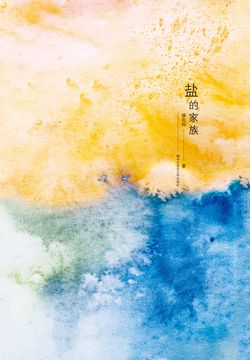 盐的家族
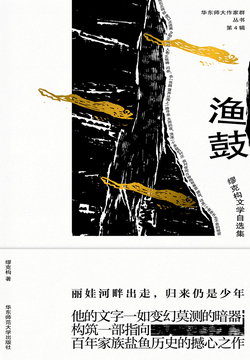 渔鼓:缪克构文学自选集
 小儿临床肾脏病学(第2版)
 一场风花雪月的盐城(放慢脚步,放下包袱,放空心灵,来盐城,开启一场“风花雪月”之旅)
 青藏高原东部边缘民族多样性研究·技艺传承—澜沧江的盐业与地方社会研究
Comments
Find this book
This site is an index: you start “Search all sources” in your browser, and the entries it lists all point to third-party sites; please judge their availability yourself.
About the author
Miao Kegou is an author about whom relatively limited information is available. The library currently holds three of his works, including the representative titles The Salt Family and Yugu: Miao Kegou's Literary Self-Selection (also given as Yugu—Miao Kegou's Literary Self-Selection). These titles suggest that his writing moves between family memory and literary self-curation: the former takes salt as its central image and appears to look back on rural life and personal origins, while the latter gathers his literary writings under the title Yugu and reveals a distinct personal literary sensibility. Within the library his works are grouped under Eastern philosophy and classic works, indicating that readers often approach his writing through a reflective, culturally resonant frame. Because public information about his life, nationality, and dates is limited, his education and creative career cannot be reliably described here; this note can only offer a brief introduction to the works at hand.
