

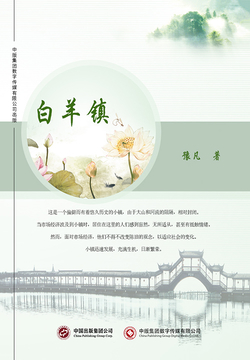
Baiyang Town
Tags
Summary
Editor's review
In literary terms, the book's most striking features are its delicate psychological portrayal and precise evocation of regional atmosphere. The author's capture of township life details—from the bustle of old streets to the subtle tensions of human relationships—shows solid observational craft. The narrative pace is slow yet full of tension, like a river with undercurrents, where beneath a calm surface lie violent collisions of emotion and fate. Characterization avoids stereotypes; each figure carries a particular stamp of the times and individual bewilderment. The contemporary interpretation of the eternal theme of "leaving and returning" in particular strikes a strong chord of reality.
In terms of reading experience, the book may challenge readers who prefer fast-paced plots, but its literary quality rewards patient reading. The author's language is both poetic and cool: lyrical in describing township scenery, coldly analytical in depicting inner lives—a tension that creates a distinctive reading rhythm. Although set in a specific geographical space, the issues it explores—identity, generational conflict, the gap between ideals and reality—are universal beyond the region, making it especially suited to readers interested in individual fate amid contemporary social change.
It should be noted that this is not rural literature in the traditional sense, but an attempt to use township narrative to carry reflections on modernity. The book's depictions of the collision between the digital age and traditional ways of life, and the friction between youth subculture and local conservatism, reflect the author's keen insight into the times. This creative path, combining local experience with universal themes, gives White Sheep Town a distinctive textual value among works of its kind.
Who it's for
A good fit for
- Readers interested in contemporary Chinese township change and social transformation
- Readers who resonate with themes of youth growth and spiritual predicament
- Lovers of literature who prefer delicate psychological description and atmosphere
- Readers interested in narratives of individual fate from a sociological perspective
Not a good fit for
- Readers seeking strong plot and fast-paced narrative
- Readers expecting romanticized depictions of the countryside
Reading tips
- Read immersively, focusing on details and the accumulation of emotion in the text
- Understand characters' motives and trajectories in light of China's contemporary urbanization
- Note the shifts in narrative perspective; chapters on different characters often present different sides of the same event
About the publisher
China Publishing Group Digital Media Co., Ltd. takes digital publishing as its main business, with titles spanning traditional medical classics and classical literature. Its catalogue includes medical works such as Treatise on Cold Damage, Essential Prescriptions from the Golden Cabinet, and The Pulse Classic, involving writings by Zhang Ji, Wang Shuhe, Lin Yi, and Zhang Jiebin. In literature, it offers Wu Jingzi's The Scholars and Xiao Hong's Tales of Hulan River, as well as foreign literary translations such as Fu Lei's rendering of Voltaire's Candide. Its publishing focus thus falls roughly into medicine, social fiction, foreign literature, and fine fiction, reflecting a balance between collated ancient texts and general reading. As public information is limited, this summary is based only on the books in the catalogue and draws no further inferences.
Contents
- 版权信息
- 第一章 邪乎的狗叫
- 第二章 小镇来了新媳妇
- 第三章 废墟中的营救
- 第四章 寡妇缠上辛木匠
- 第五章 食品天降
- 第六章 离婚
- 第七章 葬礼
- 第八章 顺手牵羊
- 第九章 转移
- 第十章 寻子
- 第十一章 一块腊肉
- 第十二章 旧情难忘
- 第十三章 黑虎失踪
- 第十四章 好马不吃回头草
- 第十五章 小山羊
- 第十六章 旧梦重温
- 第十七章 借酒浇愁
- 第十八章 旧衣风波
- 第十九章 欢送援建队
- 第二十章 善意的谎言
- 第二十一章 黑虎归家
- 第二十二章 茶园
- 第二十三章 谢媒
- 第二十四章 该死的啤酒
- 第二十五章 自讨没趣
- 第二十六章 为民担责
- 第二十七章 意外相遇
- 第二十八章 婚礼
- 第二十九章 神犬
- 第三十章 恩情永记
- 后记
FAQ
How does this book differ from traditional rural literature?
What are the characteristics of the novel's narrative structure?
How does Yu Fan's background influence this work?
Related on WeRead


Comments
Find this book
This site is an index: you start “Search all sources” in your browser, and the entries it lists all point to third-party sites; please judge their availability yourself.
About the author
Yufan is an author about whom limited public information is available; details such as nationality, dates of birth and death, and educational background have not been clearly recorded. According to the library's holdings, Yufan currently has one work, *Baiyang Town*, which is classified as a social novel. A single work is not enough to fully sketch the author's creative profile, but it does suggest an attention to social reality and a tendency to present the lives of a particular place or group through fiction. The title *Baiyang Town* has a strong sense of place, implying that the story may unfold around a township and use that specific setting to depict human relations and social change. Social novels generally focus on characters' circumstances and real-world conflicts; following this path, *Baiyang Town* may reflect broader social relations and the atmosphere of its time through close observation of daily life. Because materials on the author's life and views on writing are lacking, Yufan's style, influences, and the impact of the work await further information for supplement and assessment.
