

Lessons on Life and Death
Tags
Summary
Editor's review
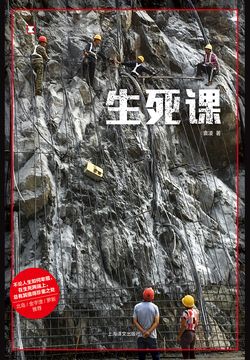
As an editor, I believe the book's greatest value lies in its quiet, resilient narrative ethic. Eschewing sensationalism and sentimentality, Yuan Ling presents life in its raw state before hardship, illness, loneliness, and death with the care and composure of anthropological field notes. The writing itself is a profound act of respect for life. Readers will find no grand conclusions here, yet they will feel the weight of countless small lived experiences. It compels us to ask: What is the dignity of life? How do people in the crevices of society maintain the meaning of existence?
In terms of reading experience, the chapters stand alone yet share a consistent inner spirit. The prose is plain but penetrating, the emotion held within the statement of fact, and it asks the reader to sit with it in silence. What it offers is not diversion or answers but a serious opportunity to gaze into the abyss and be gazed at in return. For readers concerned with social reality and eager to understand the complexity of life, this is a rewarding book to revisit and ponder.
Who it's for
A good fit for
- Readers with sustained attention and empathy for the living conditions of marginalized groups
- Readers who enjoy in-depth nonfiction and appreciate calm, restrained, detail-oriented narration
- Researchers or students in sociology, anthropology, journalism and communication, and related fields
- General readers reflecting on ultimate questions such as the meaning of life, illness, aging, and death
Not a good fit for
- Readers seeking light entertainment or strongly plot-driven stories
- Readers expecting clear methodologies or chicken-soup-style consolation
Reading tips
- Read at your own pace and pause after each profile or two to let the emotions and thoughts settle.
- Read alongside Yuan Ling's other works, such as *Moss Never Disappears*, to better understand the continuity of his writing.
- While reading, try to set aside preconceived sympathy or judgment and follow the author's perspective—first, simply to "see" and understand.
About the publisher
Shanghai Translation Publishing House is a Chinese publisher oriented mainly toward translation and publishing. Its publications cover foreign literature, world classics and classic works, as well as social culture, folk literature and classical poetry. The database contains 2,618 titles, including Never Let Me Go, Les Misérables (2 volumes), Don Quixote (illustrated collector's edition), The Complete Comedies of Molière (4 volumes), The Complete Novels of Kafka (3 volumes), The Collected Works of Dostoevsky (9-volume set), Reason and Persons, and Oedipus Rex (Translation Classics). Its author resources include foreign writers such as Kazuo Ishiguro, Victor Hugo, Cervantes and Molière, as well as translators such as Zheng Kelu, Sun Jiameng, Li Jianwu and Zhang Kun. The publisher has brands such as "Translation Classics Selections" and "Translation Documentary," and emphasizes translated works in foreign literature and the humanities and social sciences, while also publishing bilingual dictionaries and foreign-language educational books. Public information is limited; the above is based on the book information in the database.
Contents
- 版权信息
- 引言
- 生
- 壹
- 蔡姐的苹果树
- 火屋里的远方
- 命不好的长安姑儿
- 古城脚下三人行
- 路旁的变色龙
- 擂鼓台下的尼姑
- 贰
- 望京病房里的货郎
- 孤单的爆料人
- 工人欠钱
- 矿工雪夜逃生记
- 拾穗者
- 有娃子和奥菲利亚
- 叁
- 不做浪荡子
- 智障奴工的儿子
- 新世界的流浪小孩
- 寂静的儿童
- 鹅儿坪的母子
- 猜火车
- 老道与少年
- 肆
- 探望慈悯
- 大路旁的湿润
- 我肺里的真菌
- 天花
- 在悲痛最深处寻找宁静
- 没有故事的盲女
- 儿童病房里的窗户纸
- 伍
- 北大校园里的燕京过客
- 亭子间里的哥哥
- 锻炼的父子
- 父亲的房间
- 旷野动物园
- 树上的瘾士
- 陆
- 戴手铐的三姐妹
- 桂姐和秀姐
- 桃儿过溪
- 她的房间
- 志愿者一龙
- 雪覆盖了这个家族
- 死
- 柒
- 父亲的最后一个电话
- 首富之死
- 抬棺之路
- 画家头顶的利斧
- 战栗的少年
- 血手
- 捌
- 编县志的异乡人
- 有裂纹的肖邦手模
- 敬老院的“右派”
- 无梦楼窗前的绞索
- 樱桃沟的念佛女子碑
- 我不敢亲吻的头部
- 玖
- 被叫走的母亲
- 忠家公的八字
- 床与棺之间
- 找妈妈的奶奶
- 民歌手大舅
- 纪念墙上的一家人
- 拾
- 最后一瓶氧气
- 在弟弟坟前
- 勇儿的梦
- 草莓地上的林娃
- 打工女孩的墓志铭
- 不反光的房屋
- 拾壹
- 林中空地的烧痕
- 一杯香飘飘奶茶
- 核桃树下逝去的
- 老菜园
- 青潭眼中的大鱼
- 山里的狼狗
FAQ
Is the content very heavy and oppressive?
How is this book different from Moss Will Not Disappear?
How does nonfiction ensure authenticity?
Related on WeRead


Comments
Find this book
This site is an index: you start “Search all sources” in your browser, and the entries it lists all point to third-party sites; please judge their availability yourself.
About the author
Yuan Ling is a Chinese author known for documentary literature and social fiction. Public information about him is limited, and details of his life are not available in the current records. Three of his works are held in the collection: Lessons on Life and Death, City of Memory, and Eight Stories, whose subjects mostly involve individual destinies and social relationships within real-life circumstances. Judging from these works, Yuan Ling's writing moves between documentary observation and fictional narrative, focusing on how ordinary people experience and make choices in specific environments. His language is restrained, and his narration emphasizes detail and a sense of the scene. His works are categorized as documentary literature and social fiction, reflecting a tendency to cross between nonfiction and fiction. Because fuller biographical and authorial materials are lacking, his educational background, writing career, and the reception of his works remain to be supplemented. Overall, Yuan Ling's writing is grounded in concern for reality and, within contemporary Chinese writing, shows an orientation toward social and individual experience.
