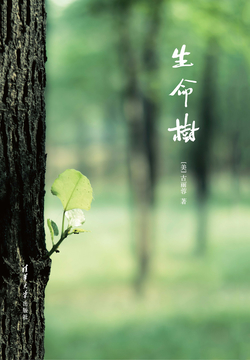
Tree of Life cover

Tree of Life

Rating 2.5
Word count
51K words
Chapters
18

Tags

Summary

This book tells the story of Jack, who loses his job, lives through the pandemic, and grows through the experience. Under the Tree of Life he attains enlightenment, grasps the true meaning of life, finds the fruit of the Tree of Life, and resolves the crisis facing Earth. It leaves readers hopeful about the future and confident that they can face all hardships, and that everything will pass.

Editor's review

This book begins with Jack losing his job during the pandemic, placing personal hardship alongside a planetary crisis to build a main arc that moves from real-world setback to spiritual growth. The author uses the "Tree of Life" as the central image, having the protagonist attain enlightenment beneath it, grasp the true meaning of life, and find its fruit; the narrative overall carries a clear allegorical quality and a hopeful tone. Its value lies not in elaborate plot puzzles but in a simple symbolic system that responds to the question of how to conduct oneself in low times: hardship will pass, and confidence and hope offer real support to the individual. The book links pandemic experience, job-loss anxiety, and transcendent insight, making it suitable for reading when one is low or needs to reset one's mindset, and also as a light text for discussing the meaning of life and resilience. Note that the work leans toward conceptual expression rather than realistic detail; readers expecting rigorous social observation or scientific worldbuilding may find it jumpy, but read as a modern allegory about rebuilding confidence, its warm and direct expression has its own appeal.

Who it's for

A good fit for

  • Readers who have gone through job changes or life setbacks and need to rebuild confidence
  • Literary readers who enjoy allegorical narrative and symbolic imagery
  • People who want emotional comfort and a sense of hope from light reading
  • Young readers interested in the meaning of life and themes of growth

Not a good fit for

  • Readers who prefer rigorously realistic plots and complex character arcs
  • Readers expecting hard science fiction or scientific explanations for the Earth crisis
  • Readers impatient with allegory and conceptual expression

Reading tips

  1. Read the story through first, then revisit the passages where the "Tree of Life" appears and trace how its symbolic meaning changes.
  2. When reading the sections on Jack's unemployment and the pandemic, make brief annotations drawing on your own experience and note your emotional shifts.
  3. Copy out the lines about hope and confidence and keep them somewhere visible as a reminder to yourself.
  4. After finishing, spend ten minutes writing "What is my Tree of Life?" to ground the abstract insight in your own life.

Contents

  1. 版权信息
  2. 内容简介
  3. 封面内容
  4. 第一章
  5. 第二章
  6. 第三章
  7. 第四章
  8. 第五章
  9. 第六章
  10. 第七章
  11. 第八章
  12. 第九章
  13. 第十章
  14. 第十一章
  15. 第十二章
  16. 第十三章
  17. 第十四章
  18. 第十五章

FAQ

Is this book a realistic novel or an allegory?
From the materials, the work starts from real situations such as unemployment and the pandemic, but the core plot has the protagonist attain enlightenment under the Tree of Life, find its fruit, and resolve an Earth crisis. Overall it is closer to allegorical narrative with a realistic shadow, and should not be expected as a strictly realistic novel.
If I haven't experienced unemployment or the pandemic, will this book still resonate with me?
Yes. The book deals with universal experiences such as setback, hope, and confidence; the pandemic and unemployment are only entry points. If you have faced low times or feel uncertain about the future, you can still draw inspiration from the protagonist's transformation.
How should the "Tree of Life" in the book be understood?
According to the synopsis, the Tree of Life is where the protagonist attains enlightenment and grasps the true meaning of life, and it is also a symbol of hope and growth. While reading, you can understand it as a spiritual anchor where a person re-roots and draws strength in hardship, rather than a specific plant in reality.
Do I need any background knowledge before reading this book?
No special background knowledge is needed. A basic familiarity with how life changed during the pandemic is enough. The book focuses on the protagonist's shift in mindset and symbolic insight; simply enter the story with an open mind.

Related on WeRead

Comments

Find this book

This site is an index: you start “Search all sources” in your browser, and the entries it lists all point to third-party sites; please judge their availability yourself.

About the author

赵祥亦 Author · Chinese

Zhao Xiangyi is a contemporary Chinese author who began writing in 2014. His work consists mainly of novels and philosophical essays, and he has published dozens of titles on platforms such as Dangdang Cloud Reading, Migu Reading and QQ Reading, including The Legend of the Medical Hero, Soul Prison, Revelation, Record of the Heart and The Road Home, with 29 titles held in the collection. Representative works include Sa Ye, Xiang Si Ling, Sha Po Lang, Li Ge, Southbound and Northbound, The Fantastic Journey Chronicles, Soul Prison and The Gathering, and his books are commonly classified as social fiction, otherworld fantasy and science fiction. Influenced by Lu Xun, he attends to reality and human nature, does not shy away from real social problems, and often ends his stories with a note of idealism. Public information about his birth year, education and writing career is limited, so his profile is known mainly through the subjects and style of his works.

More by the same author

Top rated in the same category