

Life 3.0
Tags
Summary
Editor's review
Who it's for
A good fit for
- General readers curious about the prospects of artificial intelligence but lacking a technical background
- Tech professionals seeking to add social ethics and long-term impact perspectives
- Universities using it as discussion material for general education courses or book clubs
- Policymakers and educators thinking about technology governance
Not a good fit for
- Technical readers hoping for specific algorithm implementations or hands-on programming content
- Readers expecting the book to give clear predictions and definitive answers
- Readers impatient with philosophical, speculative argumentation
Reading tips
- Read the introduction and table of contents first to grasp the book's overall discussion framework, then choose chapters to read closely according to interest.
- After each chapter, write down the author's core assumptions in one sentence for easy horizontal comparison.
- Read as a team with friends and hold role-based debates on chapters about consciousness, ethics, and other topics.
- Skip unfamiliar terms at first and return to them after reading the cases; do not insist on understanding everything in one pass.
About the publisher
Zhejiang Education Publishing House is a professional publisher focusing on educational publishing while also serving general readers and academic accumulation, with publications covering textbooks, educational readers, popular science, and academic works. Judging from the more than 1,000 titles in the database, the press places considerable emphasis on classics and traditional culture for general readers: modern literature includes Lao She's Camel Xiangzi, Lu Xun's Call to Arms and Wandering and Wild Grass, Xiao Hong's The Story of Hulan River, and Zhu Ziqing's Back View; classical poetry includes Three Hundred Tang Poems and selections from the "Good Chinese Poetry" series, such as the Chu Ci and Qing ci anthologies. Related authors include modern writers such as Lao She, Lu Xun, Xiao Hong, and Zhu Ziqing, as well as classical literature selectors and annotators such as Hengtang Tuishi, Jin Xingyao, Jin Kaicheng, and Qian Zhonglian. Common categories in the database also include social novels, classic works, prose and miscellaneous writings, popular science, and inspirational growth, reflecting a publishing orientation that balances educational service with the popularization of public culture.
Contents
- 版权信息
- 赞誉
- 推荐序一 如何正确地关心人类命运
- 推荐序二 重新定义生命
- 中文版序 我们只看到了人工智能的冰山一角
- 引言 欧米茄传奇
- 第一个100万美元
- 危险游戏
- 第一个10亿美元
- 新技术
- 获得权力
- 世界新秩序
- 01 欢迎参与我们这个时代最重要的对话
- 复杂简史
- 生命的三个阶段:生命1.0、生命2.0和生命3.0
- 生命3.0何时出现
- 关于人工智能的三大误区
- 前路几何
- 02 物质孕育智能
- 什么是智能
- 什么是记忆
- 什么是计算
- 什么是学习
- 03 不远的未来:科技大突破、故障、法律、武器和就业
- 科技大突破,深度学习带来的创造力惊喜
- 故障vs.稳健的人工智能
- 法律之争
- 武器
- 工作与工资
- 人类水平的智能
- 04 智能爆炸?
- 极权主义
- 普罗米修斯统治世界
- 缓慢起飞与多极化情形
- 赛博格与智能上传,进入仿真者时代
- 实际上,会发生什么呢
- 05 劫后余波,未知的世界:接下来的1万年
- 自由主义乌托邦
- 善意的“独裁者”
- 平等主义乌托邦
- 守门人
- 守护神
- 被奴役的神
- 征服者
- 后裔
- 动物园管理员
- 1984
- 逆转
- 自我毁灭
- 你想要什么样的未来
- 06 挑战宇宙禀赋:接下来的10亿年以及以后
- 让资源物尽其用
- 通过殖民宇宙来获得资源
- 宇宙等级
- 07 目标
- 目标的起源:物理学
- 目标的进化:生物学
- 对目标的追寻和反叛:心理学
- 外包目标:工程
- 友好的人工智能:目标一致
- 伦理关键,选择目标
- 终极目标
- 08 意识
- 谁关心这个问题
- 什么是意识
- 问题出在哪里
- 意识超出科学范畴了吗
- 意识的实验线索
- 意识发生在何处
- 意识何时发生
- 意识理论
- 人工智能的意识是什么感觉
- 意义
- 后记 未来生命研究所团队风云传
- 呱呱坠地
- 波多黎各的冒险
- 让人工智能安全性研究进入主流
- 阿西洛马人工智能原则
- 警觉的乐观
- 致谢
FAQ
Can I understand this book without a science or engineering background?
Do the views in the book represent a consensus in the AI research community?
What background knowledge should I have before reading this book?
Related on WeRead
 生命3.0:AI超级智能与伦理边界重构
 生命3.0
 洞见未来的“元宇宙”世界(套装8册)
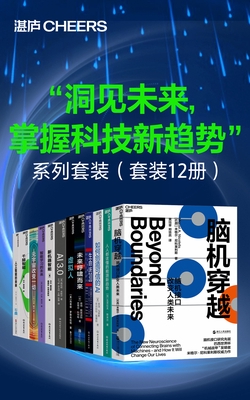 “洞见未来,掌握科技新趋势”系列套装(套装12册)
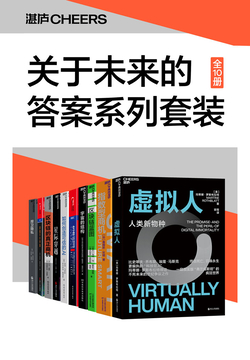 关于未来的答案系列套装(全10册)
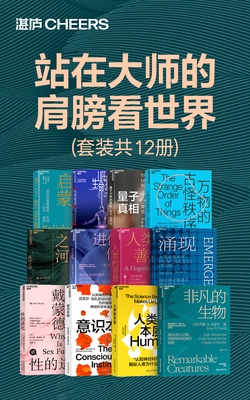 站在大师的肩膀看世界(套装共12册)
Comments
Find this book
This site is an index: you start “Search all sources” in your browser, and the entries it lists all point to third-party sites; please judge their availability yourself.
About the author
Max Tegmark is a popular-science author focused on technology and the future of humanity. Five of his works are included in this catalog, spanning popular science, artificial intelligence, and social culture. His representative titles include Life 3.0, Through the Parallel Universe, the Artificial Intelligence and Robotics series, the seven-volume set Masters Guide You Through the Mysteries of the Universe, and the ten-volume set Answers About the Future. Because public information is limited, his nationality, dates of birth and death, and specific personal experiences cannot be confirmed here. Judging from the subjects of his works, he is skilled at turning frontier topics such as cosmology and artificial intelligence into accessible narratives for general readers. He discusses technological evolution while also asking about humanity's situation and choices in the age of intelligence, and his writing combines informational density with readability, making it suitable for readers interested in science and future-related issues.
Wang Jieshu is a translator of popular science. She is currently a doctoral student in the Science, Technology and Society program at Arizona State University, having previously earned a master's degree in the Communication, Culture and Technology program at Georgetown University; she has also worked as a patent examiner and as a popular-science editor. Her translations focus on artificial intelligence, cosmology and the frontiers of science, including such bestselling popular-science books as Life 3.0, Through Two Doors at Once and The Genius of the Unafraid. Her interdisciplinary training in science and the humanities, together with her experience in patent examination and science editing, helps her translations balance conceptual accuracy with readability, offering Chinese readers a reliable channel to understand AI and cutting-edge science. Public information about her is limited, and details of her personal life are not known.
